Feeding your dog should be simple. Scoop kibble, fill the bowl, done. But walk down any pet store aisle and you will see hundreds of bags making wildly different claims: “grain free,” “ancestral recipe,” “human grade,” “vet recommended.” Some cost $20. Others cost $90. And the ingredients lists read like chemistry experiments.
I have been through this. I have stood in that aisle, flipped bags over, Googled ingredients on my phone, and walked out more confused than when I walked in. So I did what I always do: I went deep. I read the research, talked to veterinary nutritionists, compared formulas, and fed different foods to my own dogs over months of real-world testing.
This guide is everything I learned, organized so you can make confident feeding decisions without needing a nutrition degree.
How to Choose the Right Dog Food
Choosing dog food comes down to five factors: your dog’s life stage, their size, their activity level, any health conditions, and your budget. Everything else is marketing.
Life Stage Matters Most
A puppy has completely different caloric and nutrient needs than a senior dog. The Association of American Feed Control Officials (AAFCO) recognizes three life stages for dog food labeling:
- Growth (puppies): Higher protein, higher fat, higher calcium, DHA for brain development
- Maintenance (adults): Balanced macros for sustaining healthy weight and activity
- All life stages: Meets the requirements of the most demanding stage (growth), so it works for any age
If the label does not carry an AAFCO nutritional adequacy statement, put the bag down and walk away. That statement means the food has either been formulated to meet established nutrient profiles or has passed feeding trials. It is the baseline.
For puppies specifically, check out our guide to the best puppy food for the first year. If you have a dog over seven, our senior dog food picks address the specific changes in metabolism and joint health that come with aging.
Size and Breed Considerations
Large breed puppies need controlled calcium and phosphorus ratios to support proper bone growth. Feeding a Great Dane puppy a standard puppy food can contribute to developmental orthopedic problems. Look for foods specifically labeled for large breed puppies.
Small breed dogs have faster metabolisms and smaller stomachs, so they often need calorie-dense kibble in smaller bites. A Chihuahua and a Labrador should not be eating the same formula.
Some breeds are more prone to specific food sensitivities. Pitbulls and bully breeds, for example, frequently deal with skin allergies tied to common protein sources. We cover this in depth in our guide to the best food for pitbulls with skin allergies.
Activity Level
A working Border Collie running sheep eight hours a day needs significantly more calories than a Basset Hound whose biggest daily effort is walking to the food bowl. Most bag feeding guidelines assume a moderately active dog. If your dog is a couch potato, you are probably overfeeding. If your dog is an athlete, you are probably underfeeding.
Our how much to feed a dog guide walks through body condition scoring and actual calorie math so you can dial in the right amount.
Understanding Dog Food Labels
The ingredient list on a dog food bag can tell you a lot, but only if you know how to read it. Here is what actually matters.
The First Five Ingredients
Ingredients are listed by weight before processing. The first five ingredients make up the bulk of the food. You want to see a named animal protein first: “chicken,” “beef,” “salmon” – not “meat meal” or “animal by-products.”
That said, named meat meals (like “chicken meal”) are not bad. Meal is simply meat with the water removed, making it a more concentrated protein source by weight. “Chicken meal” is actually higher in protein per pound than “fresh chicken” because fresh chicken is about 70% water.
What to Look For
- Named protein sources as the first ingredient (chicken, beef, lamb, salmon)
- Named fat sources (chicken fat, salmon oil) rather than generic “animal fat”
- Whole grains or quality carbs (brown rice, oatmeal, sweet potato) for sustained energy
- Named fruits and vegetables for natural vitamins and antioxidants
- Omega fatty acids for coat and skin health
- Chelated minerals (minerals bound to amino acids for better absorption)
What to Avoid
- “Meat” or “meat by-products” without specifying the animal
- Corn syrup or artificial sweeteners (your dog does not need sugar in their food)
- Artificial colors (Red 40, Blue 2, Yellow 5) – your dog does not care what color their food is
- BHA, BHT, or ethoxyquin as preservatives (mixed tocopherols are the safer alternative)
- Excessive “splitting” where manufacturers list the same ingredient multiple ways (corn, corn gluten, corn bran) to push them lower on the list individually
For a deep dive into specific label claims and what they actually mean, our best dry dog food guide breaks down real labels from the top brands.
Types of Dog Food
Not all dog food comes in a bag. Here is an honest breakdown of every major format, with the pros and cons of each.
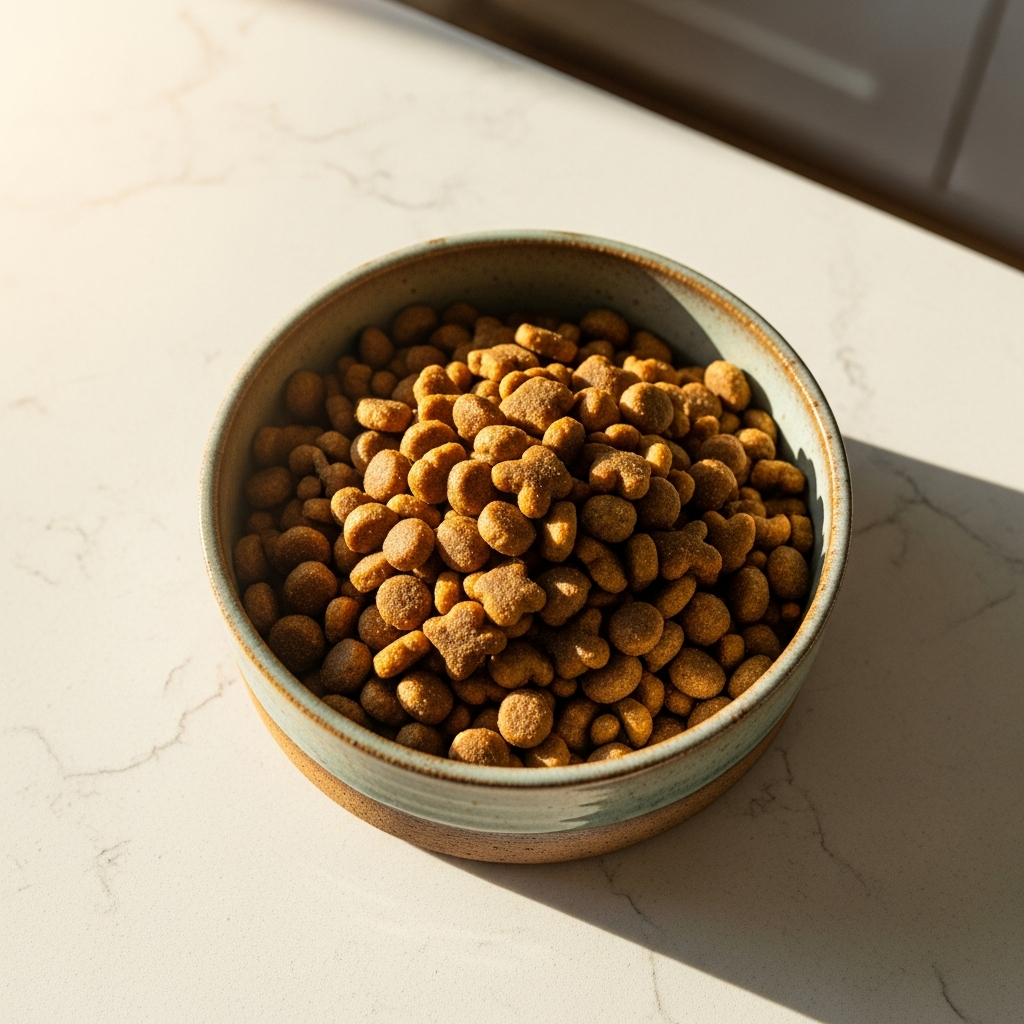
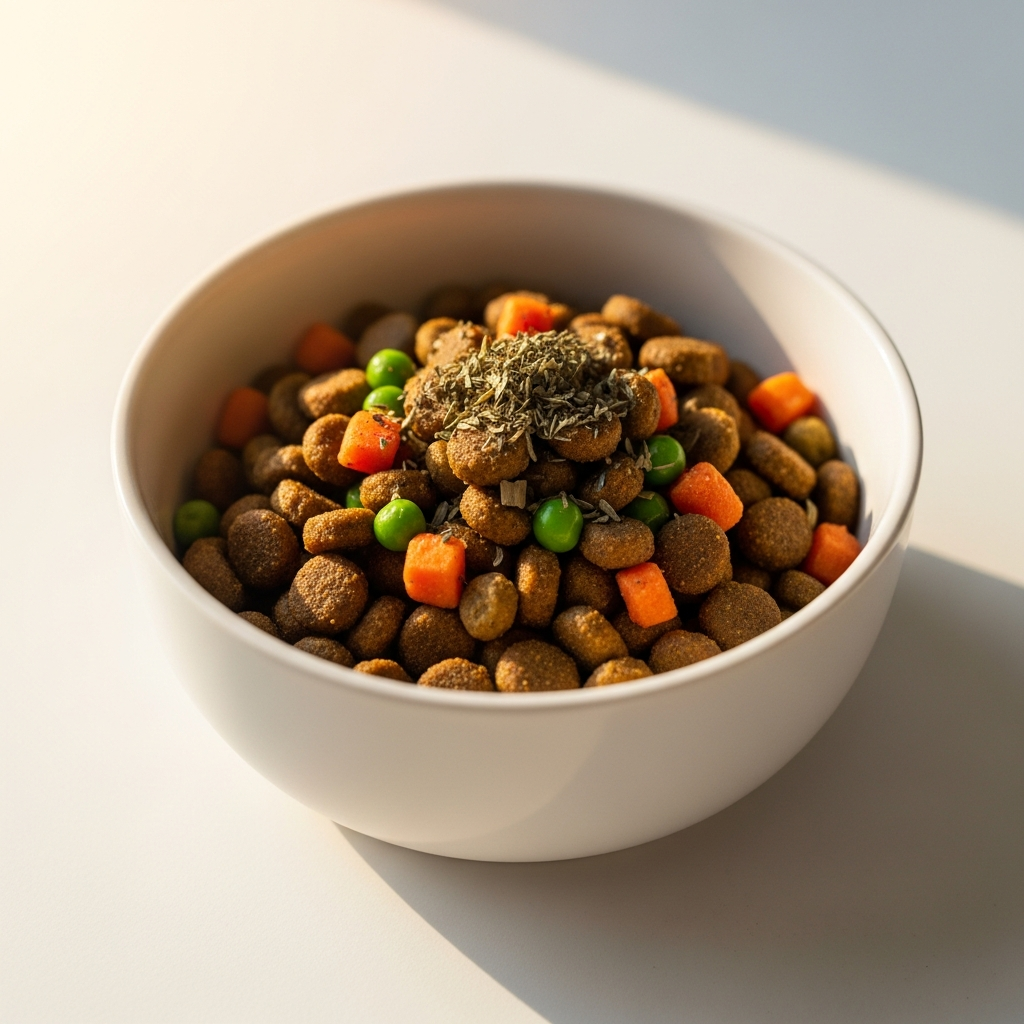
Dry Kibble
Dry kibble is the most popular dog food format in the world, and for good reason. It is affordable, shelf-stable, convenient, and most dogs eat it willingly.
Pros:
- Most affordable per serving
- Easy to store, does not require refrigeration
- Helps with dental health (the mechanical action of chewing can reduce plaque)
- Wide variety of formulas for every life stage and condition
- Easy to measure for portion control
Cons:
- Lower moisture content (around 10%) compared to wet or fresh food
- Heavily processed at high temperatures, which can degrade some nutrients
- Some dogs find it less palatable than wet food
- Quality varies enormously between brands
We rank our top dry dog food picks by budget tier so you can find the best option at your price point.
Wet or Canned Food
Wet food typically contains 70-80% moisture, which can be beneficial for dogs who do not drink enough water or have kidney concerns.
Pros:
- Higher palatability for picky eaters
- Higher moisture content supports hydration
- Often fewer carbohydrates than kibble
- Good option for senior dogs with dental issues
Cons:
- More expensive per calorie
- Shorter shelf life once opened
- Can contribute to dental issues without chewing action
- Heavier and less convenient to store
Many owners use wet food as a topper mixed with kibble, which is a reasonable middle ground. This adds palatability and moisture without the full cost of an all-wet diet.
Raw Diets
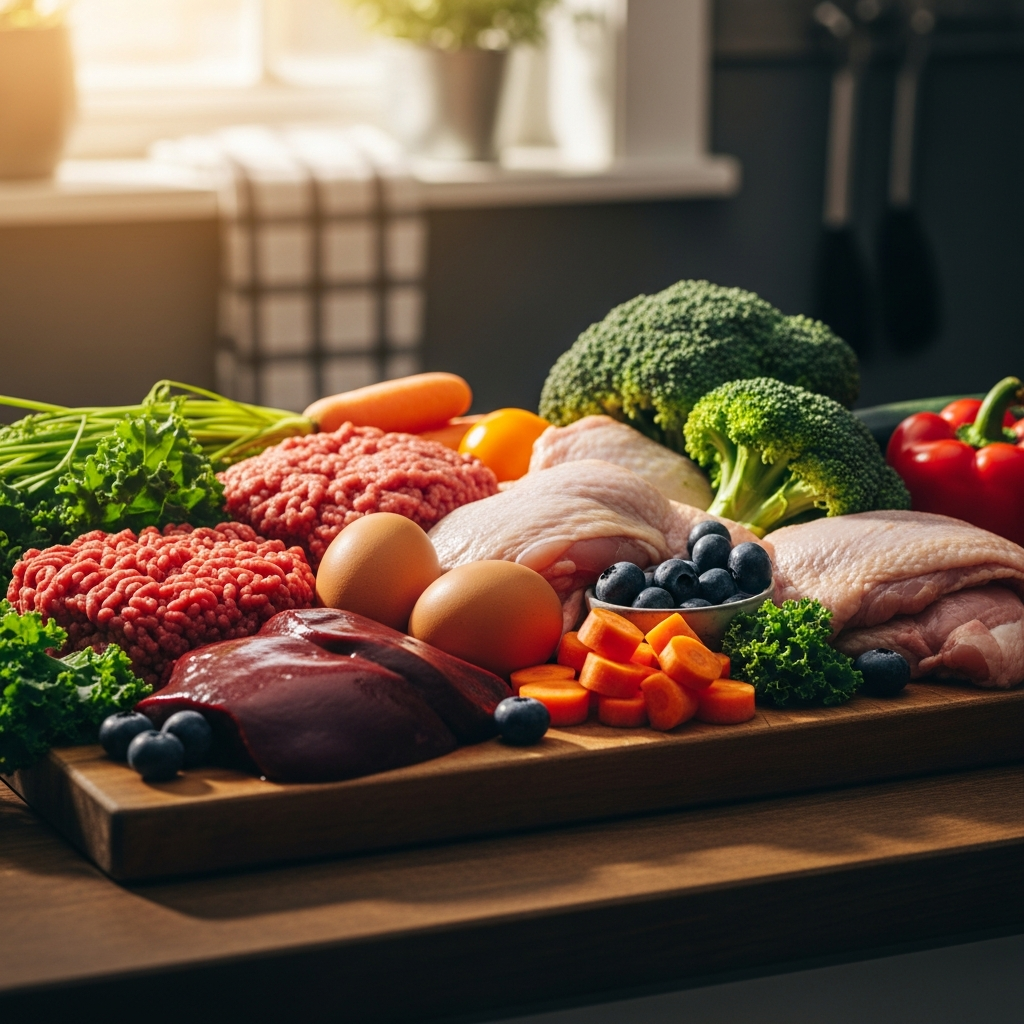
Raw feeding has become a passionate subculture in the dog world. The two main approaches are BARF (Biologically Appropriate Raw Food) and prey model raw.
BARF diets typically include raw muscle meat, organ meat, raw bones, vegetables, and fruit. Prey model raw focuses on replicating a whole prey animal: 80% muscle meat, 10% bone, 10% organ (with half being liver).
The raw feeding debate is legitimate. Some owners report shinier coats, smaller stools, and improved energy. But there are real safety concerns around bacterial contamination (Salmonella, Listeria, E. coli) for both dogs and the humans handling the food.
We cover the complete picture – including the science, the safety protocols, and the costs – in our raw dog food diet guide.
Fresh Dog Food Delivery
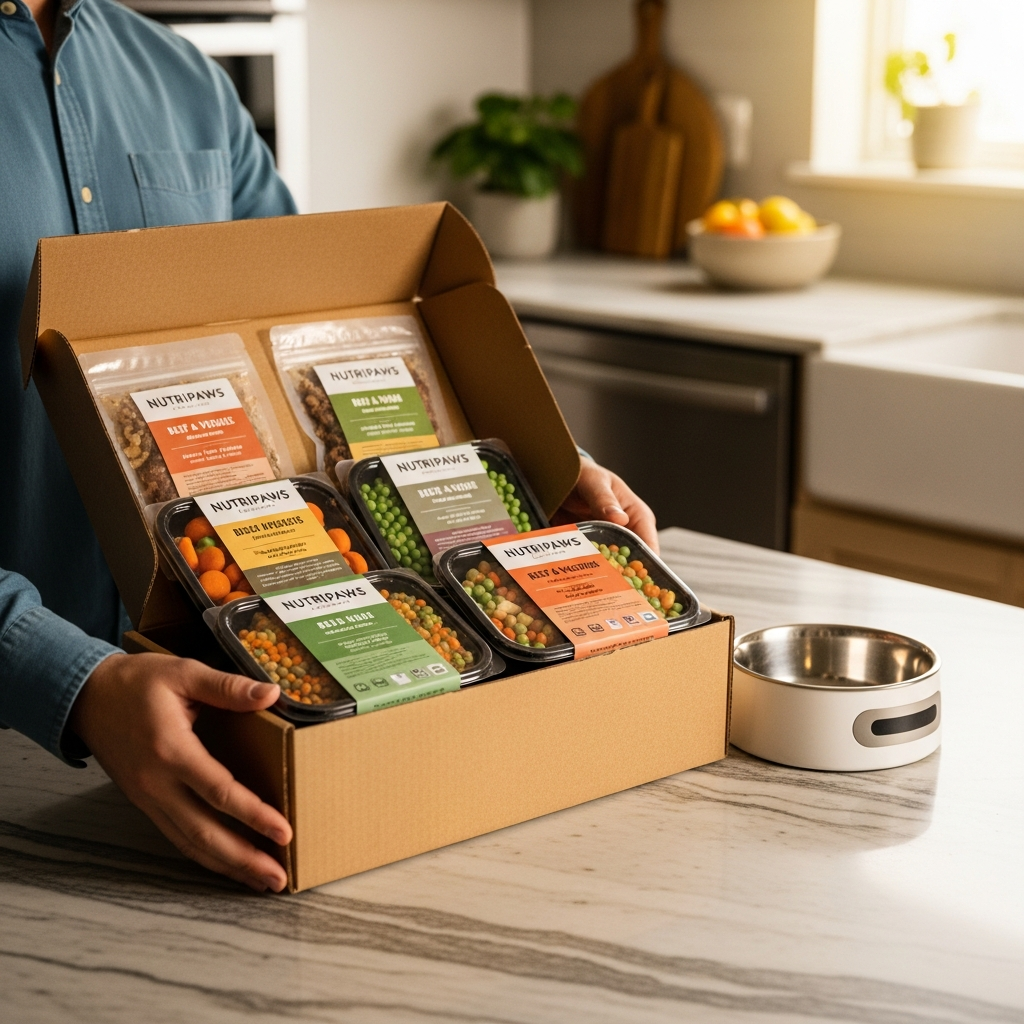
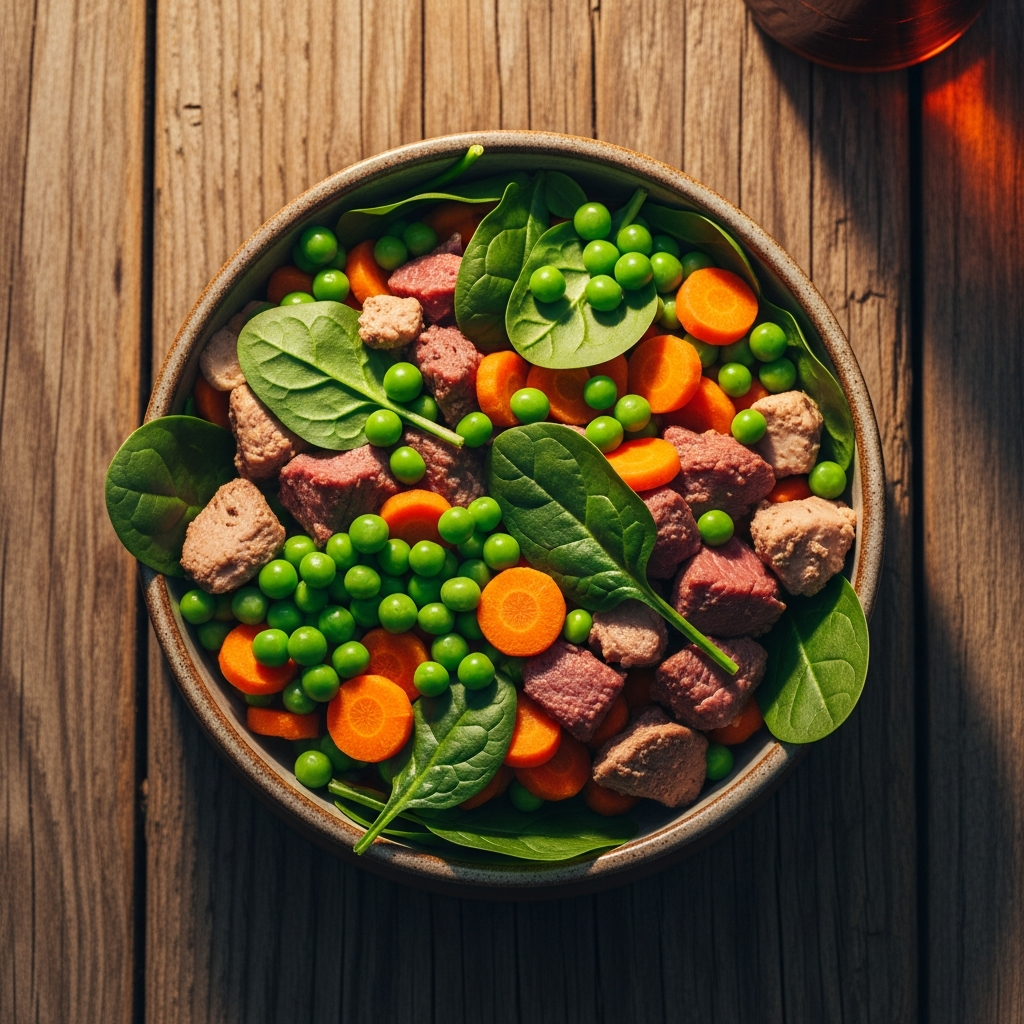
Fresh food delivery services like Ollie, The Farmer’s Dog, and JustFoodForDogs have exploded in popularity. These companies ship pre-portioned, gently cooked meals directly to your door based on your dog’s profile.
Pros:
- Human-grade ingredients, minimally processed
- Pre-portioned for your specific dog
- Higher digestibility than kibble
- Convenient delivery
Cons:
- Significantly more expensive than kibble (often 3-5x the cost)
- Requires freezer or refrigerator space
- Less convenient for travel
If you are considering this route, our fresh dog food delivery comparison ranks the top services on price, ingredients, and real-world results.
Freeze-Dried and Dehydrated
Freeze-dried food occupies a middle ground between raw and kibble. The freeze-drying process preserves nutrients while eliminating moisture and reducing bacterial risk. You typically rehydrate it with water before serving.
Pros:
- Nutrient preservation closer to raw
- Shelf-stable and lightweight
- Lower bacterial risk than raw
- Good for travel and backpacking
Cons:
- Among the most expensive options
- Rehydration adds a step
- Limited flavor and brand options compared to kibble
Life Stage Nutrition: What Changes and When
Your dog’s nutritional needs shift significantly across their lifetime. Here is what you need to know at each stage.
Puppy Nutrition (Birth to 12-24 Months)
Puppies need more of everything: more protein for muscle development, more fat for energy and brain development, more calcium and phosphorus for bone growth, and more DHA for cognitive development.
Key numbers to look for in puppy food:
- Protein: Minimum 22% (AAFCO), but 25-30% is better
- Fat: Minimum 8% (AAFCO), but 15-20% is typical for quality foods
- DHA: At least 0.1% for brain and eye development
- Calcium: 1.0-1.8% (large breeds should stay on the lower end)
Feeding frequency matters too. Puppies under six months should eat three to four times a day. From six months to a year, you can transition to twice daily. Our puppy food guide covers transition schedules and breed-specific recommendations.
Adult Nutrition (1-7 Years)
Once your dog reaches physical maturity, you are looking for maintenance nutrition. The goals are maintaining healthy weight, supporting immune function, and keeping coat and skin in good condition.
Key numbers for adult food:
- Protein: Minimum 18% (AAFCO), but 24-30% is typical for quality foods
- Fat: Minimum 5% (AAFCO), but 12-18% is common
- Fiber: 3-5% for digestive health
Most adult dogs do well on twice-daily feeding. Avoid free feeding (leaving food out all day) as it makes it nearly impossible to monitor intake and can lead to obesity.
Senior Nutrition (7+ Years)
Senior dogs face a different set of challenges: slowing metabolism, joint stiffness, potential kidney or heart concerns, and sometimes decreased appetite.
Key adjustments for senior food:
- Moderate protein to maintain muscle mass without overloading kidneys
- Reduced calories to prevent weight gain with decreased activity
- Added glucosamine and chondroitin for joint support
- Omega-3 fatty acids for inflammation management
- Moderate phosphorus for kidney health
The shift to senior food is not just about age. Body condition, activity level, and health status all matter. Some active senior dogs do perfectly fine on adult maintenance food. Always consult your vet before making significant dietary changes for an older dog.
Our senior dog food guide covers this in detail, and you can find broader senior care strategies in our senior dog care guide.
Food Allergies and Sensitivities
True food allergies in dogs are less common than many owners think. Environmental allergies (pollen, dust mites, mold) are actually more prevalent. But food sensitivities do exist, and they can make your dog miserable.
Common Food Allergens
The most common allergens in dog food, according to veterinary dermatology research, are:
- Beef (most common)
- Dairy
- Chicken
- Wheat
- Soy
- Lamb
- Egg
- Corn
Notice that grains are not at the top of the list. Protein sources are the most frequent culprits, which is why switching to a “grain-free” food often does not solve allergy symptoms.
Signs of Food Allergies
- Chronic itching, especially around ears, paws, and rear end
- Recurrent ear infections
- Red, inflamed skin
- Excessive licking of paws
- Gastrointestinal issues (vomiting, diarrhea, gas)
- Chronic anal gland problems
The Elimination Diet
The gold standard for diagnosing food allergies is an elimination diet supervised by your veterinarian. This involves feeding a novel protein (one your dog has never eaten) or a hydrolyzed protein diet for 8-12 weeks, then reintroducing ingredients one at a time.
Blood and saliva allergy tests for food are widely available but have poor reliability according to multiple veterinary studies. An elimination diet takes patience, but it is the only accurate method.
For dogs with confirmed allergies, limited ingredient diets can be life-changing. If you have a bully breed dealing with skin issues, our pitbull allergy food guide is specifically tailored to that challenge.
The Grain-Free Debate
In 2018, the FDA began investigating a potential link between grain-free diets and dilated cardiomyopathy (DCM) in dogs. This sent shockwaves through the pet food industry and left millions of dog owners confused.
Here is where things stand: the investigation found a correlation between certain grain-free diets high in legumes (peas, lentils, chickpeas) and DCM cases. However, a definitive causal mechanism has not been established. The FDA has not recalled grain-free foods or told owners to stop feeding them.
The key takeaway: grain-free is not inherently better or worse. Most dogs digest grains just fine. If your dog does not have a diagnosed grain sensitivity, there is no nutritional reason to avoid grains. If your dog does have a grain sensitivity, work with your vet to choose a grain-free food from a reputable manufacturer that conducts feeding trials.
We break down the entire FDA investigation and help you make an informed decision in our grain-free dog food guide.
Toxic Foods Every Owner Should Know
Some human foods are dangerous or even deadly for dogs. This is not an exhaustive list – for the full A-to-Z breakdown, see our complete guide to what dogs can and cannot eat – but these are the most critical ones:
Highly Toxic
- Chocolate (theobromine is toxic; dark chocolate is the most dangerous)
- Grapes and raisins (can cause acute kidney failure; mechanism unknown)
- Xylitol (artificial sweetener found in sugar-free gum, peanut butter, and baked goods; causes rapid insulin release and liver failure)
- Onions and garlic (damage red blood cells; garlic is toxic at lower doses than many people realize)
- Macadamia nuts (cause weakness, vomiting, tremors, and hyperthermia)
- Alcohol (even small amounts can be dangerous)
Commonly Mistaken as Safe
- Cooked bones (can splinter and cause intestinal perforation)
- Avocado (persin in the skin, pit, and leaves is toxic; small amounts of flesh are debated)
- Caffeine (similar effects to chocolate toxicity)
- Raw yeast dough (expands in stomach, produces alcohol)
If your dog eats something toxic, contact your veterinarian or the ASPCA Animal Poison Control Center (888-426-4435) immediately. Time matters.
How to Read a Dog Food Guaranteed Analysis
The guaranteed analysis on a dog food label shows minimum and maximum levels of key nutrients. Here is what you are looking at:
| Nutrient | What It Means | What to Look For |
|---|---|---|
| Crude Protein (min) | Total protein from all sources | 24%+ for adults, 28%+ for puppies |
| Crude Fat (min) | Total fat content | 12-18% for most adults |
| Crude Fiber (max) | Indigestible plant material | 3-5% for normal digestion |
| Moisture (max) | Water content | ~10% for kibble, ~78% for wet |
One important caveat: comparing dry food to wet food on a guaranteed analysis basis is misleading because of moisture differences. To compare apples to apples, you need to convert to a “dry matter basis” by removing the water from the equation.
Dry matter conversion formula:
- Subtract the moisture percentage from 100 to get the dry matter percentage
- Divide the nutrient percentage by the dry matter percentage
- Multiply by 100
Example: A wet food with 10% protein and 78% moisture has a dry matter protein of approximately 45% (10 / 22 x 100 = 45.5%). That is actually higher than most dry foods.
How Much Should You Actually Spend?
Let me be honest about this. You do not need to buy the most expensive food to feed your dog well. But you should not buy the cheapest option either.
Budget Tier ($30-45 per bag)
Brands like Purina Pro Plan and Iams ProActive Health offer solid nutrition backed by feeding trials and veterinary nutritionist formulation. These are not glamorous bags. They do not have farm-to-table marketing. But they deliver complete, balanced nutrition at an accessible price.
Mid-Range ($45-65 per bag)
This is where you find brands like Taste of the Wild, Diamond Naturals, and Victor. You get higher-quality protein sources, fewer fillers, and better ingredient transparency. For most dog owners, this tier offers the best value.
Premium ($65-100+ per bag)
Brands like Orijen, Acana, and Stella & Chewy’s freeze-dried lines live here. You are paying for higher meat inclusion rates, sustainably sourced ingredients, and premium manufacturing. The nutrition is excellent, but the marginal benefit over a good mid-range food is debatable for most dogs.
Fresh Delivery ($150-300+ per month)
The Farmer’s Dog, Ollie, and similar services offer the highest-quality commercial food available. But the price reflects it. This makes sense for dogs with specific health conditions, extreme picky eaters, or owners who prioritize food quality above cost. See our full comparison of fresh food delivery services.
Switching Dog Foods Safely
Abrupt food changes are one of the most common causes of digestive upset in dogs. Whether you are switching brands, formulas, or food types, follow a gradual transition over 7-10 days:
| Day | Old Food | New Food |
|---|---|---|
| 1-2 | 75% | 25% |
| 3-4 | 50% | 50% |
| 5-6 | 25% | 75% |
| 7-10 | 0% | 100% |
If your dog has a sensitive stomach, extend this to 14 days. If you see loose stools, slow down the transition. Some dogs with particularly touchy digestion may benefit from adding a probiotic supplement during transitions.
Special Dietary Needs
Some dogs require therapeutic or prescription diets for specific health conditions. These include:
- Kidney disease: Reduced phosphorus and moderate protein
- Heart disease: Reduced sodium, added taurine and L-carnitine (see our low sodium dog food guide)
- Diabetes: Higher fiber, consistent carbohydrate levels
- Pancreatitis: Very low fat (below 10% on a dry matter basis)
- Urinary conditions: Modified mineral content to prevent crystal formation
- Obesity: Reduced calorie density with maintained nutrient levels
Prescription diets like Hill’s Science Diet, Royal Canin Veterinary, and Purina Pro Plan Veterinary Diets are formulated for these conditions and typically require a veterinary authorization to purchase. Do not attempt to manage a diagnosed medical condition through diet alone without veterinary guidance.
Supplements: What is Worth Adding
Most dogs eating a complete and balanced commercial diet do not need supplements. The food already contains everything they require. But there are a few situations where supplementation may help:
- Fish oil (Omega-3): May support coat health, joint comfort, and cognitive function. One of the few supplements with broad veterinary support.
- Probiotics: May help dogs with chronic digestive issues, especially during food transitions or after antibiotic use.
- Glucosamine and chondroitin: May support joint health in senior dogs or large breeds, though evidence is mixed.
- Pumpkin puree (plain, not pie filling): A spoonful can help firm up loose stools or ease mild constipation.
Avoid multi-vitamin supplements unless your vet specifically recommends one. Over-supplementation can be as harmful as deficiency, particularly with fat-soluble vitamins (A, D, E, K) and minerals like calcium.
Our Dog Food Guides
We have created in-depth guides for every major feeding decision you will face. Each one includes specific product recommendations, detailed ingredient analysis, and honest assessments.
By Food Type
- Best Dry Dog Food – Top picks for every budget
- Raw Dog Food Diet – Honest pros and cons
- Fresh Dog Food Delivery – Service comparison and rankings
- Grain-Free Dog Food – The facts behind the fear
By Life Stage
- Best Puppy Food – First year nutrition
- Best Senior Dog Food – What changes after age 7
By Dietary Need
- Best Dog Food for Pitbulls With Skin Allergies – Novel proteins and limited ingredients
- Limited Ingredient Dog Food – Best picks for sensitive dogs
- Low Sodium Dog Food – For dogs with heart conditions
Feeding Basics
- How Much to Feed a Dog – Calorie math and body condition scoring
- What Can Dogs Eat? – The complete safe and unsafe foods list
Frequently Asked Questions
How often should I feed my adult dog?
Most veterinarians recommend feeding adult dogs twice a day, roughly 12 hours apart. This maintains steady blood sugar and energy levels throughout the day. Free feeding (leaving food out all day) can lead to overeating and makes it harder to monitor your dog’s appetite, which is an important early indicator of health changes.
Is expensive dog food always better?
Not necessarily. Price often reflects marketing, packaging, and ingredient sourcing rather than nutritional quality. Brands like Purina Pro Plan are formulated by board-certified veterinary nutritionists and backed by extensive feeding trials. They cost a fraction of boutique brands. The most important thing is that the food carries an AAFCO adequacy statement and lists named protein and fat sources.
Should I add water to my dog’s dry food?
Adding a little warm water to dry food can increase palatability and add some hydration, which may benefit dogs who do not drink enough. It is perfectly safe and can be particularly helpful for senior dogs with dental issues. Just do not let moistened food sit out for more than 30 minutes, as it becomes a breeding ground for bacteria.
Can I cook for my dog at home?
You can, but it is harder to get right than most people think. Studies have found that the vast majority of home-cooked dog food recipes – including those published in books and online – are nutritionally incomplete. If you want to home-cook, work with a board-certified veterinary nutritionist to formulate a balanced recipe, and use a service like BalanceIT to ensure it meets all nutritional requirements.
How do I know if my dog’s food is working?
A dog on the right food should have: consistent energy levels appropriate to their age and breed, a shiny coat without excessive shedding, firm and regular stools (small, compact, and easy to pick up), healthy weight with a visible waist when viewed from above, and a generally enthusiastic appetite. If any of these markers are off, it may be time to reassess the diet with your vet.
This guide is for informational purposes only and is not a substitute for veterinary advice. Always consult your veterinarian before making significant changes to your dog’s diet, especially if your dog has existing health conditions.
Have a question about dog food we did not cover? We are always updating this guide. Bookmark it and check back.