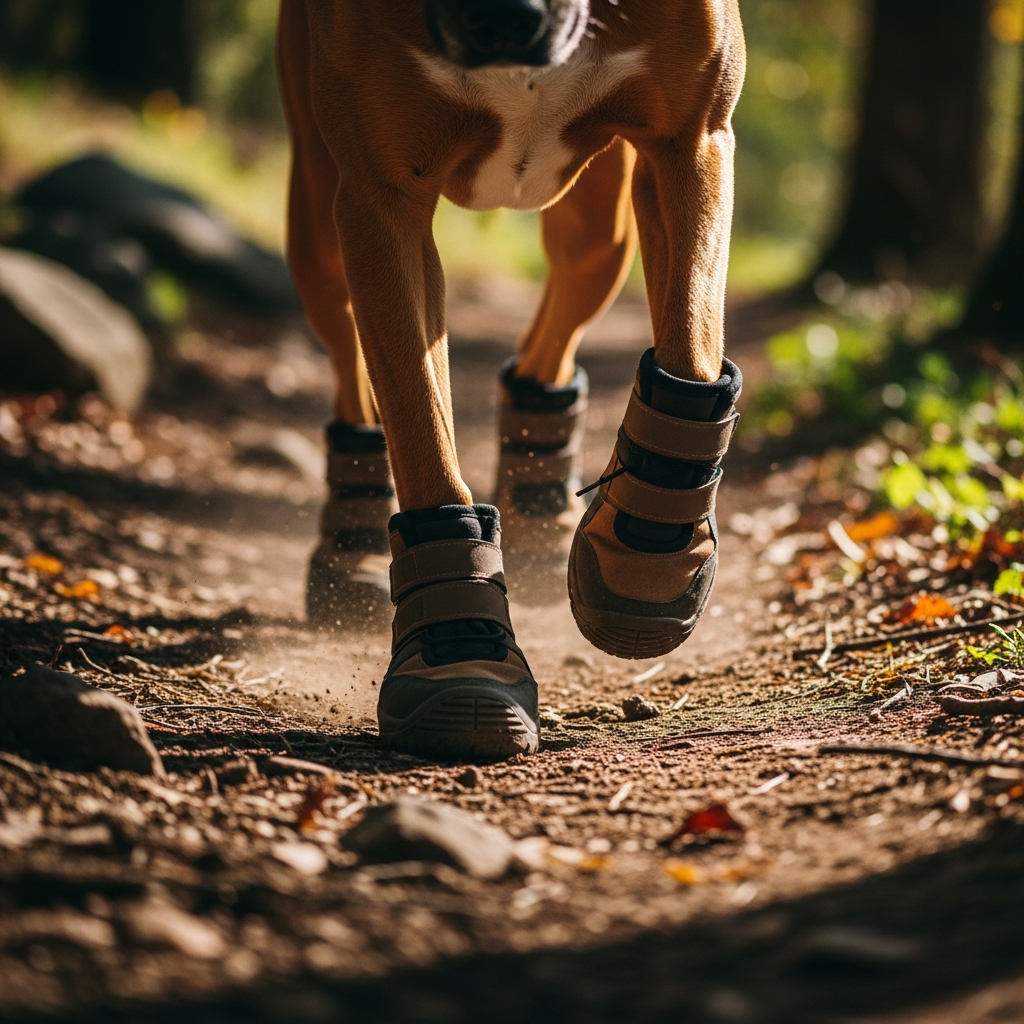
Most dogs don’t need boots. Their paw pads are tough, naturally insulated, and designed for barefoot life. But “most situations” isn’t “all situations,” and there are real scenarios where paw protection goes from optional to essential.
Hot pavement in summer can blister paw pads in minutes. Road salt in winter causes chemical burns and cracking. Rocky or gravelly trails abrade pads over long distances. And dogs recovering from paw injuries need protection to heal.
The challenge isn’t deciding whether boots are useful — it’s finding boots that actually stay on. This is where most products fail, and it’s where this guide focuses.
When Your Dog Actually Needs Boots
Hot Pavement
Asphalt absorbs heat. On a 95-degree day, pavement surface temperature can exceed 150 degrees — hot enough to cause second-degree burns on paw pads in under a minute.
The test: Place the back of your hand flat on the pavement. If you can’t hold it there for 7 seconds, it’s too hot for your dog’s paws.
If you walk your dog on paved surfaces during summer, boots or a paw wax are necessary during peak heat. Or just walk early morning and after sunset, when the pavement has cooled.
For more on paw pad burns and treatment, see our paw pad injury guide.
Ice, Snow, and Road Salt
Road salt (sodium chloride) and ice melt chemicals (calcium chloride, magnesium chloride) are irritants. They dry out paw pads, cause cracking, and can cause chemical burns with prolonged contact. Worse, dogs lick their paws, ingesting salt that can cause gastrointestinal distress.
Boots keep salt off paw pads entirely. If you don’t use boots, wash your dog’s paws after every winter walk.
Snow and ice also pack between toes, especially on dogs with longer fur between their pads. This creates uncomfortable snowballs that can cause limping.
Rocky and Rough Terrain
If you hike regularly on rocky, gravelly, or technical terrain, prolonged exposure can wear down even the toughest paw pads. This is especially true for dogs that don’t build up calluses gradually (a city dog’s first mountain hike, for example).
Planning a trail day? See our hiking with dogs guide for the full preparation checklist.
Injury Recovery
Dogs recovering from paw cuts, pad abrasions, or surgical wounds need protection to keep the injury clean and prevent reopening. A boot is often more practical than a bandage because dogs can’t easily remove it (unlike bandages, which they absolutely will try to remove).
When Boots Aren’t Necessary
- Casual walks on grass, dirt, or mild-temperature pavement
- Indoor use
- Dogs with well-conditioned pads on terrain they’re used to
- Short bathroom breaks in mild weather
Don’t force boots on a dog that doesn’t need them. They restrict the natural flex and sensory feedback of the paw, and most dogs need time to adapt to wearing them.
The 5 Best Dog Boots
1. Ruffwear Grip Trex Boots — Best for Hiking and Trail Use
Price: $35–$40 per boot (sold individually) or $80–$90 for a set of 4 | Sizes: 1.5" to 3.25" (width)
The Grip Trex is the boot I reach for on trail days. Ruffwear designed it specifically for outdoor use, and the Vibram outsole (the same rubber compound used in serious hiking boots for humans) provides grip on rock, gravel, and wet surfaces that other dog boots can’t match.
What I like:
- Vibram outsole provides genuine traction on technical terrain
- The hook-and-loop closure system wraps around the entire ankle, which is why these actually stay on
- Breathable mesh upper keeps paws from overheating
- The gusset design allows natural paw flex
- Available in half-sizes, which matters more than you’d think
What I don’t:
- Sold individually (you can buy just one to replace a lost boot, which is nice, but buying four feels unnecessarily complicated)
- Premium price
- The Vibram sole is stiff, which means dogs need a longer adjustment period than softer boots
- Sizing is based on paw width, not length. Measure carefully — Ruffwear provides a printable sizing template.
Best for: Hiking, trail running, any sustained outdoor activity on rough terrain. The best overall boot for active dogs.
2. Muttluks Fleece-Lined Boots — Best for Winter
Price: $60–$80 for a set of 4 | Sizes: XXS to XL
Muttluks are Canadian-made boots designed for Canadian winters, which tells you everything about their cold-weather capabilities. The fleece-lined interior keeps paws warm, the leather sole provides traction on ice, and the tall design keeps snow out.
What I like:
- Fleece lining provides genuine warmth in sub-zero temperatures
- The stretch cuff and Velcro strap work together to keep boots on (dual-retention system)
- Leather sole is naturally grippy on ice and packed snow
- The tall boot height prevents snow from entering
- Available in bright reflective colors for low-light winter walks
What I don’t:
- The leather sole wears down faster on pavement than synthetic alternatives
- Not breathable enough for warm-weather use (paws will overheat)
- The fleece lining holds moisture — dry thoroughly between uses
- The sizing can be tricky for dogs with wide paws relative to length
Best for: Winter walks in snow and ice, cold-climate dogs, walking on salted sidewalks, dogs that get snowballs between their toes.
3. Ultra Paws Durable Dog Boots — Best Budget Option
Price: $25–$35 for a set of 4 | Sizes: Petite to XL
If you want functional paw protection without spending $80+, the Ultra Paws Durable boots deliver surprisingly good performance for the price. They won’t match the Grip Trex on a mountain trail, but for sidewalk protection, light hiking, and seasonal use, they’re solid.
What I like:
- Excellent value — functional boots at half the price of premium options
- The foam sole provides comfortable cushioning
- Water-resistant nylon upper
- Two Velcro strap closures (most budget boots have only one)
- The tread pattern provides decent traction on pavement and packed trails
What I don’t:
- Less durable than Ruffwear or Muttluks. Expect one season of regular use.
- The sole is softer and wears faster on rough surfaces
- The Velcro can lose its grip after repeated use
- Not as secure on dogs that actively try to remove their boots
Best for: Seasonal use (summer pavement or winter salt), casual hiking, owners who want protection without the premium investment, trying boots for the first time to see if your dog tolerates them.
4. PAWZ Disposable Dog Boots — Best for Medical/Temporary Use
Price: $10–$15 for a pack of 12 | Sizes: Tiny to XL | Type: Rubber balloon-style
PAWZ are reusable rubber boots that work like thick balloons. You stretch them over the paw, and they grip through rubber-on-fur friction. No straps, no Velcro, no buckles.
What I like:
- Extremely simple to put on
- Stay on remarkably well (the rubber grips fur without slipping)
- Provide a waterproof barrier against salt, chemicals, and mud
- Disposable price point, though each boot can be reused several times
- The thinnest option available, which means dogs feel them less and adapt faster
What I don’t:
- Zero insulation (they’re a barrier, not a warm boot)
- No tread or traction — they’re smooth rubber
- They’re essentially thick balloons, so they puncture on sharp surfaces
- Not suitable for rough terrain
Best for: Post-surgery paw protection, walking through salt or chemicals, allergy dogs that need a barrier from grass, temporary use when you need a boot for a specific situation.
5. Ruffwear Summit Trex Boots — Best Everyday Boot
Price: $30–$35 per boot or $70–$80 for a set of 4 | Sizes: 1.5" to 3.25"
The Summit Trex is the Grip Trex’s lighter, more flexible sibling. It uses a thinner Vibram sole and more breathable upper, making it more comfortable for daily wear but less rugged for technical terrain.
What I like:
- More flexible sole means dogs adapt to them faster than the Grip Trex
- Same quality hook-and-loop closure system as the Grip Trex (stays on)
- Breathable mesh upper is comfortable for extended wear
- Lighter weight than the Grip Trex
- Same half-size options for precise fit
What I don’t:
- Less tread depth means less traction on wet rock
- The thinner sole won’t protect against sharp objects as well as the Grip Trex
- Still premium pricing
- Less thermal protection than the Muttluks for cold weather
Best for: Daily walks on hot or cold pavement, light hiking, owners who want Ruffwear quality in a more everyday boot.
How to Get Your Dog to Keep Boots On
This is the million-dollar question. Most dogs react to boots the same way: dramatic high-stepping, shaking, flopping, and generally acting like they’ve been betrayed. This is normal and temporary.
Step 1: Let Them Investigate
Leave the boots on the floor. Let your dog sniff them. Treat generously for any interaction with the boots.
Step 2: One Boot at a Time
Put one boot on one front paw. Immediately treat. Distract with play or a short walk. Remove after 2–3 minutes. Repeat over several days, gradually increasing duration.
Step 3: Add the Second Front Boot
Most of the adaptation challenge is the front paws (dogs rely heavily on front paw sensation for balance). Once two front boots are tolerated, add the back boots.
Step 4: Walk Immediately
Once all four boots are on, go outside immediately. The distraction of being outdoors, with new smells and sights, overrides the boot sensation for most dogs. Don’t wait around inside — the longer your dog stands in boots without a reason to move, the more they’ll fixate on removing them.
Step 5: Be Patient
Most dogs fully adapt within 3–5 outings. Some take longer. A few never love boots but tolerate them. If your dog is still dramatically distressed after a week of gradual introduction, consult a trainer or try a different boot design.
How to Size Dog Boots
Measuring Method
- Have your dog stand on a piece of paper
- Mark the widest point of the paw (not including dewclaws)
- Measure the distance between the marks
Important: Measure while the dog is standing, not while they’re sitting or lying down. Weight-bearing spreads the paw, and a boot that fits a non-weight-bearing paw will be too tight.
Front vs. Back Paws
Front paws are almost always wider than back paws. Some dogs need different sizes front and back. Ruffwear and Muttluks both accommodate this since they sell boots individually or in sets of varying sizes.
Fit Check
A properly fitted boot should:
- Slide on without excessive force
- Not rotate on the paw once on
- Allow natural toe splay when weight-bearing
- Stay on during walking, trotting, and light running
- Leave no marks or redness after removal
Paw Wax: An Alternative to Boots
If your dog won’t tolerate boots, paw wax (like Musher’s Secret) is a solid alternative for mild conditions. It creates a breathable, semi-waterproof barrier on the paw pad that protects against salt, hot pavement (up to a point), and mild abrasion.
Paw wax works for:
- Protection from road salt
- Mild pavement heat (but not extreme — boots are better for true hot-surface protection)
- Preventing snowball formation between toes
- General conditioning of dry or cracked pads
Paw wax doesn’t replace boots for:
- Extreme heat (asphalt over 130 degrees)
- Rocky terrain
- Sharp surfaces
- Extended hiking
- Post-injury protection
Apply wax before walks, reapply as needed. It absorbs into the pad over time and needs to be refreshed.
Frequently Asked Questions
Do dogs really need boots?
For everyday walks on grass and moderate-temperature pavement, no. For specific conditions — extreme heat, ice salt, sharp terrain, or injury recovery — yes. Think of dog boots like hiking boots for humans: you don’t need them to walk to the mailbox, but you want them on a mountain.
Will boots change how my dog walks?
Temporarily, yes. The high-stepping, exaggerated gait you see when boots are first put on is a sensory response, not a sign of pain. Dogs rely heavily on paw pad sensation for proprioception (knowing where their feet are). Boots reduce that sensation, which causes the funny walk. It resolves with practice.
How long do dog boots last?
Budget boots: one season of regular use. Premium boots (Ruffwear, Muttluks): 1–3 years depending on terrain and frequency. Disposable boots (PAWZ): 3–5 uses per boot.
My dog keeps pulling off their boots. What am I doing wrong?
Most likely a sizing issue. Boots that are too loose will be pulled off. Boots that are too tight will be fought against. Re-measure and try a different size. Also, make sure you’re using the closure system correctly — Velcro straps need to be snug but not circulation-restricting. The hook-and-loop systems on Ruffwear boots are specifically designed to resist removal.
Can I use baby socks instead of boots?
You can, but they won’t stay on and provide no real protection. They’re occasionally useful for keeping a bandage in place indoors, but they’re not a substitute for actual dog boots.
Should I put boots on all four paws or just the front?
For pavement heat and salt protection, all four. For hiking, all four (rear paws are less prone to injury but still benefit from traction). For injury recovery, just the affected paw(s).
Prices last updated February 2026. We use affiliate links — if you purchase through our links, we may earn a commission at no extra cost to you.
Back to the Dog Gear hub for more tested recommendations.