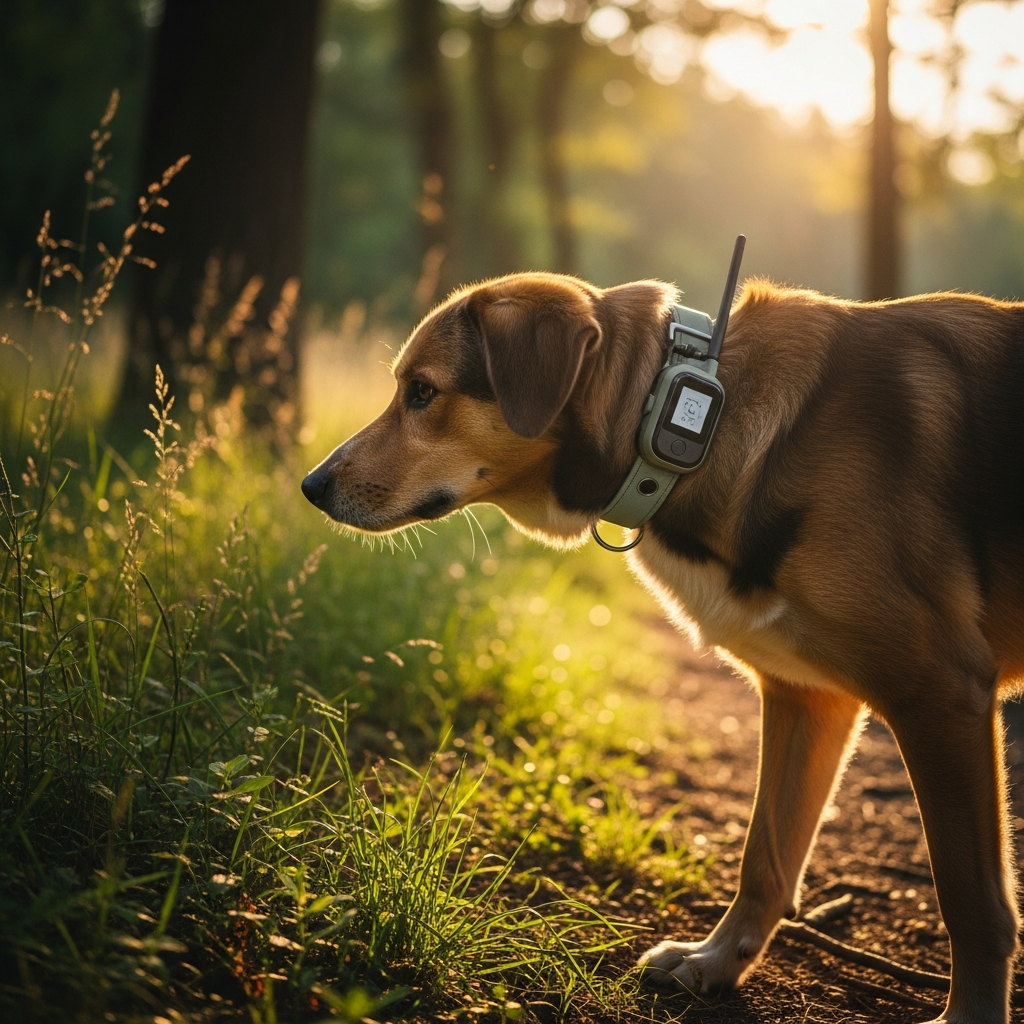
A GPS tracker on your dog’s collar is one of those products you hope you’ll never actually need. But when your dog bolts through an open gate, slips a leash, or disappears on a hike, real-time tracking is the difference between finding them in minutes and posting “lost dog” flyers for weeks.
GPS dog trackers have improved dramatically in the last few years. Battery life has doubled or tripled. Tracking accuracy is down to a few meters. And the form factor has shrunk from clunky attachments to sleek collars and small tags that your dog won’t notice.
But here’s the catch: most GPS trackers require a monthly subscription. That recurring cost adds up, and it’s the factor most buyers don’t calculate before purchasing. This guide covers the hardware, the subscriptions, and the total cost of ownership so you can make a genuinely informed decision.
How GPS Dog Trackers Work
Cellular GPS Trackers
These are the “real” GPS trackers. They use satellite GPS to determine location and cellular networks (LTE) to send that location data to your phone in real time. They work anywhere there’s cell coverage — which means almost everywhere in urban and suburban areas, but coverage can be spotty in deep wilderness.
Pros: Real-time tracking, escape alerts, activity monitoring, nationwide range. Cons: Require a monthly subscription for cellular service, battery life limited by GPS and cellular power draw.
Bluetooth Trackers (AirTag, Tile)
Bluetooth trackers don’t have GPS. They use Bluetooth signals to communicate with nearby smartphones. An AirTag, for example, leverages Apple’s Find My network — if any iPhone passes within Bluetooth range of the AirTag, the location is silently relayed to the owner.
Pros: No subscription, tiny form factor, cheap to buy, excellent battery life (1+ year). Cons: Not real-time tracking. Only works when someone with a compatible phone passes within range. In rural areas with few people, an AirTag may go hours without an update. No escape alerts, no activity tracking.
Hybrid Approaches
Some newer trackers combine GPS, cellular, Bluetooth, and even Wi-Fi to maximize coverage. The tracker uses whichever technology is available, switching between them as needed.
The 4 Best GPS Dog Trackers in 2026
1. Fi Series 3 Collar — Best Overall
Price: $100–$150 (collar) | Subscription: $8–$12/month (depending on plan length) | Battery life: Up to 3 months (standard use) | Tracking: GPS + LTE + Bluetooth + Wi-Fi
The Fi Series 3 is the GPS tracker I recommend to most dog owners. The battery life is exceptional — up to 3 months in standard tracking mode, which blows every competitor out of the water. The tracking accuracy is excellent, the escape alert system is fast, and the collar itself is actually attractive.
What I like:
- Battery life is unmatched. 3 months between charges in “base mode” (tracks via Wi-Fi at home, switches to GPS when outside)
- Escape alerts: set a safe zone (geofence), and you get an instant notification when your dog leaves it
- Real-time tracking in lost mode (updates every few seconds)
- Step counter and activity tracking (not essential but nice for monitoring exercise)
- The collar is stylish and available in multiple colors and band materials
- The Fi community “lost dog mode” — other Fi users are alerted to help find your dog
What I don’t:
- The subscription is required. No subscription means no GPS tracking — the collar becomes a regular collar.
- The collar band is proprietary. You can’t attach the Fi module to a third-party collar (though third-party Fi-compatible bands exist).
- In areas with poor LTE coverage, tracking updates slow down
- The 3-month battery life claim assumes “base mode” at home for most of the day. Heavy GPS use drains faster.
Total cost of ownership (2 years):
- Collar: $150
- 2-year subscription plan: ~$200 ($8.25/month)
- Total: ~$350
Best for: Most dog owners who want reliable GPS tracking with minimal maintenance. The battery life alone makes it the default recommendation.
2. Whistle Health + GPS — Best for Health Monitoring
Price: $100–$130 (device) | Subscription: $7–$13/month | Battery life: Up to 20 days | Tracking: GPS + LTE
Whistle combines GPS tracking with health monitoring features that go beyond step counting. It tracks scratching, licking, sleeping patterns, and eating behavior — data points that can help identify health issues early.
What I like:
- Health monitoring is genuinely useful. It detected increased scratching in one test dog two days before a visible skin irritation appeared.
- The “Ask a Vet” feature included with Premium plans gives you access to veterinary professionals via chat
- Tracking accuracy is on par with Fi
- Attaches to any existing collar (unlike Fi, which is an integrated collar system)
- Escape alerts and real-time tracking work well
What I don’t:
- Battery life is significantly shorter than Fi (20 days vs. 3 months)
- The device module is bulky compared to Fi and AirTag
- The health monitoring features require the Premium subscription ($13/month)
- The app can be slow to update location in real time
Total cost of ownership (2 years):
- Device: $130
- 2-year Premium plan: ~$310 ($13/month)
- Total: ~$440
Best for: Owners who want health tracking in addition to GPS, multi-dog households (health data across dogs), dogs with chronic health conditions where monitoring behavior changes matters.
3. Apple AirTag (with Collar Holder) — Best Budget Option
Price: $29 (AirTag) + $10–$20 (collar mount) | Subscription: None | Battery life: 1+ year | Tracking: Bluetooth + Apple Find My network
The AirTag is not a GPS tracker. But in practice, in any reasonably populated area, the Apple Find My network is so vast that AirTag tracking is surprisingly effective. Every iPhone that passes within range of the AirTag silently relays its location. In urban and suburban areas, this means updates every few minutes.
What I like:
- No subscription. Ever. Buy the AirTag, replace the battery once a year, done.
- The Find My network is enormous — over a billion Apple devices worldwide
- Precision Finding works with newer iPhones to locate the AirTag within inches when nearby
- Tiny and lightweight — your dog won’t notice it
- The battery lasts over a year (standard CR2032)
- By far the cheapest option
What I don’t:
- Not real-time GPS tracking. In rural areas with few iPhones around, location updates may be infrequent or nonexistent.
- No escape alerts. You have to manually check the Find My app.
- No activity tracking, health monitoring, or any smart features
- Requires an Apple ecosystem (iPhone, iPad, or Mac to track)
- The AirTag itself isn’t waterproof-rated for submersion, though it handles rain fine
- Apple designed AirTags for finding lost items, not tracking pets. There’s no pet-specific functionality.
Total cost of ownership (2 years):
- AirTag: $29
- Collar mount: $15
- Replacement battery: $3
- Total: ~$47
Best for: Budget-conscious owners, secondary/backup tracker, urban dog owners in areas with dense iPhone penetration, owners who want a “just in case” tracker without ongoing costs.
4. Tractive GPS Dog Tracker — Best for International Use
Price: $50–$70 (device) | Subscription: $5–$10/month | Battery life: 2–5 days | Tracking: GPS + LTE
Tractive is popular in Europe and offers one of the most affordable subscription plans. The tracking quality is good, and the virtual fence and real-time tracking features work reliably. The trade-off is battery life, which is the shortest on this list.
What I like:
- Most affordable subscription plan
- Works in 150+ countries (uses local cellular networks)
- Virtual fence with instant escape notifications
- Real-time “LIVE Tracking” mode updates every 2–3 seconds
- Activity monitoring and wellness tracking
- The device is waterproof (IPX7)
What I don’t:
- Battery life is 2–5 days. That means weekly charging, which is a significant maintenance burden.
- LIVE Tracking mode drains the battery in hours
- The device is noticeably bulkier than Fi or AirTag
- The adhesive collar mount can fail — use the clip mount instead
Total cost of ownership (2 years):
- Device: $60
- 2-year plan: ~$120 ($5/month with annual billing)
- Total: ~$180
Best for: International travelers, budget-conscious owners who want real GPS (not Bluetooth), owners who don’t mind frequent charging.
GPS Tracker Comparison Table
| Feature | Fi Series 3 | Whistle Health | AirTag | Tractive |
|---|---|---|---|---|
| Monthly cost | $8–$12 | $7–$13 | $0 | $5–$10 |
| Battery life | Up to 3 months | Up to 20 days | 1+ year | 2–5 days |
| Real-time GPS | Yes | Yes | No | Yes |
| Escape alerts | Yes | Yes | No | Yes |
| Activity tracking | Yes | Yes (advanced) | No | Yes |
| Waterproof | Yes | Yes | Splash-resistant | Yes (IPX7) |
| Works without phone nearby | Yes | Yes | No (Bluetooth) | Yes |
| Collar integration | Built-in collar | Attaches to any collar | Needs mount | Attaches to any collar |
| 2-year total cost | ~$350 | ~$440 | ~$47 | ~$180 |
What to Consider Before Buying
Coverage Area
If you live in a rural area with limited cell coverage, cellular GPS trackers will have gaps. Check the carrier coverage map for each tracker’s network before buying. AirTags are similarly limited in rural areas — if no iPhones pass by, you get no updates.
Battery Life vs. Tracking Frequency
There’s an inherent trade-off: more frequent location updates drain the battery faster. Fi’s exceptional battery life comes partly from smart power management — it uses low-power Wi-Fi and Bluetooth at home and only activates GPS when the dog leaves its safe zone.
Subscription Costs
Factor in the full cost of ownership, not just the hardware price. A $50 tracker with a $10/month subscription costs $290 over two years. A $150 tracker with an $8/month subscription costs $342. The cheaper tracker isn’t actually cheaper.
Dog Size and Comfort
Some trackers are too bulky for small dogs. The Fi collar is available in sizes down to dogs with 11.5-inch neck circumferences. AirTags are the lightest option. Tractive and Whistle are the bulkiest. If you have a toy breed, size and weight matter.
How to Use a GPS Tracker Effectively
Set Up Geofences First
Before your dog needs to be tracked, set up safe zones around your home, yard, and any regular locations. This ensures you get instant alerts if your dog escapes rather than discovering they’re missing an hour later.
Keep the Collar On
A tracker only works if the dog is wearing it. This sounds obvious, but if you remove the collar for baths, grooming, or indoor time, there’s a window where the tracker isn’t active. Develop a habit of putting it back on immediately.
Test Before You Need It
After setup, test the system. Put the tracker on your dog, walk them outside the geofence, and verify you receive the alert. Check the tracking accuracy by comparing the map position to your actual location. You don’t want to troubleshoot during an actual emergency.
Charge on a Schedule
Set a recurring reminder to charge the tracker. A dead tracker is the same as no tracker. Fi’s 3-month battery makes this easy. Tractive’s 2–5 day battery requires discipline.
If you’re taking your dog on outdoor adventures where a GPS tracker is especially valuable, check out our hiking with dogs guide for trail safety tips.
Frequently Asked Questions
Do I really need a GPS tracker for my dog?
If your dog has ever escaped your yard, if you hike or camp with your dog, if your dog is a flight risk (scared of thunder, reactive to other animals), or if you simply want peace of mind — yes. If your dog is always leashed, always supervised, and has zero escape history, it’s optional but still a reasonable precaution.
Can I use an AirTag instead of a GPS tracker?
In urban and suburban areas, an AirTag works surprisingly well as a low-cost tracking solution. In rural areas, it’s unreliable. AirTags are a great backup tracker but shouldn’t be your only tracking solution if you live in a low-population area or your dog has a history of escaping.
Will the subscription work if I cancel?
For cellular GPS trackers (Fi, Whistle, Tractive), canceling the subscription disables GPS tracking entirely. The device becomes a non-functional collar attachment. There is no way to use cellular GPS without an active subscription — the cellular data costs are real.
How accurate are GPS dog trackers?
Modern GPS trackers are accurate to within 5–15 meters under open sky. In dense urban environments with tall buildings, accuracy can decrease. Under heavy tree cover, the same. Real-time “live tracking” modes provide the most accurate, frequently updated locations.
Are GPS trackers safe for dogs?
Yes. The GPS, Bluetooth, and cellular signals emitted by these trackers are the same as those from smartphones, which have been extensively studied. The devices are designed to be worn 24/7 and are waterproof and impact-resistant. The only physical risk is the collar itself, which follows the same safety rules as any dog collar.
Which GPS tracker has the best battery life?
Fi Series 3, by a wide margin. Up to 3 months in standard mode. No other dedicated GPS tracker comes close. AirTag lasts longer (1+ year), but it’s a Bluetooth tracker, not GPS.
Prices last updated February 2026. We use affiliate links — if you purchase through our links, we may earn a commission at no extra cost to you.
Back to the Dog Gear hub for more tested recommendations.