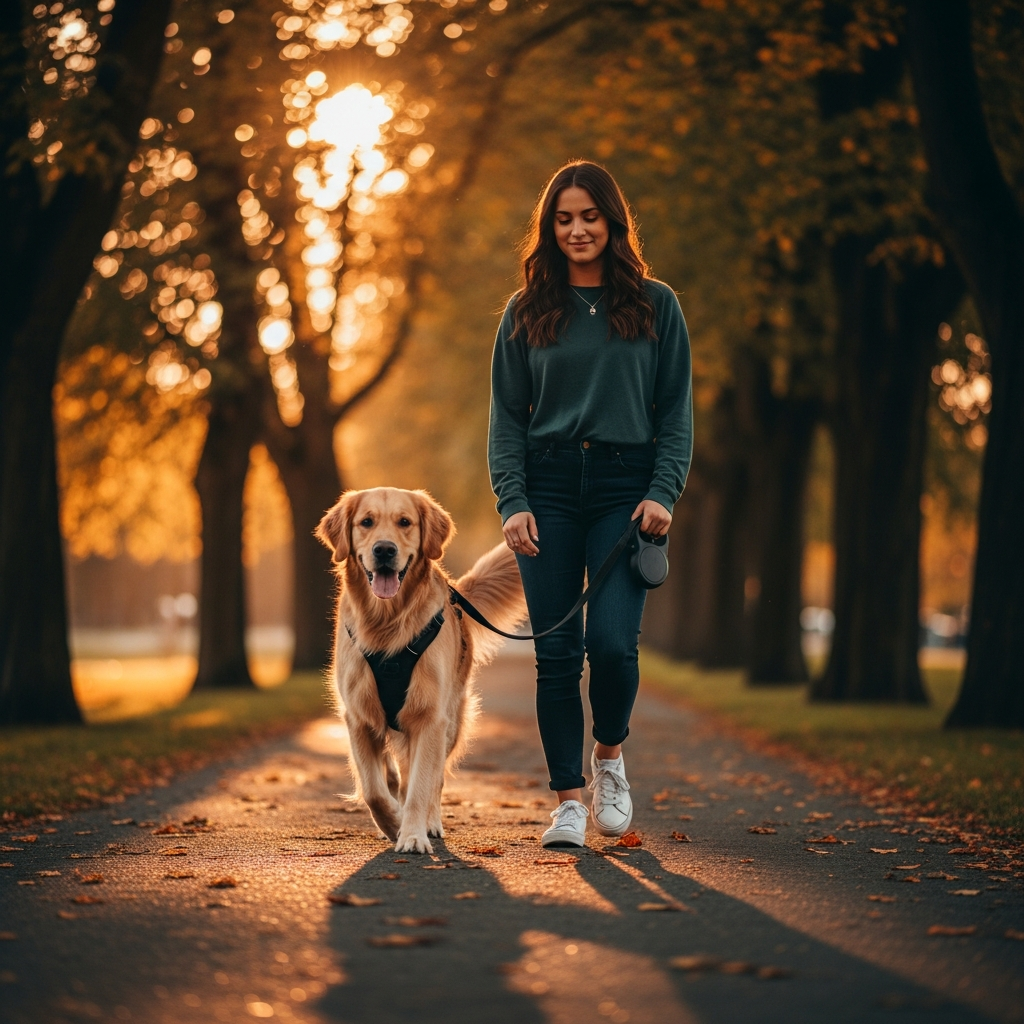
A no-pull harness isn’t a magic fix. Let me say that upfront. If your dog lunges at every squirrel and drags you down the sidewalk, a harness alone won’t solve the problem — you need training too. But the right harness makes training dramatically easier, and the wrong one can actually make pulling worse.
I’ve tested dozens of harnesses across multiple dog sizes and body types over the past several years. Some were great. Most were mediocre. A few were genuinely bad. Here are the five that actually deliver on the “no-pull” promise, plus everything you need to know about choosing and fitting one correctly.
If you’re also working on leash manners, pair this guide with our stop dog pulling on leash training walkthrough for the best results.
How No-Pull Harnesses Work
Understanding the mechanics helps you choose the right type.
Front-Clip Harnesses
The leash attaches at the chest. When your dog pulls forward, the front attachment point redirects their momentum to the side, rotating their body back toward you. This natural correction discourages pulling without any pain or discomfort.
Best for: Dogs that pull consistently, dogs in active leash training, dogs that respond to gentle correction.
Drawback: The leash can sometimes get tangled under the front legs during walks. Not ideal for dogs that twist and spin.
Back-Clip Harnesses
The leash attaches between the shoulder blades. These are the most comfortable harness type because they distribute pressure evenly across the chest without any redirecting force.
Best for: Small dogs, dogs that already walk nicely, dogs with trachea concerns, casual walking.
Drawback: For dogs that pull, a back-clip harness actually encourages pulling. The dog can lean into the harness and use their full body weight — it’s the same mechanics as a sled dog harness. If your dog pulls, a back-clip alone won’t help.
Dual-Clip Harnesses
These have attachment points at both the front and back, giving you the option to switch depending on the situation. Use the front clip for training walks and the back clip for relaxed outings once your dog’s leash manners improve.
Best for: Owners who want versatility, dogs transitioning from pulling to polite walking, people who use different leashes for different activities.
Drawback: Slightly more complex to fit correctly since both attachment points need to be in the right position.
The 5 Best No-Pull Dog Harnesses in 2026
1. Ruffwear Front Range Harness — Best Overall
Price: $40–$45 | Clip type: Dual-clip (front and back) | Sizes: XXS to L/XL
The Front Range has been my go-to recommendation for three years running, and the current version is the best yet. The padded chest and belly panels are genuinely comfortable — I’ve left this on dogs for full-day hikes without any rubbing or chafing.
What I like:
- Dual-clip design gives you front-clip correction when you need it and back-clip comfort when you don’t
- Four adjustment points mean you can dial in the fit precisely
- The aluminum V-ring leash attachment points are strong without being heavy
- Reflective trim is visible and well-placed
- The ID pocket on the back is a nice touch
What I don’t:
- Sizing runs slightly large. If your dog is between sizes, go down.
- The front clip leash ring can shift off-center during vigorous pulling. It self-corrects, but it’s noticeable.
Best for: Active owners who want one harness that works for everything — daily walks, hikes, car rides (with a seatbelt tether), and training.
2. PetSafe Easy Walk Harness — Best for Dedicated Pulling Correction
Price: $20–$28 | Clip type: Front-clip only | Sizes: Petite to Large
The Easy Walk is the no-frills pulling correction specialist. No bells and whistles. Just a front-clip harness that does one thing exceptionally well: it makes pulling uncomfortable enough that most dogs stop doing it within a few walks.
What I like:
- Martingale-style chest loop tightens slightly when the dog pulls, providing immediate feedback
- Quick-snap buckles make it easy to get on and off (important for wiggly dogs)
- Extremely lightweight — dogs barely notice it
- The price point is outstanding for the quality
What I don’t:
- No back-clip option. Once your dog stops pulling, you’ll probably want a more comfortable harness for relaxed walks.
- The nylon straps are thinner than premium options and can rub on some dogs with short coats if not fitted perfectly.
- The belly strap can loosen over time and needs periodic re-adjustment.
Best for: Dogs currently in leash training, owners on a budget, dogs that need focused pulling correction without a ton of extra features.
3. Julius K9 IDC Powerharness — Best for Large and Working Dogs
Price: $40–$60 | Clip type: Back-clip with chest strap | Sizes: Baby 2 to Size 4 (covers 3 lb to 198 lb dogs)
The Julius K9 is the tank of the harness world. Originally designed for police and search-and-rescue dogs, it’s built to survive anything. The rigid chest plate distributes pressure across a wide area, and the construction quality is genuinely in a different league from most consumer harnesses.
What I like:
- Build quality is exceptional — military-grade buckles, reinforced stitching, heavy-duty webbing
- The wide chest plate prevents any pressure points
- Interchangeable Velcro patches (for labels, ID, or just personality)
- The top handle is the best in the business — rigid, strong, perfectly placed for lifting or controlling a large dog
What I don’t:
- It’s a back-clip harness, which means it doesn’t actively discourage pulling. For pullers, you’ll need to pair it with training.
- Heavy compared to other options. Not ideal for small dogs or toy breeds.
- The sizing uses Julius K9’s proprietary system, which doesn’t map intuitively to standard sizes. Measure carefully.
Best for: Large breeds (50+ pounds), working dogs, dogs in outdoor/hiking situations where durability is non-negotiable, owners who need a solid handle for control.
4. Blue-9 Balance Harness — Best for Reactive Dogs
Price: $35–$40 | Clip type: Dual-clip | Sizes: XS to XL
The Balance Harness was designed by a professional dog trainer, and it shows. The six points of adjustment let you achieve a custom fit that stays in place even on dogs that lunge, spin, and twist. This is the harness I recommend for reactive dogs because it provides excellent control without restricting natural movement.
What I like:
- Six adjustment points. No other harness at this price comes close to this level of fit customization.
- Sits behind the shoulder blades rather than across them, which means it doesn’t interfere with natural gait
- The front clip position is slightly lower than most harnesses, which provides better redirecting leverage
- Lightweight despite having so many adjustment straps
What I don’t:
- The multiple adjustment points make initial setup more time-consuming. Budget 15 minutes to get it right the first time.
- Less padding than the Ruffwear. For long hikes, I’d choose the Front Range instead.
- The webbing is narrower than I’d like for dogs over 80 pounds.
Best for: Reactive dogs, dogs with unusual body proportions (deep chest, narrow waist), owners who want the most precise fit possible.
5. Kurgo Tru-Fit Smart Harness — Best Car/Walk Combo
Price: $25–$35 | Clip type: Dual-clip | Sizes: XS to XL
If you want one harness that doubles as a car restraint, the Kurgo Tru-Fit is the pick. It includes a seatbelt tether, the back-clip D-ring is reinforced for car use, and it’s been crash-tested (though it didn’t receive CPS certification — see our car harness guide for the distinction).
What I like:
- Comes with a seatbelt tether included
- The padded chest plate is comfortable for daily walks
- Five adjustment points for a solid fit
- The steel nesting buckles are noticeably stronger than plastic alternatives
- Reasonable price for a dual-purpose product
What I don’t:
- It’s not CPS crash-test certified, so while it’s better than an unrestrained dog, it’s not a replacement for a dedicated crash-tested car harness for highway driving.
- The chest padding adds bulk that some small dogs find cumbersome.
- The front clip doesn’t redirect pulling as effectively as the PetSafe Easy Walk.
Best for: Owners who want a single harness for walks and car rides, suburban dog owners who drive to parks and trails, dogs that ride in the car regularly.
How to Fit a No-Pull Harness Correctly
A poorly fitted harness is worse than no harness at all. It can rub, chafe, restrict movement, or simply fail to control pulling. Here’s how to get it right:
Step 1: Measure Your Dog
You need two measurements:
- Chest girth: Measure around the widest part of the ribcage, just behind the front legs. Pull the tape snug but not tight — you should be able to slide one finger under the tape.
- Neck circumference: Measure around the base of the neck where a collar would sit.
Write these numbers down and compare them to the manufacturer’s size chart. If your dog falls between sizes, go with the smaller size for front-clip harnesses (you want a snug fit for redirection to work) and the larger size for back-clip harnesses (comfort matters more when there’s no redirecting force).
Step 2: Adjust All Points
Put the harness on and adjust every strap. The chest strap should sit across the breastbone, not on the throat. The belly strap should be snug behind the front legs, not riding up into the armpits. The back panel should sit flat, not bunched or twisted.
Step 3: Check the Fit
Run two fingers under every strap. You should be able to do this comfortably but without excess slack. Then have your dog walk, sit, and lie down. Watch for:
- Straps shifting or rotating
- The front clip pulling off-center
- Rubbing or chafing marks (check after the first walk)
- Restricted front leg movement (the harness shouldn’t limit their natural gait)
Step 4: Recheck After a Week
Harness straps settle and stretch slightly during the first week. Recheck the fit and tighten as needed.
No-Pull Harness vs. Head Halter vs. Prong Collar
I get asked about these alternatives often, so let me be direct.
Head halters (like the Gentle Leader) work by controlling the dog’s head — where the head goes, the body follows. They’re effective for pulling but many dogs find them aversive and need a careful desensitization period. Some dogs never accept them. I recommend trying a front-clip harness first and only moving to a head halter if the harness isn’t providing enough control.
Prong collars work through pain compliance. They tighten metal prongs against the dog’s neck when they pull. While some trainers use them, I don’t recommend them for the average dog owner because the margin for error is high and there are effective force-free alternatives available. A front-clip harness paired with proper leash training achieves the same result without the risk.
Pairing Your Harness With the Right Leash
A no-pull harness works best with the right leash. For most situations, a standard six-foot leash with a sturdy clasp is all you need. Avoid retractable leashes with front-clip harnesses — the constant tension defeats the purpose of the redirecting design.
For more on choosing the right leash for your situation, check out our best dog leash guide.
And don’t forget a properly fitted collar for ID tags — a harness alone isn’t enough.
Frequently Asked Questions
Can a no-pull harness replace training?
No. A harness is a management tool that makes walks easier while you train. It reduces pulling in the moment but doesn’t teach your dog to walk politely on its own. For lasting results, pair the harness with consistent leash training.
Will a no-pull harness hurt my dog?
A properly fitted no-pull harness distributes pressure across the chest and torso, which is much safer than a collar that puts pressure on the neck. No-pull harnesses don’t use pain or discomfort to discourage pulling — they use redirection. They’re widely considered the safest option for dogs that pull.
How long does it take for a no-pull harness to work?
Many owners notice a difference on the first walk with a front-clip harness. The redirection effect is immediate. However, for lasting behavior change, plan on 2–4 weeks of consistent use combined with training.
My dog has a deep chest (Greyhound, Whippet, Boxer). Which harness should I buy?
Dogs with deep, narrow chests need harnesses with multiple adjustment points. The Blue-9 Balance Harness is my top pick for these breeds because its six adjustment points let you customize the fit for unusual proportions. The Ruffwear Front Range also works well in its narrower size ranges.
Can my dog wear a harness all day?
For supervised time, yes — as long as the harness fits properly and isn’t causing rubbing. For unsupervised time, remove the harness. Straps can catch on objects and create a strangulation risk. A breakaway collar is safer for all-day wear.
How often should I replace a no-pull harness?
Inspect monthly. Replace when you see fraying webbing, cracked buckles, bent D-rings, or stitching that’s coming loose. Most quality harnesses last 2–3 years with daily use. Budget harnesses may need replacement annually.
Prices last updated February 2026. We use affiliate links — if you purchase through our links, we may earn a commission at no extra cost to you.
Back to the Dog Gear hub for more tested recommendations.