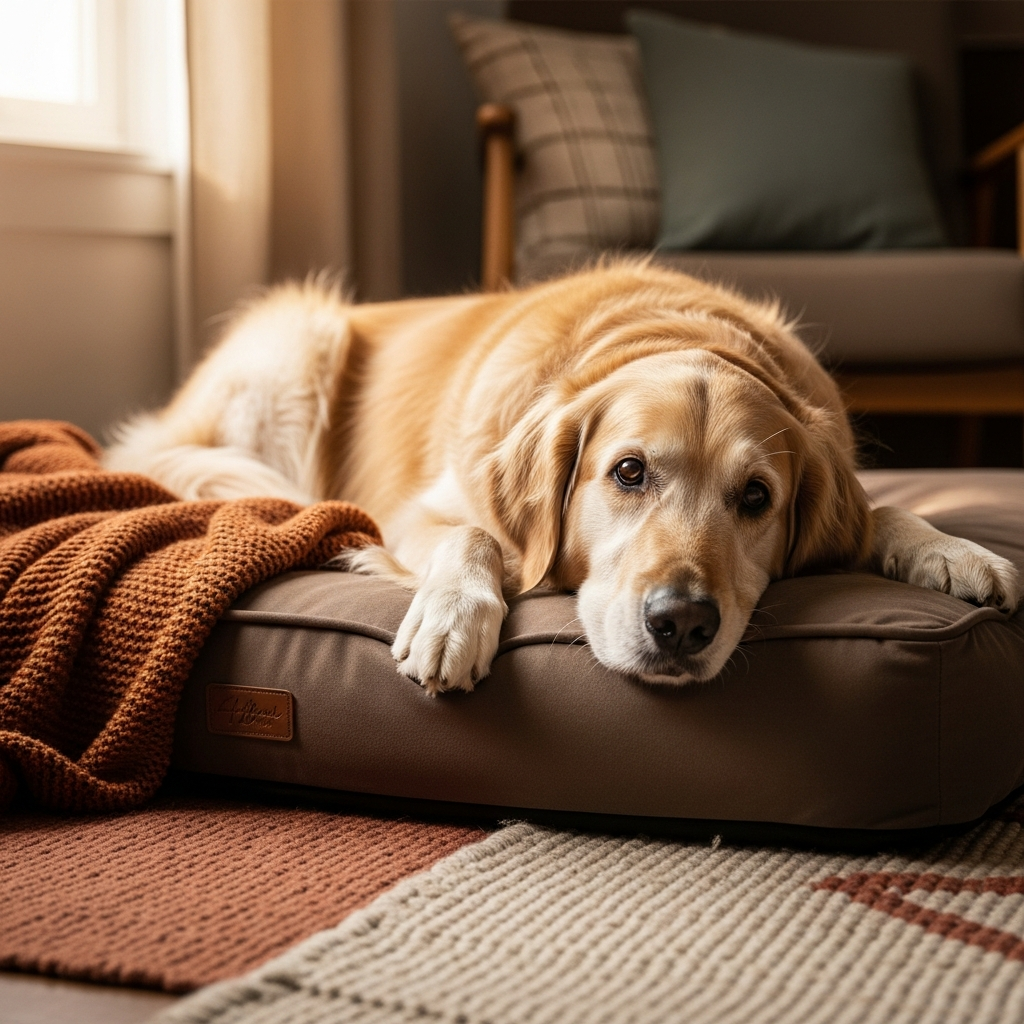
The word “orthopedic” gets slapped on a lot of dog beds that don’t deserve it. A two-inch slab of cheap foam in a plush cover isn’t orthopedic — it’s marketing. A genuinely orthopedic dog bed uses specific foam types, densities, and layer designs that support joints, distribute body weight, and maintain that support over months and years of daily use.
If you have a large breed or a senior dog, this distinction matters. Hip dysplasia, arthritis, elbow calluses, and general joint stiffness are reality for millions of dogs, and the right bed can meaningfully reduce discomfort and improve mobility. The wrong bed — or no bed at all — makes these conditions worse.
This guide explains what makes a dog bed actually orthopedic, how to evaluate foam quality, and which beds are worth the investment.
For a broader look at all bed types (including budget options), see our best dog bed guide.
What Makes a Dog Bed “Orthopedic”
A truly orthopedic bed does three things:
1. Pressure Point Relief
When your dog lies down, their body weight concentrates on contact points — hips, shoulders, elbows, and spine. A quality orthopedic bed redistributes that weight across a larger surface area, reducing pressure on any single point. This is what prevents calluses, joint pain, and the morning stiffness you see in older dogs struggling to stand up.
2. Spinal Alignment
Just like a good mattress for humans, an orthopedic dog bed should allow the spine to maintain a neutral position. If the foam is too soft, the dog sinks and their spine curves. If it’s too firm, pressure points aren’t relieved. The right density supports without sinking.
3. Long-Term Shape Retention
This is where most “orthopedic” beds fail. They feel great on day one and are flat by month four. True orthopedic foam maintains its supportive properties over time. If you can see a permanent body impression in the foam, it’s no longer providing orthopedic support.
Understanding Foam Types
Memory Foam (Viscoelastic)
Memory foam is the gold standard for orthopedic dog beds. It responds to body heat and weight, conforming to your dog’s shape and distributing pressure evenly. When the dog stands up, the foam slowly returns to its original shape.
What to look for:
- Density of at least 4 lb/ft3 (higher is better for large dogs)
- Thickness of at least 4 inches for dogs over 50 pounds
- CertiPUR-US certification (confirms the foam is free of harmful chemicals and meets durability standards)
What to avoid:
- “Memory foam” beds that are actually a thin memory foam layer (1") over cheap poly foam. This is the most common bait-and-switch in dog bed marketing.
- Shredded memory foam fill. Shredded foam doesn’t provide consistent support — it shifts and creates gaps.
Egg-Crate Foam
Egg-crate foam has the familiar bumpy surface pattern. The peaks and valleys create airflow channels and provide some pressure distribution. It’s better than flat poly foam but significantly less supportive than solid memory foam.
Verdict: Acceptable for young, healthy dogs. Not sufficient for senior dogs or dogs with joint conditions.
High-Density Poly Foam
Standard furniture foam. Provides cushioning but doesn’t conform to body shape or distribute pressure. Most cheap dog beds use poly foam and call it “orthopedic.”
Verdict: Not orthopedic. Fine for young, lightweight dogs without joint concerns.
Gel-Infused Memory Foam
Memory foam with gel beads mixed in. The gel is designed to draw heat away from the dog’s body, keeping the sleeping surface cooler. Some dogs, especially those with thick coats, sleep hot, and gel-infused foam can help.
Verdict: Same orthopedic properties as standard memory foam with added temperature regulation. Worth considering for dogs that pant or seem restless on regular memory foam.
The 5 Best Orthopedic Dog Beds
1. Big Barker Sleek Orthopedic Bed — Best Overall
Price: $200–$300 | Sizes: L, XL, XXL | Foam: 7" therapeutic foam, American-made
Big Barker is the only dog bed company that offers a 10-year warranty guaranteeing the foam won’t lose more than 10% of its original shape. They can make that claim because the foam density and quality are genuinely in a different league from everything else on the market.
What I like:
- The 7-inch foam stack is made of calibrated-density American foam designed specifically for heavy dogs
- 10-year, 90% shape retention warranty — unprecedented in the industry
- Clinically tested: a University of Pennsylvania study found Big Barker beds improved joint function and gait quality in large-breed dogs
- The microfiber cover is removable and machine washable
- Available with or without a headrest bolster
What I don’t:
- The most expensive dog bed on this list, by a significant margin
- Only available in large sizes (starts at 48" x 30"). Not designed for small or medium dogs.
- Heavy — the XXL weighs over 30 pounds
- Direct-to-consumer only (not available in pet stores)
Best for: Large and giant breeds (70+ pounds), senior dogs with arthritis or hip dysplasia, any owner willing to invest in the best orthopedic support available.
2. PetFusion Ultimate Dog Bed — Best Value Orthopedic
Price: $80–$130 | Sizes: S to XXL | Foam: 4" memory foam base + bolster
The PetFusion Ultimate is the bed I recommend most often because it delivers legitimate orthopedic support at a price that doesn’t require a second mortgage. The 4-inch memory foam base is solid (not shredded), the bolsters are supportive enough to rest a head on, and the construction quality is excellent for the price.
What I like:
- Solid 4-inch memory foam base provides genuine support
- The bolster edges are filled with recycled polyfill and maintain their shape well
- The cover is waterproof-lined and machine washable
- CertiPUR-US certified foam
- Wide size range from small to XXL
What I don’t:
- The foam will eventually compress — expect 2–3 years of good support before it starts losing shape
- The waterproof liner can crinkle, which bothers some dogs
- The bolsters make the usable sleeping area smaller than the overall bed dimensions
Best for: The best balance of orthopedic quality and price. Good for medium to large dogs, dogs with moderate joint concerns, and owners who want quality without paying Big Barker prices.
3. Casper Dog Bed — Best for All Ages
Price: $100–$140 | Sizes: S, M, L, XL | Foam: Multi-layer pressure-relieving foam
Casper applies their human mattress expertise to the dog bed space, and the result is a bed that works well across all life stages. The multi-layer foam provides enough support for senior dogs while being comfortable enough that young dogs actually choose it over the couch.
What I like:
- Multi-layer foam system provides both support and comfort
- The durable microfiber cover resists dog nails and holds up to washing
- The bolster design is lower-profile than PetFusion, which some dogs prefer
- Clean, minimal design that looks good in a living room
What I don’t:
- More expensive than the PetFusion for similar foam quality
- The foam layers are thinner than Big Barker or PetFusion — less ideal for very heavy dogs
- The bolster is softer and less structured than the PetFusion
Best for: Multi-dog households with dogs of different ages, owners who want a single bed that works for a dog from adulthood through senior years.
4. BarksBar Snuggly Sleeper — Best Budget Orthopedic
Price: $40–$70 | Sizes: M, L, XL | Foam: Orthopedic foam base (solid)
The BarksBar delivers more orthopedic support than you’d expect at this price. The foam base is solid (not shredded), the cotton-padded rim provides a comfortable headrest, and the quilted cover is soft and washable.
What I like:
- Genuine solid foam base at a budget price
- The padded rim is comfortable for leaning and head-resting
- Non-slip rubber backing on the bottom
- The quilted cover is removable and machine washable
- Good size range including XL (44" x 34")
What I don’t:
- The foam density is lower than premium options — it will compress faster under heavy dogs
- Expect 12–18 months of good support, not the 3–10 years of premium beds
- The stitching on the cover can pull after repeated washing
- Not truly suitable for dogs with serious joint conditions
Best for: Budget-conscious owners who want something better than a flat poly bed but can’t justify $100+. Good for medium-sized dogs and dogs without significant joint problems.
5. FurHaven Faux Fur Memory Foam Bed — Best for Anxious Dogs
Price: $35–$60 | Sizes: S to Jumbo Plus | Foam: Memory foam base with plush faux fur
Anxious dogs often benefit from beds with a soft, den-like feel. The FurHaven combines a legitimate memory foam base with a deep-pile faux fur surface that many dogs find calming. The nest-like shape and soft texture create a cozy, enclosed feeling.
What I like:
- The faux fur surface is genuinely calming for many anxious dogs
- Memory foam base provides real support (not just cushioning)
- The round nest shape with raised edges appeals to dogs that curl up
- Enormous size range from Small to Jumbo Plus
- Very affordable for what you get
What I don’t:
- The faux fur collects hair like a magnet and is harder to keep clean
- The foam is thinner (2–3 inches depending on size) than dedicated orthopedic beds
- Not ideal for dogs that sprawl — the round shape works best for curlers
- The foam will compress faster than premium options
Best for: Anxious dogs that need a comforting sleep surface, dogs that curl up to sleep, dogs dealing with separation anxiety or stress.
When Your Dog Needs an Orthopedic Bed
Not every dog needs a premium orthopedic bed. Here’s who benefits most:
Definitely Yes
- Senior dogs (7+ years): Joint degeneration is a natural part of aging. Supportive sleep surfaces reduce morning stiffness and long-term joint damage. See our senior dog care guide for a comprehensive approach.
- Large and giant breeds: Dogs over 50 pounds put significantly more pressure on their joints. Breeds prone to hip dysplasia (German Shepherds, Goldens, Labradors, Rottweilers) benefit especially.
- Dogs with diagnosed joint conditions: Arthritis, hip dysplasia, elbow dysplasia, luxating patella, IVDD — any condition that affects mobility benefits from proper sleeping support.
- Post-surgery recovery: Dogs recovering from orthopedic surgery need a supportive surface that doesn’t require effort to get in and out of.
Probably Yes
- Active/working dogs: Dogs that run, hike, or work hard put more stress on joints and benefit from quality recovery sleep.
- Overweight dogs: Extra body weight increases joint stress. An orthopedic bed helps, though weight management should also be a priority.
Optional
- Young, healthy, lightweight dogs: A standard quality bed is fine. Orthopedic support won’t hurt, but the premium cost isn’t necessary.
Red Flags in Orthopedic Dog Bed Marketing
Watch out for these common deceptions:
- “Orthopedic” beds under $30 in large sizes. Quality foam costs money. If the price seems too good, the foam is almost certainly low-density poly, not true orthopedic foam.
- No foam specifications listed. If the product listing doesn’t mention foam density, foam type, or CertiPUR-US certification, they’re hiding something.
- “Memory foam” beds that use shredded foam. Shredded memory foam shifts, creates lumps, and doesn’t provide consistent support. Solid slabs only.
- Beds that feel great in the store but flatten in a week. This is low-density foam. Ask about the density (measured in lb/ft3). Below 3 lb/ft3 is not truly orthopedic.
- No removable cover. If you can’t wash the cover, the bed’s lifespan drops dramatically.
Frequently Asked Questions
How thick should an orthopedic dog bed be?
For dogs under 50 pounds, 3–4 inches of quality foam is sufficient. For dogs over 50 pounds, aim for 5–7 inches. The key is density, not just thickness — 4 inches of high-density foam outperforms 6 inches of cheap foam.
Can an orthopedic bed help with my dog’s arthritis?
A quality orthopedic bed reduces the joint pressure and strain that worsen arthritis symptoms. It won’t cure arthritis, but it can significantly reduce morning stiffness, improve sleep quality, and complement other treatments your vet recommends. Consult your veterinarian for a comprehensive arthritis management plan.
How long do orthopedic dog beds last?
Budget models: 6–18 months. Mid-range (PetFusion, Casper): 2–4 years. Premium (Big Barker): 10+ years with warranty. The difference comes down to foam density and quality.
Is it worth spending $200+ on a dog bed?
For large and giant breeds with joint concerns, yes. The math works out: a $200 bed that lasts 10 years costs $20/year. Three $50 beds that each last 18 months costs $100 over the same period, with worse support. The premium bed is actually cheaper per year and provides better care.
Should I put an orthopedic bed in my dog’s crate?
If your dog sleeps in a crate and has joint concerns, yes. However, most crate-specific beds are thinner than standalone beds due to space constraints. A 3-inch memory foam crate pad is a good compromise between support and fit. See our best dog crate guide for crate setup recommendations.
My dog sleeps on the couch anyway. Do they still need a bed?
Couches aren’t designed for dogs. The cushion height means your dog has to jump up and down, which stresses joints. The cushion shape doesn’t provide targeted joint support. An orthopedic bed on the floor is easier to access and provides better support. That said, if your senior dog insists on the couch, consider adding a ramp to reduce the jumping.
Prices last updated February 2026. We use affiliate links — if you purchase through our links, we may earn a commission at no extra cost to you.
Back to the Dog Gear hub for more tested recommendations.