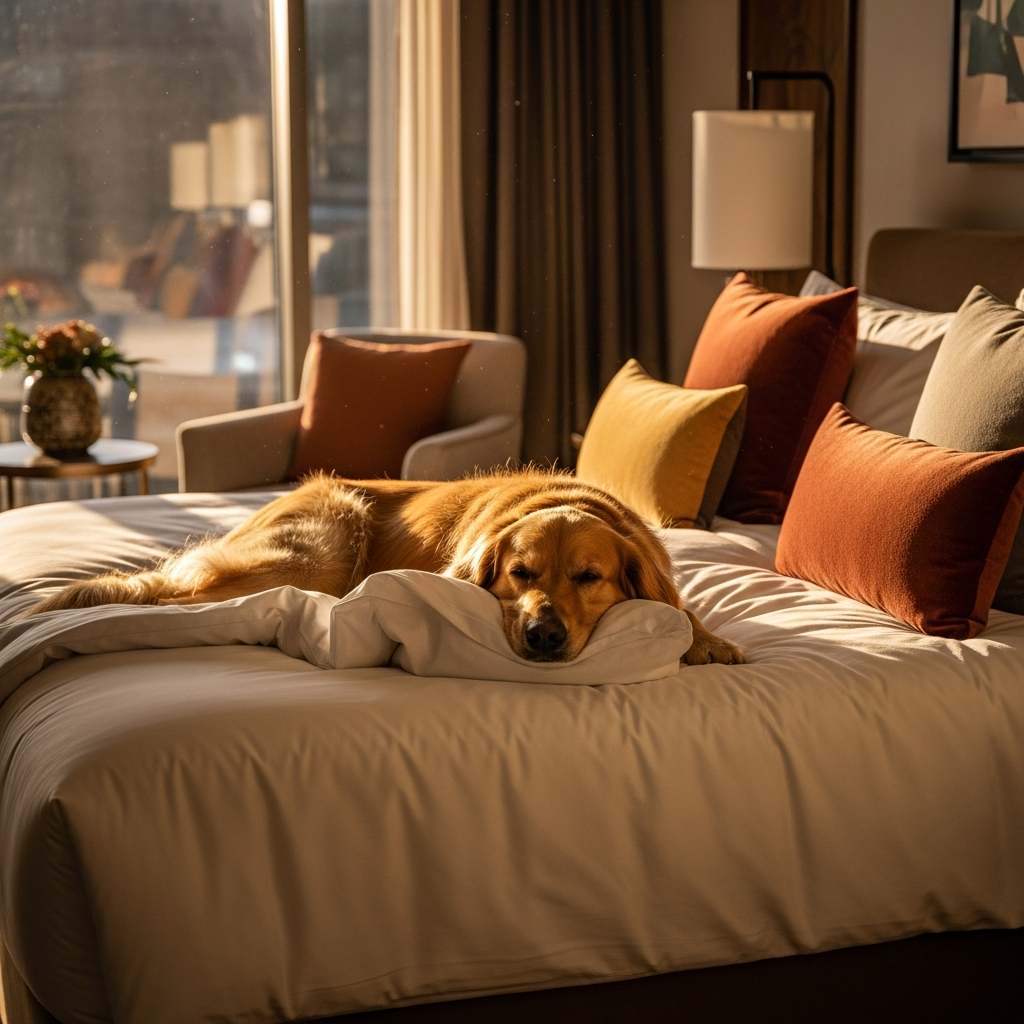
I once showed up at a hotel that advertised itself as “pet-friendly” only to discover that meant a $125 non-refundable fee, a 25-pound weight limit (my dog weighs 55), and the single room they’d allow pets in was next to the elevator on the ground floor. That’s not pet-friendly. That’s pet-tolerant at a premium.
The gap between what hotels market as “pet-friendly” and what that actually means in practice is enormous. Some places genuinely welcome your dog - treats at check-in, no weight limits, pet beds available, zero judgment. Others technically allow dogs but make the whole experience feel like a punishment for having the audacity to travel with your pet.
This guide cuts through the marketing. We’ll cover what pet-friendly actually means at the major hotel chains, the real costs (not just the ones on the booking page), how to find places that genuinely welcome dogs, and how to be a guest that keeps hotels dog-friendly for everyone who comes after you. If you’re planning a bigger trip, check out our complete road trip with your dog guide for everything from car safety to route planning.
What “Pet-Friendly” Actually Means
There’s no standard definition. “Pet-friendly” is a marketing term, not a regulated one. Each hotel, chain, and property defines it differently. Here’s what you’re actually dealing with:
The Spectrum of Pet Policies
Genuinely dog-friendly: No pet fees (or minimal ones), no weight limits, no breed restrictions, dog-specific amenities (bowls, beds, treats), staff that’s happy to see your dog. These places exist. They’re just harder to find.
Conditionally pet-friendly: Dogs are allowed, but with conditions - weight limits (usually 50-75 pounds), breed restrictions, a per-night or per-stay fee, limited rooms available, damage deposits, signed pet agreements. This is the majority of “pet-friendly” hotels.
Technically allows pets: Dogs are technically permitted, but the experience makes it clear they’d rather you didn’t bring one. High fees, restrictive rules, designated “pet rooms” that are clearly the worst rooms in the hotel, and staff that treats your well-behaved dog like a liability. Sometimes staying at these places is worse than finding one that just says no.
The Fine Print You Need to Read
Before booking any “pet-friendly” hotel, find the actual pet policy. Not the marketing blurb - the policy. Look for:
- Fee structure: Per night? Per stay? Refundable or non-refundable? Does it increase with multiple pets?
- Weight limits: Many chains cap at 50 or 75 pounds. Some have no limit.
- Breed restrictions: Some hotels ban specific breeds (Pit Bulls, Rottweilers, German Shepherds - the usual suspects). This is often unwritten and applied inconsistently.
- Number of pets: Most allow one or two. Rarely more.
- Room restrictions: Are dogs only allowed in certain room types? First-floor only? Non-smoking rooms only?
- Damage deposit: Some hotels hold a deposit (usually $100-$250) that’s returned after room inspection.
- Unattended dog policy: Can you leave your dog in the room while you go to dinner? Most hotels technically say no, but enforcement varies. If your dog barks when alone, don’t leave them.
- Common area rules: Where is your dog allowed? Lobby only? Pool area? Restaurant?
Major Hotel Chains: The Honest Breakdown
I’ve stayed at most of these with my dog. Here’s what you’re actually getting.
The Genuinely Dog-Friendly Chains
Kimpton Hotels (IHG) Kimpton is the gold standard. No pet fee. No weight limit. No breed restrictions. No limit on number of pets. They’ll provide a pet bed and bowls at check-in. Some properties have hosted events like “wine and wag” social hours in the lobby. Every Kimpton property is pet-friendly - it’s a brand-wide policy, not a property-by-property decision.
The catch: Kimpton is a boutique brand. Properties are concentrated in major cities, and room rates are higher than budget chains. But if you’re in a city with a Kimpton, it’s the move.
La Quinta (Wyndham) No pet fee at most properties. Two pets allowed. No weight limit at most locations (some properties set their own restrictions, so verify). La Quinta is one of the most affordable genuinely dog-friendly options, especially for road trips where you need a reliable, consistent policy across the country.
Motel 6 / Studio 6 No pet fee. Two pets per room. No weight limit. It’s a budget chain, so expectations should be calibrated accordingly, but the pet policy is straightforward and consistent.
The Conditionally Pet-Friendly Chains
Marriott (Bonvoy brands) Pet policies vary by property and brand within Marriott. Some Residence Inn and TownePlace Suites locations are excellent for dogs - suite layouts with kitchens give you more space. Most charge a non-refundable fee of $75-$150 per stay. Weight limits typically around 50-75 pounds. Always verify the specific property’s policy.
Hilton brands Similar to Marriott - property-by-property policies. Hilton’s Homewood Suites and Home2 Suites tend to be more dog-friendly due to their extended-stay format. Most properties charge $50-$100 per stay. Weight and breed restrictions vary. Some Hilton properties that claim to be pet-friendly will surprise you with stricter rules at check-in, so call ahead and confirm.
Best Western Allows pets at many properties, but policies and fees vary widely. Some charge $20 per night, others $100 per stay. Weight limits are common (usually 80 pounds, which is reasonable). Always call the specific property - don’t rely on the website alone.
Hyatt Pet policies vary by brand within Hyatt. Hyatt Place and Hyatt House tend to be the most accommodating. Fees are typically $75-$100 per stay. Most limit dogs to 50 pounds, though some properties are more flexible. The pet experience at Hyatt is generally positive when the property does allow dogs.
Vacation Rentals: Often the Best Option
For longer stays, a dog-friendly vacation rental (Airbnb, Vrbo) is often better than a hotel. Advantages:
- More space (your dog isn’t confined to a hotel room)
- Fenced yards at many properties
- Kitchens for preparing your dog’s food
- No lobby encounters with other guests
- Often more affordable per night for longer stays
- More natural “home” environment that keeps your dog calmer
The downside: policies vary wildly by owner, pet fees can be high ($50-$200+), and some listings claim to be pet-friendly but have restrictive rules buried in the fine print. Always message the host before booking to confirm the specific pet policy and any limitations.
How to Find Genuinely Dog-Friendly Hotels
Use Dog-Specific Search Tools
BringFido is the best resource. It’s a dedicated pet travel platform with reviews from actual dog owners, verified pet policies, and the ability to filter by weight limit, fee structure, and amenities. If you travel with your dog regularly, bookmark it.
Google Maps with “pet-friendly hotels” near your destination works but returns mixed results. Cross-reference with the hotel’s actual pet policy page.
Booking.com and Hotels.com both have pet-friendly filters, but the accuracy is inconsistent. Some properties listed as “pet-friendly” have severe restrictions. Always verify directly.
Call Before You Book
This is the single most important piece of advice. Don’t rely on the website. Call the specific property and ask:
- “What is your pet fee, and is it per night or per stay?”
- “Do you have weight or breed restrictions?”
- “Can I leave my dog in the room unattended?”
- “Which rooms are available for pets?”
- “Is there a grassy area near the hotel for bathroom breaks?”
The person answering the phone gives you the real policy, not the marketing version. I’ve caught significant discrepancies between website policies and front desk answers more times than I can count.
Read Dog Owner Reviews
Generic hotel reviews won’t tell you what you need to know. Look for reviews from dog owners specifically. BringFido reviews are ideal. On TripAdvisor and Google Reviews, search within reviews for terms like “dog,” “pet,” or “dog-friendly” to find relevant experiences.
What to look for in reviews:
- Were there grassy areas near the hotel for bathroom breaks?
- Did staff seem genuinely welcoming or reluctant?
- Was the pet fee as advertised, or were there surprise charges?
- Were “pet rooms” in poor condition compared to standard rooms?
- Were there noise issues (thin walls, barking complaints)?
Hidden Costs of Traveling With Your Dog
The pet fee is just the beginning. Here’s the full cost picture:
Non-refundable pet fee: $25-$150+ per stay or per night. This is the most common charge and it varies enormously.
Damage deposit: $100-$250, usually refundable if there’s no damage. Some hotels hold this on your credit card as a pre-authorization.
Extra cleaning fee: Some vacation rentals charge this on top of the pet fee. It can add $50-$150 to your stay.
Incidental charges: If your dog damages something - scratches a door, stains the carpet, chews a pillow - expect a charge. Having renter’s insurance or pet damage coverage can help here.
The “you owe us for the whole mattress” scenario: Some hotels have aggressive damage policies. If your dog has an accident on the bed, some properties will charge you for a new mattress. Bring a waterproof blanket to put over hotel bedding.
Ground-floor premium: At some properties, pet rooms are only on the ground floor, and ground-floor rooms may cost more (or be the least desirable rooms). If given a choice, ground floor is actually better for dogs - easier access outside, fewer stairs, less hallway walking.
For budgeting purposes, add $50-$100 per night to your hotel budget when traveling with a dog. Some stays will cost less, some will cost more, but that’s a realistic average for the total pet-related expenses.
How to Be a Good Guest (So Hotels Stay Dog-Friendly)
Every bad experience a hotel has with a dog makes it harder for the rest of us. Here’s how to be the guest that makes hotels want to keep welcoming dogs.
Before Check-In
- Exercise your dog. A long walk or play session before you enter the hotel makes everything easier. A tired dog is a quiet dog. Even a quick enrichment activity can help burn off travel energy.
- Bathroom break. Give your dog a chance to go before you walk through the lobby. Nobody wants an accident on the hotel carpet.
- Wipe paws. Especially if you’ve been on a trail. Muddy paw prints through the lobby aren’t a great look.
In the Room
- Bring your own blanket or sheet to put on the bed if your dog sleeps with you. This protects hotel bedding and makes cleanup easier.
- Set up their space with familiar items - their bed, a toy, a blanket. This helps them settle and feel at home.
- Don’t leave your dog unattended unless you’re confident they won’t bark, destroy things, or have accidents. If your dog struggles with being alone, see our guide on dog separation anxiety for training techniques. If you need to leave briefly, a stuffed Kong or interactive toy can keep them occupied, but keep it short.
- Clean up immediately if your dog has an accident. Bring enzyme-based cleaner specifically for this purpose. Blotting up a mess and spraying cleaner is dramatically better than letting it set.
- Keep your dog off furniture if that’s not your normal practice at home. Hotels can tell when a dog has been on the upholstered chair, the couch, or the desk chair.
- Manage barking. If your dog barks at hallway noises, use white noise (a fan, the TV at low volume, or a white noise app) to mask sounds. If your dog is a serious barker in new environments, consider whether a hotel stay is the right choice for them.
In Common Areas
- Leash always on. Even in the lobby, even if your dog is perfectly behaved. Hotel guests who are uncomfortable around dogs deserve that consideration.
- Avoid the elevator during peak times if your dog makes other guests nervous. Take the stairs or wait for an empty elevator.
- Don’t bring your dog to the pool area, gym, or restaurant unless the hotel specifically invites it.
- Pick up after your dog immediately in outdoor areas. Carry bags everywhere. Even if you’re just stepping outside for a quick bathroom break.
At Checkout
- Do a room sweep. Check for hair, stains, damage, or anything your dog left behind.
- Report any issues honestly. If your dog scratched a door or stained the carpet, tell the front desk. Being honest and proactive is better than having housekeeping file a surprise damage claim.
- Tip housekeeping. An extra $5-$10 goes a long way when the room needs additional cleaning after a dog stay.
Packing List for Hotel Stays With Your Dog
- Food and water bowls (collapsible or travel-sized)
- Enough food for the stay plus one extra day
- Treats and a long-lasting chew for quiet time
- Leash and harness (or car harness if driving)
- Poop bags
- Their bed, blanket, or a familiar item
- A sheet or blanket for hotel furniture/bedding protection
- Towels for paw wiping and general cleanup
- Enzyme-based cleaner for accidents
- Water bottle
- Feeding mat to protect hotel carpet during meals
- A white noise machine or plan (phone app works)
- Any medications
Frequently Asked Questions
Which hotel chain is the most dog-friendly?
Kimpton Hotels is the most consistently dog-friendly chain in the United States. No pet fees, no weight limits, no breed restrictions, and a brand-wide policy that genuinely welcomes dogs at every property. For budget-friendly options, La Quinta and Motel 6 also have strong, consistent pet policies with no additional fees at most locations.
How do I find dog-friendly hotels in rural areas?
BringFido is the best starting point. For very rural areas, call local hotels and motels directly - many small, independently owned properties welcome dogs but don’t bother listing on booking platforms. Vacation rentals (Airbnb, Vrbo) are often the best option in rural areas because they tend to have more space and outdoor access. Local tourism boards and state park websites sometimes list pet-friendly lodging near popular destinations.
Can I leave my dog alone in the hotel room?
Most hotels technically prohibit this, but enforcement varies. The real question is whether your dog can handle it. If your dog is quiet, doesn’t destroy things, and isn’t anxious when left alone, brief absences (1-2 hours) are usually fine in practice. If your dog barks, whines, or has separation anxiety, do not leave them alone in the room - complaints from other guests will ruin your stay and potentially your welcome at that hotel. Bring a crate if your dog is crate-trained, as this can help them feel more secure.
Are there apps for finding dog-friendly hotels?
BringFido is the best dedicated app. It lets you search by destination, filter by amenities and policies, and read reviews from dog owners. Booking.com and Hotels.com have pet-friendly filters but aren’t dog-specific. The AllTrails app, while primarily for trails, can help you find dog-friendly outdoor destinations and then you can search for nearby lodging.
What should I do if a hotel charges me unfairly for pet damage?
Document the room condition at check-in by taking photos. Do the same at checkout. If you’re charged for damage that didn’t occur, contact the hotel manager with your documentation. If that doesn’t resolve it, dispute the charge with your credit card company. Having check-in and checkout photos is your strongest evidence. Most legitimate damage claims are fair, but overcharging does happen, and documentation protects you.
How do I handle a dog that barks at every hotel hallway noise?
White noise is your best tool. A fan, a TV at low volume, or a dedicated white noise app masks the hallway sounds that trigger barking. If hotel barking is a recurring issue, our guide on how to stop dog barking covers desensitization techniques that help in new environments. You can also try a calming supplement or ThunderShirt before settling in for the night. Request a room at the end of the hallway (less foot traffic) and on a higher floor (less outdoor noise). If your dog’s barking in new environments is severe, consider whether camping or a vacation rental with more buffer space might be a better fit.