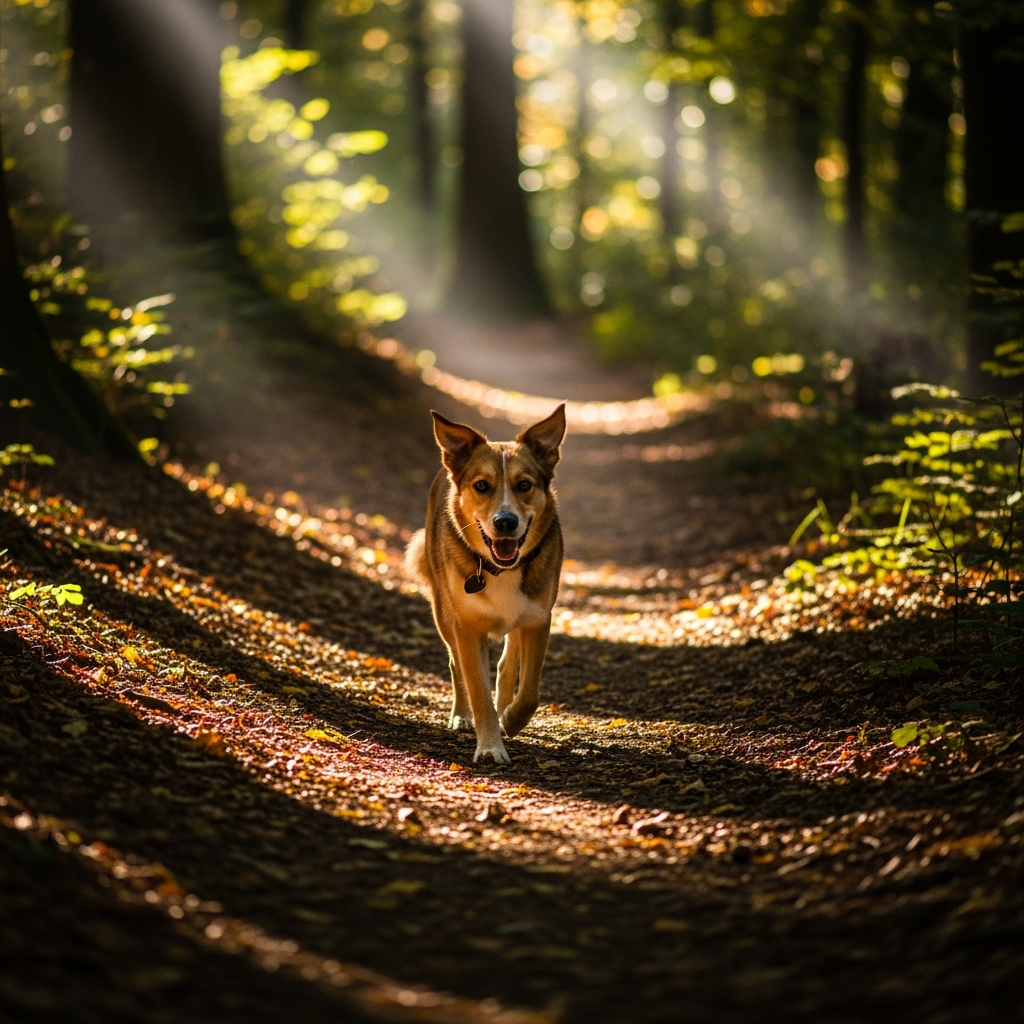
The first time I took my dog on a real trail - not the paved path around the park, an actual trail with rocks and roots and a creek crossing - I watched something switch on in her brain. She wasn’t just walking anymore. She was hunting scents, navigating terrain, solving problems in real time. Two miles in, I realized this was what she was built for, and I’d been shortchanging her with sidewalk loops for a year.
Hiking with your dog is one of the best things you can do together. It’s accessible, it scales with your fitness (and theirs), and it activates parts of your dog’s brain that nothing else does. The combination of physical effort, new smells, and novel terrain is exactly the kind of stimulation dogs are wired for.
But hiking with a dog isn’t the same as hiking solo or with another human. Your dog can’t read the trail map. They don’t know that the snake on the path is venomous. They’ll run until they collapse if you let them. And other trail users have legitimate expectations about how your dog behaves in shared spaces.
This guide covers everything you need to know: fitness assessment, gear, water and food, trail etiquette, weather considerations, first aid, and distance guidelines. Whether this is your first trail day or your hundredth, there’s something here for you.
Is Your Dog Ready to Hike?
Before you hit the trailhead, you need an honest assessment of your dog’s fitness and temperament. I see two common mistakes: owners who overestimate their dog’s physical readiness and owners who underestimate their dog’s behavioral needs.
Physical Fitness Assessment
If your dog’s current exercise routine is a couple of 20-minute leash walks, they’re not ready for an 8-mile trail with 2,000 feet of elevation gain. Just like you wouldn’t sign up for a marathon without training, your dog needs a base level of fitness before tackling serious trails.
Signs your dog is ready for easy to moderate hikes (3-5 miles, minimal elevation):
- They comfortably walk 2-3 miles without lagging or excessive panting
- They recover quickly after physical activity (not stiff or sore the next day)
- They’re at a healthy weight for their breed and size
- They’re over 12-18 months old (growth plates need to close first)
- They have no unmanaged joint or mobility issues
Building up fitness for longer hikes:
- Increase weekly mileage by no more than 10-15%
- Add elevation gradually - hills, stairs, inclines during regular walks
- Vary the terrain: grass, dirt, gravel, sand
- Watch for fatigue indicators: heavy panting, lagging behind, sitting down, limping
- Give rest days between hard efforts - dogs need recovery too
Dogs that need special consideration:
- Brachycephalic breeds (Bulldogs, Pugs, Boxers): reduced heat tolerance and airway capacity. Short, easy trails only, and never in heat.
- Giant breeds (Great Danes, Mastiffs): shorter distances due to joint stress. Soft trails preferred.
- Senior dogs (7+): shorter distances, flatter terrain, more rest stops. Still absolutely capable of enjoying trails.
- Puppies (under 12-18 months): short distances only. No sustained climbs. The 5-minutes-per-month-of-age rule is a reasonable guideline for structured exercise.
Behavioral Prerequisites
Physical fitness is half the equation. Your dog also needs basic behavioral skills for the trail to be safe and enjoyable.
Non-negotiable skills:
- Reliable leash walking without constant pulling (a no-pull harness helps enormously here)
- “Leave it” command that works with distractions (dead animals, food wrappers, other dogs)
- Ability to pass other dogs and people without lunging, barking, or excessive excitement
- Basic recall if you plan to use off-leash areas (and I mean actual reliable recall, not “comes when they feel like it”)
Nice-to-have skills:
- “Wait” command for water crossings and obstacles
- “Behind” or “heel” for narrow singletrack
- Comfortable being handled (for paw checks, tick removal, etc.)
- Calm behavior around wildlife
If your dog is reactive on leash or has poor impulse control around other dogs, the trail isn’t the place to work on that. Get those skills solid in less stimulating environments first. Our dog training guides cover the fundamentals.
Essential Hiking Gear for Dogs
You don’t need much, but what you do need matters. I’ve dialed my gear list down to the essentials over dozens of hikes.
The Must-Haves
Harness: A well-fitted harness is better than a collar on the trail. It distributes pressure across the chest instead of the neck, gives you a grab handle for obstacles, and provides better control on steep terrain. The best no-pull harnesses combine comfort, durability, and control without restricting your dog’s shoulder movement.
Leash: A 4-6 foot fixed-length leash. Not a retractable. Retractable leashes are dangerous on trails - they can tangle around rocks, trip other hikers, and give you zero control in tight situations. A hands-free waist leash is great if you want your hands free for trekking poles or scrambling.
Water: This is the most commonly underestimated item. Dogs need approximately 1 ounce of water per pound of body weight per day under normal conditions. On a hike, especially in heat, that can double. For a 50-pound dog on a moderate 4-hour hike, you’re looking at bringing at least 50-60 ounces of water (about 2 liters) for the dog alone. Carry a collapsible bowl and offer water every 15-20 minutes during active hiking.
Poop bags: Non-negotiable. Pack it out. Every time. No exceptions. Biodegradable bags are fine, but they still need to come off the trail - “biodegradable” doesn’t mean they decompose in a week on the side of a path.
Dog boots: Protective dog boots are critical on hot surfaces (pavement, exposed rock in summer), sharp rocky terrain, ice, and trails with cactus or thorns. Your dog won’t like them at first - there’s always an adjustment period with high-stepping and comical walking. Give them time. Once broken in, most dogs accept them and the paw protection is invaluable.
Strongly Recommended
GPS collar: If your dog is off-leash in areas where it’s permitted, a GPS tracking collar is cheap insurance. Battery life and coverage vary by brand, so choose one that works for your typical trail environment. This is especially important in areas with wildlife that your dog might decide to chase.
First aid kit: A basic kit for your dog should include: gauze pads, self-adhesive bandage wrap, antiseptic wipes, tweezers (for tick removal and splinters), styptic powder (stops bleeding from nail injuries), an emergency muzzle (even friendly dogs may bite when in pain), and any medications your dog takes.
Dog pack: For longer hikes, a dog pack lets your dog carry their own water and food. Proper fit is critical - the pack should sit on the shoulders, not the lower back, and total weight should be no more than 10-25% of your dog’s body weight (start at 10% and build up).
High-value treats: For recall reinforcement, rewarding good trail behavior, and as an emergency motivator if your dog decides a squirrel is more interesting than you.
Nice-to-Have
- Cooling bandana for hot-weather hikes
- Insect repellent formulated for dogs (no DEET - it’s toxic to dogs)
- Reflective vest or LED collar light for early morning or late afternoon hikes
- Portable dog bed or pad for rest stops on rough ground
- Emergency space blanket (works for dogs too in cold weather situations)
Water and Food on the Trail
Water Strategy
Dehydration is the biggest safety risk on most hikes, and dogs are more vulnerable to it than humans because they can’t regulate their temperature as efficiently. They cool primarily through panting, which loses water fast.
How often to offer water: Every 15-20 minutes during active hiking, more frequently in heat, at elevation, or on strenuous terrain. Don’t wait for your dog to show signs of thirst - by the time they’re panting excessively or seeking shade, they’re already behind on hydration.
How much to carry: A good rule of thumb is 1 ounce per pound of body weight for a half-day hike. For a full day, double it. This is a lot of water. For a 60-pound dog on a full-day hike, that’s nearly a gallon. Consider trail water sources (streams, lakes) to reduce what you carry, but be aware of potential contamination.
Trail water sources: Most flowing streams and clear lakes are fine for dogs. Stagnant water, ponds with algae, and water downstream from agricultural operations are risky. Blue-green algae is genuinely dangerous - it can kill a dog within hours. If you’re not sure about a water source, use the water you packed.
Signs of dehydration: Excessive panting that doesn’t slow during rest, dry or sticky gums, sunken eyes, lethargy, loss of skin elasticity (pinch the skin on the back of the neck - if it doesn’t snap back quickly, they’re dehydrated). Severe dehydration is a veterinary emergency.
Food Strategy
For day hikes, your dog’s normal feeding schedule is usually fine. Feed a light meal 2-3 hours before the hike (a full stomach on the trail can cause digestive issues, and in deep-chested breeds, increases bloat risk). Bring treats for energy during the hike and feed a full meal after.
For multi-day backpacking trips, increase your dog’s food by 25-50% to account for the extra caloric expenditure. High-protein, calorie-dense food works best on the trail. Pre-portion meals into ziplock bags for easy packing.
Trail Etiquette
This matters more than most people think. Dog owners with poor trail etiquette are the reason trails get closed to dogs. Every time someone lets their dog charge an oncoming hiker or leaves poop on the trail, it makes it harder for the rest of us.
The Rules That Keep Trails Open for Dogs
Leash laws are not suggestions. If the trail requires a leash, use a leash. Full stop. I don’t care how well-trained your dog is. The rules exist because not every trail user is comfortable around dogs, wildlife needs protection, and even the best-trained dog can break in the wrong situation. Many national parks, state parks, and wilderness areas have strict leash requirements with real fines for violations.
Yield to other trail users. When you encounter another hiker, biker, or horse, step to the side and keep your dog close. Shorten the leash. Put your dog in a sit if they’re excitable. Don’t assume the other person wants to interact with your dog - many don’t, and that’s completely fine.
Right of way: Uphill hikers have the right of way. Horses always have the right of way (and your dog should never approach a horse). Bikers should yield to hikers but often can’t stop easily, so give them room.
Pack out all waste. All of it. No burying, no tossing the bag to “get on the way back” (you won’t), no leaving it because “it’s natural.” Dog waste in the backcountry introduces parasites and bacteria that can affect wildlife and contaminate water sources.
Keep your dog on the trail. Dogs running off-trail through meadows and fragile alpine environments cause real ecological damage. Wildflower meadows, wetlands, and riparian zones are especially sensitive. Stay on established trails.
Control barking. Excessive barking disturbs wildlife and other trail users. If your dog is a vocal hiker, work on a “quiet” command before hitting popular trails. Some dogs are naturally vocal on the trail - if yours is, consider less-trafficked routes.
Off-Leash Etiquette (Where Permitted)
Some trails and areas do allow off-leash dogs. If you choose to use these areas:
- Your dog must have reliable recall. Not “pretty good” recall - actual, tested, works-with-distractions recall.
- You must have visual contact with your dog at all times. If they’re around a corner or over a ridge and you can’t see them, they’re too far.
- Leash up when you see other people or dogs approaching. You can unleash again once they’ve passed.
- Carry a leash at all times, even in off-leash areas. You may need it.
- If your dog approaches another person or dog and that person asks you to call your dog back, do it immediately. No “it’s okay, he’s friendly.” Just call your dog.
Weather and Seasonal Considerations
Hot Weather Hiking
Heat is the most dangerous hiking condition for dogs. They overheat faster than humans because they can’t sweat - they rely almost entirely on panting to cool down, which is significantly less efficient.
Guidelines for hot weather:
- Hike early morning or late afternoon. Avoid midday entirely in summer.
- The pavement test: place the back of your hand on the trail surface. If you can’t hold it there for 5 seconds, it’s too hot for your dog’s paws.
- Choose shaded trails with water access.
- Bring extra water and offer it constantly.
- Watch for heat stroke signs: excessive panting, drooling, bright red tongue, stumbling, vomiting, collapse. Heat stroke is a life-threatening emergency - cool your dog immediately with water and get to a vet.
- Brachycephalic breeds should not hike in temperatures above 75-80 degrees Fahrenheit.
- Light-colored or thin-coated dogs can get sunburned, especially on the nose and ears.
Cold Weather Hiking
Cold weather is generally safer for dogs than heat (they tolerate cold much better than we do), but there are still considerations.
- Short-coated breeds and small dogs may need a jacket below 40 degrees Fahrenheit.
- Snow and ice can ball up between paw pads. Dog boots or paw wax prevents this.
- Road salt and de-icing chemicals on trailhead roads can irritate paws. Rinse or wipe paws after the hike.
- Ice on trails is slippery for dogs too. Avoid steep icy terrain.
- Bring extra food - dogs burn more calories maintaining body temperature in cold conditions.
Wet Weather
- Muddy trails are slippery and can hide hazards. Slow your pace.
- Wet dogs lose body heat faster. Towel off your dog at rest stops in cold, wet conditions.
- Leptospirosis risk increases in wet conditions - make sure your dog’s vaccination is current if you hike near standing water.
- Post-hike: dry your dog thoroughly, especially ears (wet ears breed infection).
Trail First Aid for Dogs
Injuries happen on the trail. Knowing basic first aid can prevent a minor issue from becoming an emergency.
Paw Pad Injuries
The most common trail injury. Cuts, tears, and abrasions on paw pads from sharp rocks, broken glass, or ice. Clean the wound with water, apply antiseptic, and bandage with gauze and self-adhesive wrap. A dog boot over the bandage prevents it from coming off. If the cut is deep or won’t stop bleeding, cut the hike short and see a vet. For a comprehensive breakdown, see our guide on dog paw pad injuries.
Ticks
Check your dog for ticks during rest stops and after every hike. Focus on ears, neck, armpits, groin, and between toes. Remove ticks with fine-tipped tweezers: grasp as close to the skin as possible and pull straight up with steady, even pressure. Don’t twist. Clean the area with antiseptic. Save the tick in a ziplock bag in case your dog develops symptoms later - the vet may want to identify the species.
Limping and Sprains
If your dog starts limping on the trail, stop and assess. Check the paw for thorns, cuts, or stuck debris. Flex and extend each joint gently to check for pain. If the limp is mild and improves with a short rest, you can continue at a slow pace on flat terrain. If it’s severe or your dog won’t bear weight on the leg, carry them if possible or take the shortest route out. Rest and ice at home. See a vet if it doesn’t improve within 24 hours.
Snake Bites
In snake country, keep your dog on leash and on the trail. Rattlesnakes are the primary concern in the western U.S. If your dog is bitten, remain calm, limit your dog’s movement (carry if possible), and get to a veterinary emergency clinic immediately. Do not try to suck out venom, apply a tourniquet, or ice the bite. Time is the critical factor. If you hike frequently in rattlesnake territory, ask your vet about the rattlesnake vaccine.
Heat Stroke
If your dog shows signs of heat stroke (excessive panting, drooling, red tongue, stumbling, vomiting), stop immediately. Move to shade. Pour water over their body - focus on the belly, armpits, and paw pads. Offer small amounts of water to drink. Get to a vet as quickly as possible. Heat stroke can be fatal, and organ damage can occur even after the dog appears to recover.
Distance Guidelines by Fitness Level
These are general guidelines. Your dog’s breed, age, health, and individual fitness all affect what they can handle. When in doubt, start shorter and build up.
Beginner (Just Starting Out)
- Distance: 2-4 miles
- Elevation gain: Under 500 feet
- Terrain: Well-maintained, wide trails with minimal obstacles
- Duration: 1-2 hours
- Recovery: 1-2 days before the next hike
- Best for: Dogs transitioning from neighborhood walks, senior dogs, brachycephalic breeds, puppies (12-18 months)
Intermediate (Regular Walkers/Hikers)
- Distance: 4-8 miles
- Elevation gain: 500-1,500 feet
- Terrain: Moderate trails with some rocks, roots, and stream crossings
- Duration: 2-4 hours
- Recovery: 1 day
- Best for: Dogs with a consistent exercise routine, most healthy adult dogs
Advanced (Conditioned Dogs)
- Distance: 8-15+ miles
- Elevation gain: 1,500+ feet
- Terrain: Technical trails, steep climbs, water crossings, variable conditions
- Duration: 4-8+ hours
- Recovery: 1-2 days
- Best for: Dogs with months of progressive fitness building, high-energy breeds, experienced trail dogs
Multi-Day Backpacking
- Daily distance: 6-12 miles (less than single-day because of cumulative fatigue)
- Considerations: Extra food (25-50% more), sleeping insulation, larger first aid kit, paw care routine each evening
- Best for: Experienced, conditioned dogs who’ve done multiple advanced day hikes
Planning Your First Hike
If you’ve never hiked with your dog before, here’s a simple framework for that first outing:
Choose a beginner trail. Under 3 miles, minimal elevation, well-maintained. Check AllTrails or your local parks department for dog-friendly options. Verify leash requirements.
Check the weather. Avoid extreme heat. Morning is usually best.
Feed lightly 2-3 hours before. Don’t hike on a full or empty stomach.
Pack the essentials. Water (more than you think you need), collapsible bowl, poop bags, treats, leash, and your dog’s harness. That’s it for the first hike.
Go at your dog’s pace. Let them sniff. Let them explore. This isn’t a speed test. Watch for fatigue cues and turn around if needed - there’s no shame in a short first outing.
Do a post-hike check. Check paws for cuts or debris. Check ears, belly, and armpits for ticks. Offer water and food. Watch for limping or stiffness the next day.
Assess and adjust. If your dog bounced back quickly and loved it, you can increase distance or difficulty next time. If they were wiped out for two days, scale back.
The first hike sets the tone. Make it a positive experience and your dog will be at the door every time you reach for your hiking shoes.
Frequently Asked Questions
Can all dog breeds go hiking?
Most breeds can enjoy some form of hiking, but the intensity and distance should match the dog. High-energy breeds like Australian Shepherds, Labs, and Vizslas are natural trail dogs. Brachycephalic breeds (Bulldogs, Pugs) have significant limitations due to their airway structure and heat sensitivity - stick to short, cool, flat trails. Giant breeds can hike but need softer terrain and shorter distances due to joint stress. Small breeds can cover more distance than people assume, but their stride length means they’re working much harder per mile than a large dog.
How old does my dog need to be to start hiking?
Most vets recommend waiting until your dog is 12-18 months old before doing sustained distance hiking. This allows growth plates to close and reduces the risk of developmental joint problems. Larger breeds close their growth plates later, so err toward 18 months for dogs over 50 pounds. Before that age, short, easy walks on natural terrain are fine and good for socialization - just keep it under a mile and avoid strenuous elevation.
What do I do if my dog won’t stop pulling on the trail?
A no-pull harness is the most immediate solution - it redirects pulling energy without neck strain. Beyond that, practice loose-leash walking in less stimulating environments before hitting the trail. The trail is the hardest place to train this skill because there are distractions everywhere. If your dog is an aggressive puller, work with a trainer or our leash training guide before attempting longer hikes.
Is it safe for my dog to drink from streams?
Most flowing streams and clear-running water are safe for dogs. Avoid stagnant water, ponds with visible algae (especially blue-green algae, which is toxic), and water downstream from farms or industrial sites. Giardia is a risk in some water sources and can cause gastrointestinal issues. If you’re concerned about a particular area, pack enough water for the full hike and skip the natural sources.
How do I protect my dog from ticks while hiking?
Use a vet-recommended tick prevention product (topical, oral, or collar) year-round if you hike regularly. Check your dog for ticks during rest stops and do a thorough full-body check after every hike. Light-colored fur makes ticks easier to spot. In heavy tick areas, a tick-repellent spray formulated for dogs adds an extra layer of protection. Our guide on flea and tick prevention covers the best options.
Do I need to bring my own water or can I rely on trail sources?
Always bring your own water. Trail sources can be unreliable - streams dry up seasonally, springs may be farther than the map suggests, and water quality varies. Bring enough for your dog’s full water needs for the planned hike duration, and treat trail water as a bonus rather than a plan. In desert environments or on exposed ridgeline trails, bring extra beyond your calculated needs.
What if my dog gets tired and can’t finish the hike?
This is why starting conservatively matters. If your dog sits down, lies down on the trail, or starts lagging consistently, they’re done. Find shade, offer water, and rest. If they recover after 10-15 minutes, you may be able to continue slowly on flat terrain. If not, you need to turn back. For small dogs, a dog-carrying backpack is a smart emergency option. For larger dogs, it’s a two-person carry or a slow walk out on the shortest route. The best prevention is building fitness gradually and choosing trails appropriate for your dog’s current ability.