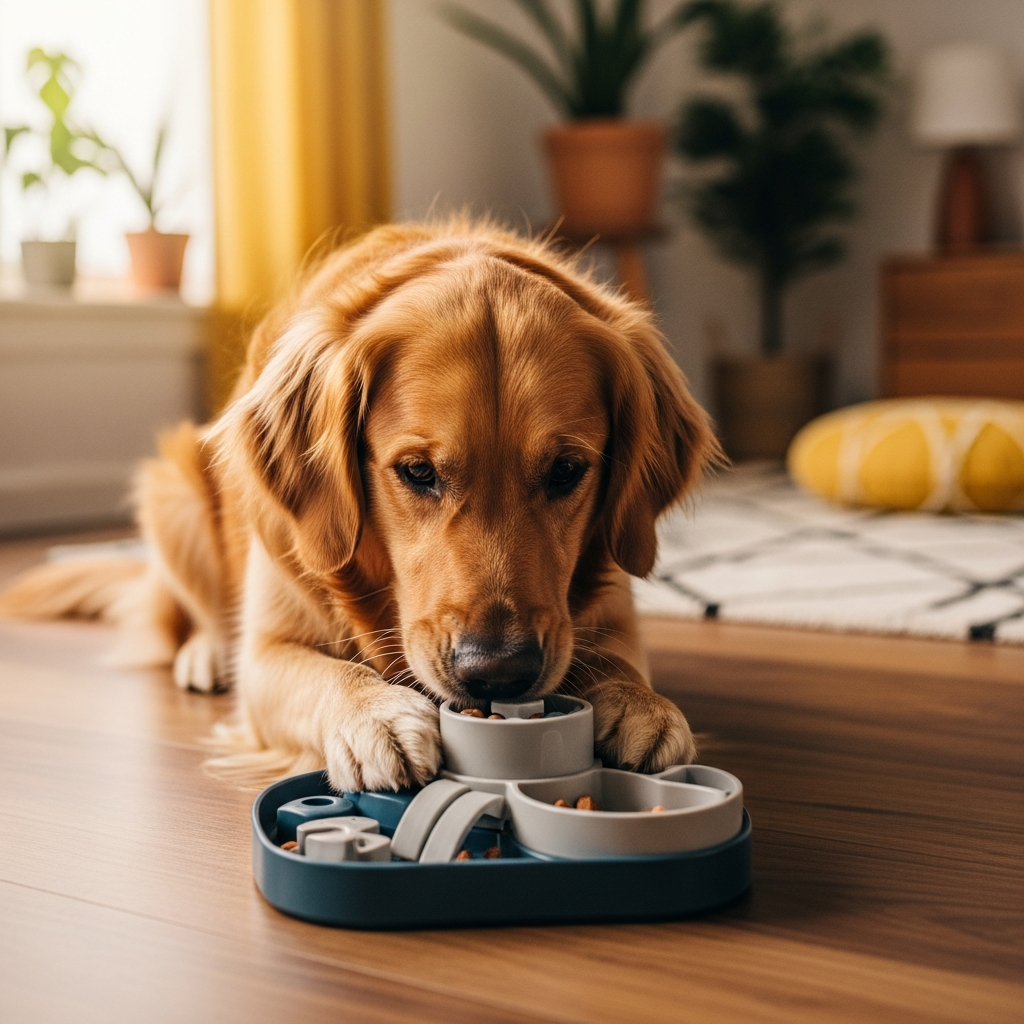
I used to think the answer to a hyper dog was more exercise. Longer walks. More fetch. An extra trip to the dog park. And for a while, it seemed to work - my dog would come home tired, crash on the couch, and I’d feel like I’d done my job.
Then the walks got longer and the dog got fitter and somehow the destructive behavior didn’t stop. She was chewing the baseboards, barking at nothing, pacing the house at 9 PM even after a 5-mile hike that morning. More exercise wasn’t making her calmer. It was making her an endurance athlete who was still bored out of her mind.
That’s when I learned about enrichment. Real enrichment - not just throwing a ball harder, but actually engaging the part of my dog’s brain that was screaming for something to do. And it changed everything.
Mental enrichment is the most underrated tool in a dog owner’s toolkit. It’s more effective than exercise for calming a restless dog, it’s accessible to every dog regardless of age or physical ability, and it costs almost nothing. This guide covers the science, the specific activities, and how to build an enrichment routine that transforms your dog’s behavior.
The Science: Why Mental Work Tires Dogs Out
Here’s what’s happening in your dog’s brain when they sniff, problem-solve, and explore: they’re using energy. Not the caloric burn of running - something different and, for behavioral purposes, more important.
The Seeking System
Neuroscientist Jaak Panksepp identified what he called the “seeking system” - a core emotional circuit in the brain that drives exploration, investigation, and anticipation. It’s the system that makes your dog excited about a new trail, intensely focused on a scent, and deeply satisfied when they solve a puzzle.
When the seeking system is engaged, your dog’s brain releases dopamine - the same neurotransmitter associated with pleasure and reward in humans. This isn’t just “being entertained.” It’s a fundamental neurological need. Dogs are wired to seek, investigate, and figure things out. When we deprive them of those opportunities - which modern pet life does by design - we create dogs that are neurologically understimulated even when they’re physically exhausted.
Why Exercise Alone Isn’t Enough
Exercise burns calories and builds fitness. That’s valuable. But it doesn’t necessarily engage the brain in a meaningful way. A dog running laps in the yard or doing repetitive fetch is getting a physical workout, but they’re not problem-solving, investigating, or engaging their seeking system.
Worse, high-intensity exercise without mental engagement can create a cycle: the dog gets fit, needs more exercise to feel tired, gets fitter, needs even more. You end up with a marathon-ready dog who still can’t settle in the house because their brain hasn’t been challenged.
Mental enrichment breaks this cycle. Fifteen minutes of nose work can produce the same calm, satisfied tiredness as an hour-long walk - because it engages the brain at a level that physical exercise alone doesn’t touch.
The Calming Effect
Enrichment activities - particularly those that involve sniffing, licking, and chewing - activate the parasympathetic nervous system. That’s the “rest and digest” system, the opposite of the “fight or flight” response. This is why a dog working on a frozen Kong or doing a scatter feed is visibly calming down as they do it. The activity itself produces relaxation.
This is particularly relevant for dogs with anxiety. An anxious dog’s nervous system is overactivated. Enrichment activities that engage the calming pathways can help bring that system back into balance - not as a replacement for addressing the root cause of anxiety, but as a daily management tool that makes a real difference.
The Core Enrichment Activities
Not all enrichment is created equal. These are the activities with the strongest evidence and the biggest impact, ranked by how easy they are to implement.
Sniff Walks
Effort to implement: Zero. You’re already going on walks.
A sniff walk is a walk where your dog’s nose leads. Instead of marching along at your pace on a fixed route, you let your dog stop, sniff, investigate, backtrack, and explore. They set the pace. They choose the direction (within reason). Your job is to hold the leash and let them work.
This sounds lazy. It isn’t. A 20-minute sniff walk engages your dog’s brain more intensely than a 40-minute brisk walk at your pace. Their nose is processing thousands of data points at every stop - who was here, when, what they ate, their emotional state. It’s information processing at an incredible level.
How to do it:
- Use a 6-foot or longer leash (a long line in appropriate areas is even better)
- Let your dog stop and sniff as long as they want
- Follow their lead on direction
- Don’t rush them or pull them away from a scent
- One or two sniff walks per week is enough to make a meaningful difference
The result: A calmer, more satisfied dog after the walk. Many owners report that their dog settles faster and sleeps better after a sniff walk compared to a regular exercise walk of the same duration.
Scatter Feeding
Effort to implement: Almost none. Takes 30 seconds.
Instead of putting your dog’s meal in a bowl, scatter it across the floor, the yard, or a snuffle mat. Your dog has to use their nose to find every piece of food, which turns a 30-second bowl meal into a 10-15 minute foraging session.
This single change - ditching the bowl - is the highest-impact, lowest-effort enrichment hack that exists. Your dog is already eating. You’re just making them work for it.
Variations:
- Scatter kibble in the grass for maximum difficulty
- Use a snuffle mat for indoor scatter feeding
- Hide small piles of food around a room
- Scatter kibble on a textured surface (a muffin tin, an egg carton, a towel bundled up)
Food Puzzles and Stuffed Kongs
Effort to implement: Low. Requires a toy and 5 minutes of prep.
Food puzzles - Kongs, puzzle feeders, lick mats, and similar products - make your dog work to access food. A frozen Kong stuffed with peanut butter, kibble, and a layer of yogurt can occupy a dog for 20-45 minutes depending on the difficulty.
The best interactive dog toys range from simple (a basic Kong) to complex (multi-step puzzle feeders that require sliding, lifting, and rotating components). Start simple and increase difficulty as your dog gets better. If a puzzle is too hard, they’ll give up. If it’s too easy, they’ll finish in seconds. The sweet spot is challenging but achievable.
The frozen Kong formula:
- Smear a layer of peanut butter (xylitol-free) inside the Kong
- Add kibble mixed with a spoonful of wet food or yogurt
- Seal the large opening with more peanut butter
- Freeze for at least 4 hours
- Give to your dog and enjoy 30 minutes of blissful silence
Nose Work
Effort to implement: Moderate. Requires setup time but no special equipment.
Nose work is structured scent detection - teaching your dog to find specific scents or hidden items using their nose. It can be as simple as hiding treats in boxes around the room or as structured as competitive scent work with target odors.
Beginner nose work:
- Show your dog a treat, let them watch you place it under one of three cups
- Say “find it” and let them nose the correct cup
- Gradually make it harder - more cups, farther distances, rooms they didn’t see you hide in
- Once they understand the game, hide treats in boxes, behind furniture, in closets, under blankets
Why it works: Nose work is the perfect enrichment activity because it engages both the seeking system and the dog’s most powerful sensory organ. A dog doing nose work is processing information at a level we can barely comprehend. It’s intensely stimulating and simultaneously calming because of the parasympathetic activation from sniffing.
Who benefits most: Every dog benefits from nose work, but it’s especially valuable for reactive dogs (it builds confidence and focus), anxious dogs (the sniffing activates calming pathways), senior dogs (it’s low-impact but mentally challenging), and dogs with physical limitations who can’t get enough exercise.
Decompression Activities
Effort to implement: Low. Mostly about providing the right context.
Decompression activities are calm, repetitive behaviors that help your dog’s nervous system downregulate. Think of them as meditation for dogs.
Key decompression activities:
Licking: Licking releases endorphins and activates calming pathways. A lick mat smeared with yogurt, peanut butter, or canned pumpkin is the easiest decompression tool. Freeze it for longer duration.
Chewing: Sustained chewing is deeply calming for dogs. A bully stick, a yak cheese chew, or a raw marrow bone gives your dog 20-60 minutes of focused chewing that visibly reduces their arousal level. Keep an eye on your dog with any chew to prevent choking.
Shredding: Some dogs are natural shredders. Instead of fighting this instinct, channel it. Stuff a cardboard box with paper and hide treats inside. Let your dog destroy it. The shredding behavior is enriching, and the treat-finding adds a seeking component. Yes, it’s messy. It’s also deeply satisfying for your dog.
Digging: If your dog is a digger, create a designated dig zone - a sandbox or a specific area of the yard. Bury treats and let them excavate. Channeling a natural behavior is always more effective than suppressing it.
Building an Enrichment Routine
The key to enrichment is consistency, not intensity. A small amount of enrichment every day is dramatically more effective than an elaborate setup once a month.
Daily Minimum (10-15 minutes)
Pick one of these for each day. Rotate through the week for variety.
- Monday: Scatter feeding for breakfast
- Tuesday: Frozen Kong during your lunch break
- Wednesday: Sniff walk instead of a regular walk
- Thursday: 10-minute nose work session
- Friday: Lick mat after dinner
- Saturday: Cardboard shredding box
- Sunday: Sniff walk + puzzle feeder combo
The “Enriched Meal” Approach
The simplest way to ensure daily enrichment is to stop using a food bowl entirely. Every meal is served through an enrichment activity:
- Breakfast: Scatter feed in the yard or on a snuffle mat
- Dinner: Stuffed Kong, puzzle feeder, or lick mat
This requires almost no extra time and gives your dog two enrichment sessions per day automatically.
Enrichment for Specific Situations
Before you leave the house: Give your dog a frozen Kong or a long-lasting chew. The enrichment occupies them during the transition from “you’re here” to “you’re gone” and reduces separation-related stress. This is not a substitute for addressing separation anxiety if your dog has it, but it helps with normal departure stress.
After a vet visit or stressful event: Decompression activities (licking, chewing) help your dog’s nervous system recover. Offer a lick mat or a chew and give them a quiet space.
During recovery from injury or surgery: Mental enrichment becomes critical when physical exercise is restricted. Nose work, puzzle feeders, frozen Kongs, and gentle training sessions keep your dog’s brain engaged without physical strain.
On rest days between adventures: After a big hike or adventure day, the next day should be lower intensity physically. Enrichment fills the gap - a sniff walk, a puzzle feeder, and a decompression chew give your dog a satisfying day without taxing their recovering body.
Enrichment for Different Dog Types
High-Energy Dogs
High-energy dogs benefit most from enrichment because they’re the most likely to develop behavior problems from understimulation. Focus on activities with a physical component: scatter feeding in a large yard (running between finds), nose work with hides spread across multiple rooms, and shredding activities that involve tearing and pulling.
The goal isn’t to replace exercise - these dogs still need physical outlets. But adding enrichment on top of exercise transforms the result. A Border Collie who gets a 5-mile run plus a 15-minute nose work session is calmer than a Border Collie who gets a 10-mile run alone.
Anxious Dogs
Enrichment is therapeutic for anxious dogs because it engages the calming parasympathetic nervous system. Prioritize licking (lick mats, stuffed Kongs), sniffing (sniff walks, nose work), and chewing (long-lasting chews). Avoid activities that increase arousal, like tug or frantic fetch. The goal is calm engagement, not excitement.
If your dog’s anxiety is significant, combine enrichment with the behavioral strategies in our dog anxiety guide. Enrichment is a powerful daily management tool, but it doesn’t replace addressing the root cause.
Senior Dogs
Enrichment is essential for senior dogs because it keeps their brains active as physical capacity declines. Nose work is ideal - it’s low-impact, endlessly scalable in difficulty, and engages cognitive function. Puzzle feeders adapted to their speed (not too frustrating) keep meals interesting. Sniff walks at their pace provide sensory stimulation without physical strain.
Senior dogs may also benefit from novel experiences - a new park, a different room to explore, new textures to walk on. Novelty is enriching at any age.
Puppies
Puppies need enrichment for development, not just entertainment. Early exposure to different textures, sounds, surfaces, and problem-solving tasks builds a more confident, resilient adult dog. Puppy-appropriate enrichment includes: exploring new surfaces (grass, sand, tile, grates), simple food puzzles, supervised cardboard shredding, and very short nose work games.
Keep sessions brief - puppies have short attention spans and tire quickly. Five minutes is plenty. The variety matters more than the duration.
Common Enrichment Mistakes
Making It Too Hard
If your dog gives up on a puzzle feeder in frustration, it’s too difficult. Enrichment should be challenging but achievable. Start easy and increase difficulty gradually. A frustrated dog gets the opposite of enrichment - they get stressed.
Making It Too Easy
The flip side. If your dog finishes a Kong in two minutes, it’s not providing meaningful enrichment. Freeze it. Use stickier fillings. Layer different textures. The goal is sustained engagement, not a quick snack.
Only Using One Type
Rotate activities. A dog that gets the same puzzle feeder every day eventually learns the solution and it stops being enriching. Variety is critical. Mix sniffing, licking, chewing, problem-solving, and social enrichment throughout the week.
Replacing Exercise Entirely
Enrichment is not a substitute for physical exercise. It’s a supplement. Your dog still needs walks, play, and physical activity. The point is that enrichment handles the mental side of the equation that exercise alone doesn’t address. Both are necessary. Together, they create a genuinely satisfied dog.
Ignoring the Social Component
Dogs are social animals. Some of the most powerful enrichment comes from interaction - with you, with other dogs, with new environments and people. Don’t rely entirely on food puzzles. Play, training, exploration, and social time are all forms of enrichment. For ideas beyond the food-based activities, check out our guide to fun things to do with your dog.
DIY Enrichment Ideas (No Budget Needed)
You don’t need to buy anything to provide enrichment. Most of the best activities use stuff you already have.
Muffin tin puzzle: Put treats in a muffin tin and cover each cup with a tennis ball. Your dog figures out how to remove the balls to get the treats.
Towel roll-up: Lay a towel flat, scatter treats across it, and roll it up. Your dog unrolls it with their nose and paws to find the food.
Box within a box: Put a treat inside a small box, put that inside a medium box, put that inside a large box. Your dog has to work through layers.
Ice block treasure hunt: Freeze treats, toys, or broth into a large block of ice. Give it to your dog in the yard and let them lick and paw at it until the treasures emerge.
Paper bag search: Put treats inside crumpled paper bags and scatter them around the room. Your dog has to open each bag. Yes, there will be shredded paper. It’s worth it.
Egg carton puzzle: Place treats in the cups of an egg carton and close it. Some dogs open the lid; others shred through the cardboard. Both are valid approaches and equally enriching.
Toilet paper roll treat holder: Fold one end of a toilet paper roll closed, drop treats inside, fold the other end. Your dog figures out how to get them out.
If your dog is bored but you don’t have enrichment toys, check out our bored dog solutions guide for more ideas that require no gear at all.
Frequently Asked Questions
How much enrichment does my dog need per day?
A minimum of 15 minutes of dedicated enrichment activity per day makes a noticeable difference in most dogs’ behavior. This can be as simple as a scatter-fed meal and a 10-minute sniff walk. Dogs with higher mental needs (working breeds, adolescent dogs, dogs with behavioral issues) benefit from 30-45 minutes spread across the day. The enriched meal approach - serving all meals through puzzles, scatter feeding, or stuffed toys - is the easiest way to hit this target without adding extra time to your day.
Can enrichment help with destructive behavior?
Yes, and it’s often more effective than increased exercise. Destructive behavior is usually a sign of understimulation - your dog is finding their own enrichment by chewing your shoes, shredding pillows, or digging holes. Providing appropriate outlets for those same behaviors (sanctioned shredding, designated digging, food puzzles) redirects the drive without suppressing it. Most owners see a significant reduction in destructive behavior within 1-2 weeks of implementing a daily enrichment routine.
Is enrichment a substitute for training?
No. Enrichment and training serve different purposes and complement each other. Training teaches your dog specific skills and behaviors. Enrichment satisfies neurological needs for stimulation, problem-solving, and sensory engagement. A well-enriched dog is typically easier to train because they’re calmer, more focused, and not desperately seeking stimulation. But enrichment doesn’t teach your dog to come when called or to walk nicely on a leash.
My dog isn’t interested in puzzle feeders. What now?
Start easier. If a puzzle feeder is too challenging or unfamiliar, your dog may give up or ignore it. Put treats on the surface of the puzzle without hiding them. Let your dog see the food and figure out that interacting with the toy makes food happen. Gradually increase difficulty as they get the idea. If your dog genuinely doesn’t engage with puzzles, try a different type of enrichment - some dogs prefer sniffing (scatter feeds, nose work), some prefer chewing (long-lasting chews), and some prefer physical enrichment (shredding, digging). Find what your dog gravitates toward.
How do I do enrichment in a small apartment?
Almost all enrichment activities work in a small space. Scatter feeding on a snuffle mat takes up about two square feet. A frozen Kong requires zero floor space. Nose work can be done in a single room by hiding treats in corners, under furniture, and behind objects. Lick mats stick to the floor or a wall. The only activities that need more space are physical enrichment like indoor agility or flirt pole - save those for trips to the park.
Does enrichment replace walks?
No. Walks provide physical exercise, socialization, environmental exposure, and bonding time that enrichment activities can’t replicate. What enrichment does is handle the mental stimulation component that walks (especially repetitive walks on the same route) don’t address well. The ideal is both: regular walks for physical exercise and enrichment for mental exercise. On days when walks aren’t possible (weather, injury, time constraints), enrichment becomes even more important to fill the gap.