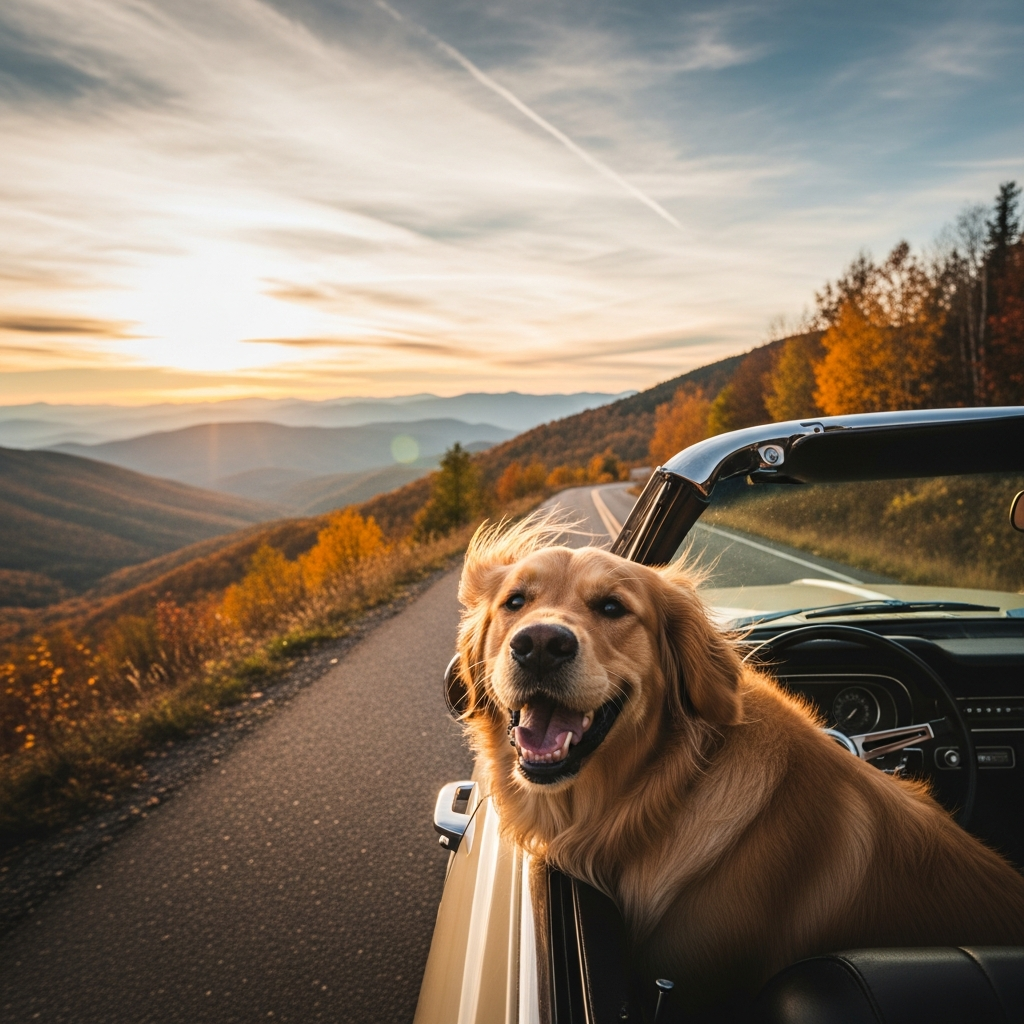
My best road trip ever started with zero planning and a dog who’d never been in a car for more than 20 minutes. It did not go well. Within three hours I had a carsick dog, no towels, no idea where to stop, and a growing realization that “we’ll figure it out” is not a strategy.
My second-best road trip started with a plan. And it was incredible.
Road tripping with your dog is one of the great pleasures of dog ownership. The freedom of the open road, a dog with their head out the window (safely, with a harness on), new trails at every stop, and that feeling of genuine adventure that you just can’t get from a weekend at home. But the difference between a road trip you remember fondly and one you’d rather forget comes down to preparation.
This guide covers everything: pre-trip prep, car setup, rest stop strategy, hotel selection, managing car anxiety, and the complete gear list. Whether you’re doing a weekend getaway to a state park or a two-week cross-country haul, this framework scales.
Pre-Trip Preparation
A good road trip starts before you leave the driveway. The planning you do in the week before departure makes everything easier once you’re on the road.
Vet Check and Documentation
If your dog hasn’t been to the vet in the past six months, schedule a quick wellness check before a long trip. You want to confirm they’re healthy, up to date on vaccinations, and that any medications are stocked for the full duration of the trip.
Documentation to bring:
- Current vaccination records (especially rabies - some states and campgrounds require proof)
- Your vet’s phone number and emergency contact
- A list of your dog’s medications and dosages
- A recent photo of your dog on your phone (in case they get lost)
- Microchip number and registration confirmation
- Pet insurance card if applicable
If you’re crossing state lines, check the destination state’s pet entry requirements. Most states just need proof of rabies vaccination, but Hawaii has a mandatory quarantine, and some states have specific health certificate requirements.
Car Conditioning
If your dog isn’t used to long car rides, don’t make the road trip their first one. Build up gradually over a few weeks:
- Week 1: Short drives (10-15 minutes) to fun destinations - the park, a trail, a friend’s house. The goal is to associate the car with good things.
- Week 2: Extend to 30-45 minute drives with a rest stop and a short walk in the middle.
- Week 3: Try a 1-2 hour drive with your full road trip setup - harness, travel bowl, their blanket, everything. See how they do.
Dogs that get carsick often improve with gradual exposure. If motion sickness persists, talk to your vet about anti-nausea medication (Cerenia is commonly prescribed and safe for most dogs). Natural remedies like ginger treats work for some dogs but aren’t reliable enough for a 12-hour drive.
Route Planning
Plan your route with your dog’s needs in mind, not just the fastest way from A to B.
Map your stops. Dogs need a rest stop every 2-3 hours for a bathroom break, water, and a short walk. Mark potential stops on your route - rest areas, parks, pet-friendly gas stations. Apps like BringFido can help you find dog-friendly stops along your route.
Identify emergency vets. Look up emergency veterinary clinics along your route and at your destination. Save the addresses and phone numbers in your phone. You probably won’t need them, but if you do, you’ll be glad you have them.
Research pet-friendly lodging. Don’t assume you’ll find a dog-friendly hotel when you get tired. Book in advance, especially during peak travel seasons. Our guide to dog-friendly hotels covers which chains are genuinely welcoming and what to watch for.
Car Setup and Safety
How your dog rides in the car is a safety issue - for them and for everyone else in the vehicle.
The Car Harness Is Non-Negotiable
An unrestrained dog in a car is a projectile in an accident. A 60-pound dog in a 30 mph collision generates roughly 2,700 pounds of force. That’s enough to seriously injure or kill the dog and any human they hit.
A crash-tested car harness is the single most important piece of road trip gear. It attaches to the seatbelt system and keeps your dog secured in the back seat. Look for harnesses that have been tested by the Center for Pet Safety - not all “car harnesses” actually perform in a crash.
Alternatives to a harness:
- Crash-tested crate: The safest option if you have the space. The crate should be secured to the vehicle so it doesn’t become a projectile itself.
- Car barrier: A barrier between the back seat/cargo area and the front seat. Safer than nothing, but it doesn’t protect the dog - it protects the driver.
- Seat covers with attachment points: These protect your upholstery and provide harness attachment points but aren’t a safety device on their own.
What doesn’t work: letting your dog ride in the front seat (airbag risk), in your lap (extremely dangerous in a crash), or loose in the bed of a pickup truck (illegal in many states and genuinely life-threatening).
Temperature Control
A parked car can reach 120 degrees Fahrenheit in minutes on a warm day, even with windows cracked. This is not an exaggeration. Dogs die in hot cars every summer.
The rule is simple: Never leave your dog in a parked car in warm weather. Period. If you need to stop somewhere that doesn’t allow dogs, one person stays with the car and the AC running, or the dog comes with you.
For driving in hot weather:
- Run the AC in the back seat area (airflow doesn’t always reach the back evenly)
- Use a sunshade on rear windows
- Offer water at every stop
- Watch for panting - if your dog is panting excessively in the car, it’s too hot back there
The Back Seat Setup
Create a comfortable, contained space for your dog in the back seat:
- A seat cover protects your upholstery and gives your dog a non-slip surface
- Their regular blanket or bed provides familiar scent and comfort
- A chew toy or stuffed Kong gives them something to do
- The car harness keeps them secure while allowing them to sit, stand, or lie down
- A small towel within reach (yours, not theirs) for spills, drool, or accidents
Rest Stop Strategy
The rest stop schedule is the backbone of a good road trip with a dog. Get this right and everything else gets easier.
How Often to Stop
Every 2-3 hours is the standard recommendation, and it works well for most dogs. Some dogs need stops more frequently, especially:
- Puppies (smaller bladders, higher energy)
- Senior dogs (more frequent bathroom needs)
- Dogs prone to anxiety (the break helps them decompress)
- Dogs on certain medications (diuretics, etc.)
What to Do at Each Stop
A rest stop isn’t just a bathroom break. It’s a decompression point. Here’s the routine:
- Leash up before opening the door. Your dog is excited and disoriented. A leash prevents a panicked bolt into a parking lot.
- Walk for at least 10-15 minutes. Let them sniff, stretch, and move. A quick pee in the grass and back in the car isn’t enough.
- Offer water. Every single stop. Even if they don’t seem thirsty.
- Do a quick check. Paws, ears, general demeanor. Are they panting excessively? Seem stiff? Reluctant to get back in the car? Adjust your plan accordingly.
- Give a small treat or short training game. This reinforces that stops are positive and keeps the trip feeling like an adventure, not an endurance test.
Finding Good Stops
Not all rest areas are created equal. Look for:
- Grassy areas away from traffic for bathroom breaks
- Shade (critical in summer)
- Room to walk without navigating a crowded parking lot
- Water access (some rest areas have pet water stations)
State rest areas are usually better than gas station parking lots. City and county parks along your route are even better - many have trails or walking paths that give your dog real exercise.
Keeping Your Dog Calm on Long Drives
Some dogs love the car. They curl up and sleep for six hours straight. Other dogs… don’t. If your dog is anxious, restless, or vocal in the car, here are strategies that actually work.
For Mild Anxiety
Familiar items: Their bed, a blanket that smells like home, a shirt that smells like you. Familiar scents are powerful calming tools.
Calming music: Studies have actually confirmed this - classical music and specially designed dog calming playlists reduce stress behaviors in dogs. It sounds silly until you try it and your dog falls asleep in 20 minutes.
Window management: Some dogs are calmer when they can see out. Others are calmer when they can’t (visual stimulation at highway speed is overwhelming). Experiment with both. A partially opened window provides airflow and interesting smells, but make sure it’s not open enough for your dog to get their head out while in a harness.
Exercise before departure: A well-exercised dog is a calm dog. Before a long drive, give your dog a solid 30-60 minutes of exercise. A tired dog sleeps in the car.
For Moderate to Severe Anxiety
Desensitization training: This is the long-term solution. Gradually expose your dog to the car in positive contexts, starting with just sitting in the parked car with treats, then short drives, then longer ones. This takes weeks but creates lasting change.
Calming supplements: Products with L-theanine, melatonin, or hemp extract help some dogs. Start testing these at home before the trip so you know if they work and what dose is effective. They’re not sedatives - they take the edge off without knocking your dog out.
Prescription medication: For dogs with genuine car anxiety that doesn’t respond to behavioral approaches, talk to your vet about anti-anxiety medication. Trazodone and gabapentin are commonly prescribed for travel anxiety and are safe and effective for most dogs. This isn’t a failure - it’s a tool that makes travel possible for dogs who would otherwise be miserable.
ThunderShirt or pressure wrap: The gentle, constant pressure can reduce anxiety for some dogs. It doesn’t work for everyone, but it’s inexpensive and has zero side effects, so it’s worth trying.
If your dog’s anxiety extends beyond car travel, our full guide covers the different types and evidence-based treatments.
The Complete Road Trip Gear List
Here’s everything you need, organized by category. Print this. Check it twice. You’ll thank yourself on day two when you have the thing nobody remembers to pack.
Safety Essentials
- Crash-tested car harness or crate
- 4-6 foot leash (not retractable)
- ID tags with current phone number
- Microchip (confirmed registered and up to date)
- Recent photo on your phone
- Vaccination records
- Emergency vet contact list for your route
Food and Water
- Enough dog food for the full trip plus 2 extra days
- Collapsible water bowl (or two)
- Water bottles dedicated to the dog
- Treats for rest stops and training
- Portable food container (airtight)
- Feeding mat or towel for hotel rooms
Comfort
- Their regular bed or a travel bed
- Blanket with familiar scent
- Favorite toy (one or two, not their whole collection)
- Chew toy or stuffed Kong for the car
- Seat cover or hammock
Health and Hygiene
- Medications (enough for the full trip plus extra)
- Basic first aid kit
- Poop bags (more than you think you need)
- Towels (for wet dog, carsickness, general cleanup)
- Dog-safe wipes for paw cleaning
- Tick removal tool
- Flea and tick prevention
- Enzyme-based cleaner (for hotel room accidents)
Documentation
- Vaccination records
- Health certificate (if crossing certain state lines)
- Pet insurance card
- Hotel confirmation with pet policy noted
Hotel Stays
Staying at hotels with your dog requires a little more planning than checking in solo. Our full guide on dog-friendly hotels covers this in depth, but here are the essentials:
Book pet-friendly hotels in advance. Don’t wing it. Pet-friendly rooms are limited and fill up, especially during peak travel.
Know the real cost. Many hotels charge a pet fee on top of the room rate. This ranges from $25 to $150+ per night and is often non-refundable regardless of whether your dog damages anything. Factor this into your trip budget.
Be a good guest. This is how we keep hotels dog-friendly for everyone. Don’t leave your dog alone in the room if they bark. Clean up after them thoroughly. Don’t let them on the beds if that’s not your norm (housekeeping can tell). Bring a towel to wipe muddy paws before coming inside. Report any accidents immediately.
Evening routine: Give your dog a solid walk before bedtime. Set up their bed in a familiar configuration. Run white noise or the TV at low volume if your dog is sensitive to hallway sounds. Bring an extra sheet to put over hotel bedding if your dog sleeps on the bed.
Camping vs. Hotels
Both work great for road trips with dogs, and each has advantages.
Hotels: Climate controlled, comfortable, predictable. Better for dogs who are anxious in new environments because the enclosed room feels more den-like. Worse for dogs who bark at every hallway footstep.
Camping: More freedom, more outdoor time, more adventure. Most dogs are happier camping than in hotels because they can be outside more. Require more gear (your dog needs a sleeping pad and cover). Check campground dog policies - most national park campgrounds allow dogs but not on trails.
Car camping (sleeping in or next to your vehicle) is the best of both worlds for short trips. You have all your gear, your dog has familiar car smells, and you can park at a trailhead and start hiking at dawn.
Road Trip Activities at Your Destination
The destination is the whole point. Plan activities that include your dog:
- Morning: Trail or hike (the best time, before it gets hot). Check our hiking guide for trail-day planning.
- Midday: Rest and recovery. Find a shaded park or head back to camp/hotel for a nap.
- Afternoon: Low-key exploration - a new neighborhood, a dog-friendly beach, a sniff walk through town.
- Evening: Dog-friendly brewery or restaurant patio, followed by a sunset walk.
The goal is to make the destination worth the drive - for your dog, not just for you. A road trip to a city where your dog sits in a hotel room all day isn’t a dog-friendly trip. It’s a trip with extra logistics. Plan destinations with outdoor access, trails, and dog-friendly spaces.
For more activity ideas, check out our list of 25 fun things to do with your dog.
Common Road Trip Mistakes
I’ve made all of these so you don’t have to.
Skipping the car conditioning. Don’t make a 10-hour drive your dog’s first real car experience. Build up.
No harness. “He just sits in the back seat” isn’t a safety plan. A car harness is as important as your own seatbelt.
Not enough water. Your dog needs water at every stop. Carry more than you think you need.
Winging the hotel situation. “We’ll find something” at 10 PM in a small town with a dog does not go the way you hope. Book ahead.
Leaving the dog in the car. Even “just for five minutes.” In summer heat, five minutes is enough for a car to become dangerous. Don’t do it.
Over-scheduling. Your dog needs downtime. Don’t plan eight hours of activities every day. Build in rest. They’re on vacation too.
Ignoring car sickness. If your dog gets sick in the car, don’t power through hoping they’ll adjust. Address it before the trip with conditioning and, if needed, medication.
Not packing enough poop bags. You will always need more than you think. Always.
Frequently Asked Questions
How long can a dog ride in a car?
Most healthy adult dogs can handle 6-8 hours of driving in a day with appropriate rest stops every 2-3 hours. Some dogs do fine with longer days, while others hit their limit earlier. Watch for signs of stress or restlessness. Puppies and senior dogs typically need more frequent breaks and shorter total drive times. The key isn’t the total time - it’s the quality and frequency of your rest stops.
What if my dog gets carsick?
Start with shorter trips to build tolerance. Feed a light meal 2-3 hours before driving (not right before). Keep the car cool with fresh air circulation. Some dogs do better when they can see out the window; others do better facing forward. If motion sickness persists, talk to your vet about Cerenia (maropitant), which is specifically designed for motion sickness in dogs. Ginger treats and calming supplements work for mild cases.
Can I take my dog on a cross-country road trip?
Absolutely. Dogs adapt well to road trip life once they’ve had some conditioning. The key is maintaining their routine as much as possible - same feeding times, consistent rest stops, familiar items in the car, and enough exercise at each destination. Dogs are remarkably adaptable travelers when their basic needs are met consistently.
How do I find dog-friendly places to eat on the road?
BringFido, Yelp (filter for “dogs allowed”), and Google Maps reviews are your best resources. Most restaurants with outdoor patios welcome well-behaved dogs, though policies vary by city and state health codes. Fast-casual spots with outdoor seating are usually the easiest option. When in doubt, ask before sitting down. And always bring water and a mat or blanket for your dog to settle on.
Should I sedate my dog for a road trip?
Sedation should be a last resort and only under veterinary guidance. Sedatives can affect balance and temperature regulation, which are not ideal in a moving vehicle. Anti-anxiety medications (trazodone, gabapentin) are different from sedatives - they reduce anxiety without heavy sedation and are a much better option for travel stress. Talk to your vet about the specific difference and what’s appropriate for your dog.
What if my dog has an accident in the hotel room?
Clean it up immediately and thoroughly with an enzyme-based cleaner (bring one). Inform the front desk - being honest and proactive is better than having housekeeping discover it. Most hotels expect occasional accidents and handle it professionally. The pet fee you’re paying is partly to cover this. Dogs are more likely to have accidents in unfamiliar environments, so give them plenty of bathroom opportunities before settling in for the night.