Training your dog is one of the most rewarding things you will ever do as a dog owner. It is also one of the most misunderstood.
I have spent years working with my own dogs - from a wildly energetic puppy who thought every leash walk was a sled race to a rescue with fear-based behaviors that took months of patience. Through all of it, one thing became crystal clear: positive reinforcement training works. Not sometimes. Not for “easy” dogs. For every dog, at every stage.
This guide is your starting point. Whether you just brought home an eight-week-old puppy or you are trying to fix a behavior problem in your five-year-old rescue, you will find a clear, actionable plan here. No gimmicks, no harsh tools, no shortcuts that create new problems.
Why Training Matters More Than You Think
Training is not just about getting your dog to sit on command. That is a small piece of a much bigger picture.
A well-trained dog is a safer dog. A reliable recall can save your dog’s life at the edge of a busy road. A solid “leave it” prevents your dog from eating something toxic on a walk. A dog who walks calmly on leash is less likely to pull you off your feet or lunge at another dog.
A well-trained dog is also a happier dog. Dogs thrive on structure. They want to know what is expected of them. Without clear communication from you, your dog is left guessing - and that guessing often shows up as anxiety, destructive behavior, or excessive barking.
And here is what most people miss: training strengthens your relationship with your dog. Every session is a conversation. You learn to read your dog’s body language. Your dog learns to trust you. That trust becomes the foundation for everything else you do together, from hiking trails to traveling to simply coexisting in a small apartment.
What Good Training Looks Like
Good training is built on four principles:
Positive reinforcement. Reward the behavior you want. When your dog does something right, mark it and reward it. This is the fastest and most reliable way to build lasting behaviors.
Consistency. Everyone in your household uses the same cues, the same rules, the same expectations. Dogs are not confused by difficulty - they are confused by inconsistency.
Timing. Your marker (a clicker or a verbal “yes”) needs to happen within one to two seconds of the desired behavior. Timing is what tells your dog exactly what they did right.
Patience. Dogs are not robots. They have bad days. They get overstimulated. They forget things in new environments. Your job is to set them up for success and adjust the difficulty when they struggle.
What We Do Not Recommend
You will not find recommendations for shock collars, prong collars, or any aversive training methods on this site. Here is why: the science is clear. Research published in journals like Applied Animal Behaviour Science consistently shows that punishment-based methods increase stress, erode trust, and often create new behavior problems - including aggression.
Positive reinforcement is not “permissive” training. You still set boundaries. You still say no (by redirecting, managing the environment, or withholding rewards). You just do it without pain or fear.
How to Use This Guide
This pillar page gives you the big picture. The cluster articles below go deep on specific topics. Here is how to navigate based on where you are right now.
If You Have a New Puppy
Start with basic dog commands. Sit, stay, come, down, and leave it are your foundation. Then move to crate training - it makes housetraining dramatically easier and gives your puppy a safe space. If you are just getting started with a new pup, you will also want to grab our new puppy checklist for everything you need on day one.
Socialization is time-sensitive for puppies. The critical socialization window closes around 14 to 16 weeks, so read that article early and start exposing your puppy to the world in a safe, controlled way.
If You Have an Adolescent Dog (6 Months to 2 Years)
This is the stage where most people feel like training “stopped working.” It did not. Your dog is just testing boundaries, dealing with hormonal changes, and discovering that the world is incredibly distracting.
Go back to basics. Revisit the core commands and proof them in new environments. Tackle leash pulling - it almost always gets worse during adolescence. And if your dog is getting destructive while you are gone, read our guide on entertaining a bored dog.
If You Have an Adult Dog With Behavior Problems
Start with the specific problem:
- Pulls on leash: How to stop your dog from pulling on leash
- Barks excessively: How to stop a dog from barking
- Destructive or anxious when alone: Dog separation anxiety guide
- Reactive or fearful around other dogs/people: How to socialize a dog at any age
Then come back here for the broader framework. Many behavior problems are interconnected - a dog who barks excessively may also have separation anxiety, which is connected to under-stimulation, which leads to the bored dog article. The links between these pages are intentional.
The Positive Reinforcement Framework
Let me walk you through the core training method we use across every article on this site.
Step 1: Choose Your Marker
A marker is a sound that tells your dog, “Yes, that exact thing you just did is what I wanted.” You have two options:
- Clicker. A small device that makes a consistent click sound. The advantage is precision - it always sounds exactly the same.
- Verbal marker. A short word like “yes” or “good.” The advantage is that you always have it with you.
Pick one and stick with it. The marker must always be followed by a reward.
Step 2: Choose Your Rewards
Not all rewards are created equal, and the best trainers use a hierarchy:
- High-value treats. Small pieces of real meat - chicken, turkey, freeze-dried liver. Use these for new behaviors, difficult environments, and breakthrough moments.
- Medium-value treats. Commercial training treats. Use these for maintenance and practice of known behaviors.
- Low-value treats. Kibble from their regular meal. Use these for easy reps at home.
- Life rewards. Access to what your dog wants - going outside, getting to sniff, playing with another dog. These are powerful and free.
The key is to match the reward to the difficulty. Asking your dog to sit in your living room? Kibble is fine. Asking your dog to hold a down-stay while a squirrel runs by? Break out the chicken.
Step 3: Shape the Behavior
There are three main ways to get the behavior you want:
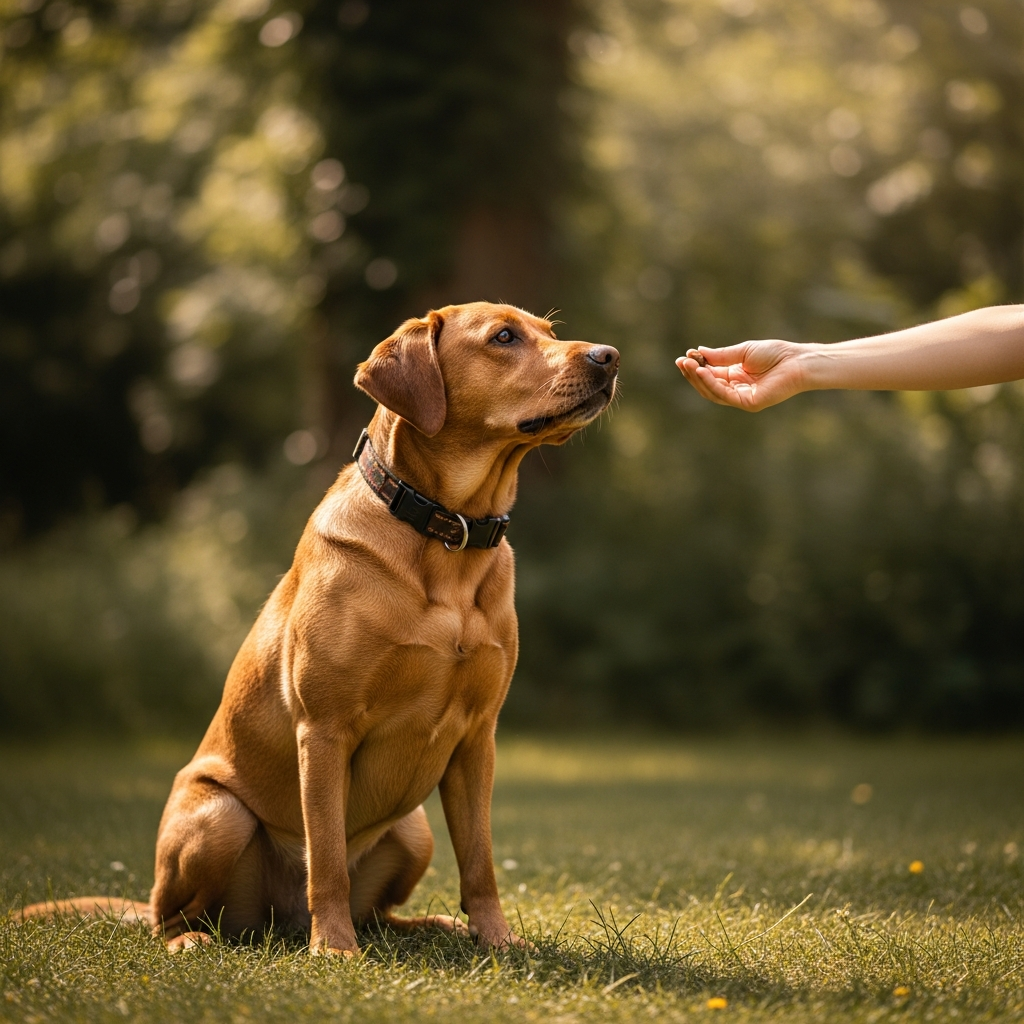
Luring. Use a treat to guide your dog into position. Hold a treat above your dog’s nose and slowly move it back over their head - most dogs will naturally sit as they look up. This is the fastest way to get started.
Capturing. Wait for your dog to offer the behavior naturally, then mark and reward. Your dog sits on their own? Click and treat. This takes longer but produces very reliable behaviors because the dog figured it out themselves.
Shaping. Reward successive approximations of the final behavior. If you want your dog to go to a mat and lie down, you might first reward looking at the mat, then stepping toward it, then stepping on it, then sitting on it, then lying down. This is how you train complex behaviors.
Step 4: Add the Cue
Here is a common mistake: adding the verbal cue too early. Wait until your dog is reliably offering the behavior before you name it. Otherwise, your dog learns that “sit” is just a word you say before waving a treat around.
The sequence is: behavior happens, then add the word. Say the cue immediately before your dog does the behavior (once it is predictable), mark when they do it, and reward.
Step 5: Proof the Behavior
A behavior is not truly trained until your dog can do it anywhere, around anything, every time. This is called proofing, and it is where most people stop too early.
Proof in three dimensions:
- Duration. How long can your dog hold the behavior? Start at one second and build.
- Distance. How far away can you be? Start right next to your dog and gradually increase distance.
- Distraction. What is happening around your dog? Start in a quiet room and gradually add distractions.
Only change one variable at a time. If you increase distance, decrease duration and distraction. If you add a new distraction, keep the duration short and stay close.
Essential Training: The Core Topics
Here is a brief overview of each topic covered in this training pillar. Click through to the full article for step-by-step instructions.
Basic Commands
Every dog needs five reliable commands: sit, stay, come, down, and leave it. These are not tricks - they are safety behaviors. A solid recall can literally save your dog’s life.
Our basic dog commands guide breaks each command into step-by-step instructions with troubleshooting for common mistakes. If you are starting from zero, this is your first stop.
Leash Walking
Leash pulling is the number-one complaint I hear from dog owners. The good news? It is completely fixable. The bad news? It takes consistency and patience - usually two to four weeks of dedicated practice.
The leash training guide covers three proven techniques: the be-a-tree method, direction changes, and engagement training. We also pair these techniques with the right no-pull harness to set your dog up for success while you train.
Crate Training
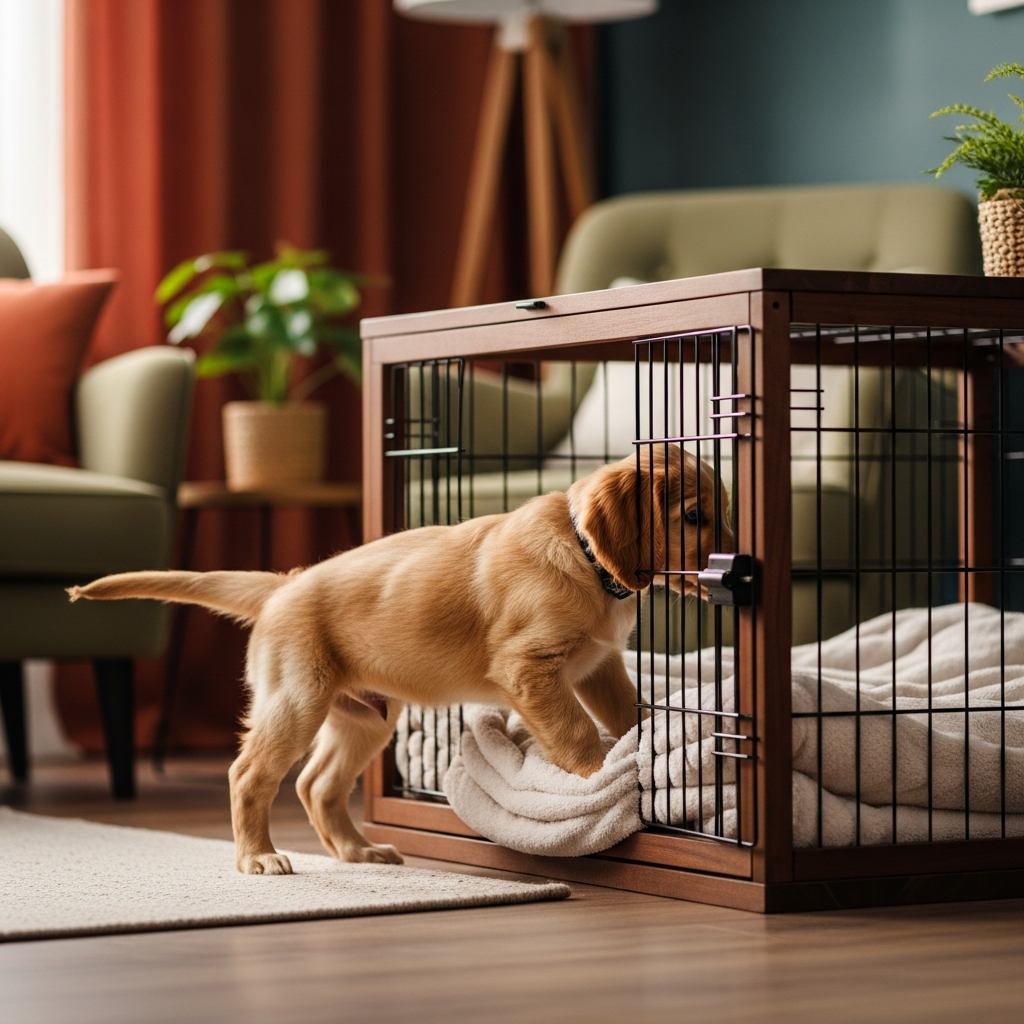
A crate is not a punishment. Done right, it is your dog’s safe space - their den, their bedroom, the place they choose to go when they want to decompress. Crate training also makes housetraining faster and prevents destructive behavior when you cannot supervise.
The crate training guide walks you through the entire process, from first introduction to overnight success. We also cover common mistakes that make crate training harder than it needs to be. You will want to pair this with the right crate for your dog’s size.
Separation Anxiety
True separation anxiety is a panic disorder. Your dog is not being spiteful or trying to punish you for leaving. They are genuinely terrified. It is one of the most heartbreaking and most misunderstood behavior problems in dogs.
Our separation anxiety guide helps you distinguish between true separation anxiety and simple boredom, lays out a systematic desensitization protocol, and discusses when medication might be appropriate. If your dog also struggles with general anxiety, our dog anxiety health guide covers the broader picture.
Boredom and Enrichment
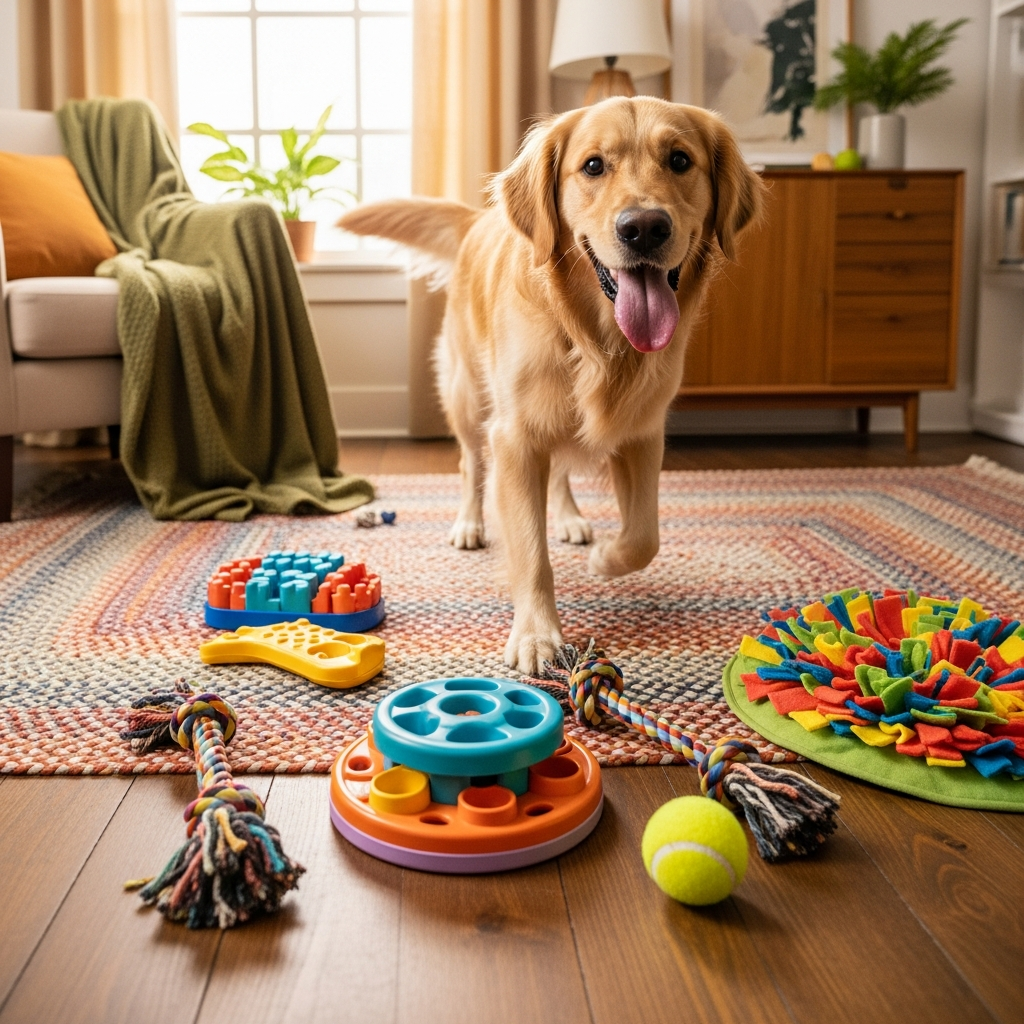
A tired dog is a good dog - but physical exercise alone is not enough. Dogs need mental stimulation too. Without it, they find their own entertainment, and you probably will not like their choices.
The bored dog guide covers physical exercise plans, mental enrichment ideas, interactive toys that actually work, and practical solutions for when you are away at work. For a deeper dive into mental stimulation, check out our mental enrichment guide.
Barking
All dogs bark. It is a normal, healthy form of communication. The problem is when barking becomes excessive - and the solution depends entirely on why your dog is barking.
The stop dog barking guide breaks barking into three categories (alert, demand, and anxiety) and gives you a specific counter-conditioning plan for each one. No bark collars, no yelling, no duct-tape solutions that create new problems.
Socialization
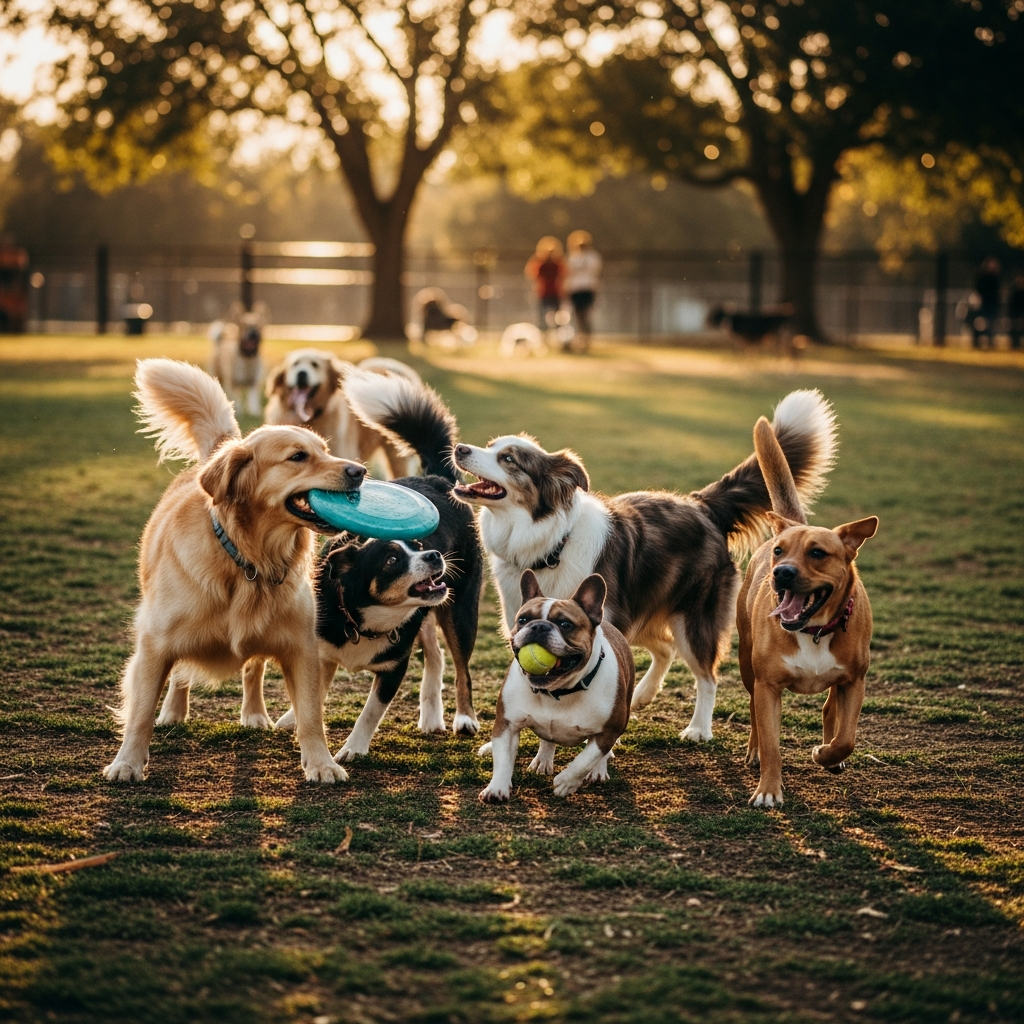
Socialization is not just about letting your dog meet other dogs. It is about exposing your dog to the full range of experiences they will encounter in life - people, animals, sounds, surfaces, environments - in a way that builds confidence rather than fear.
Our socialization guide covers the critical puppy window, safe socialization strategies for adult dogs, and how to work with reactive dogs who are already fearful or aggressive in social situations.
Common Training Mistakes to Avoid
After years of training dogs and talking to hundreds of dog owners, I see the same mistakes come up over and over. Here are the biggest ones:
Repeating Commands
If you say “sit” and your dog does not respond, saying “sit, sit, SIT” does not help. It teaches your dog that “sit” does not mean anything until you have said it three times with increasing frustration. Say it once. If your dog does not respond, help them (lure them or reposition) and try again. If they still do not get it, you need to make the exercise easier - not louder.
Training Sessions That Are Too Long
Dogs learn best in short bursts. Five minutes of focused training is worth more than thirty minutes of sloppy repetition. End sessions on a win - even if you have to make the last rep easy to get there.
Poisoning Cues
A “poisoned” cue is one your dog has learned to associate with something negative. The most common example: using “come” to call your dog and then immediately putting them in the bath, trimming their nails, or ending their playtime. Your dog quickly learns that “come” means fun is over. Protect your recall by making “come” the best word in your dog’s vocabulary every single time.
Inconsistency Between Family Members
If you require your dog to sit before getting dinner but your partner just puts the bowl down, your dog is not learning “sit before eating.” They are learning “it depends on who is in the kitchen.” Get everyone on the same page.
Expecting Too Much Too Fast
Learning is not linear. Your dog will have setbacks. They will nail something at home and completely forget it at the park. This is normal. It does not mean training is not working. It means your dog needs more practice in that specific context.
When to Hire a Professional Trainer
Positive reinforcement training is something anyone can learn and apply at home. But there are situations where a professional trainer or a veterinary behaviorist is the right call:
- Aggression. If your dog has bitten someone, growls with hard body language, or resource guards aggressively, get professional help. This is not something to experiment with on your own.
- Severe separation anxiety. If your dog is injuring themselves, destroying doors and crate bars, or having full panic attacks when left alone, you need a certified separation anxiety trainer (CSAT) and likely veterinary support.
- Reactivity that is not improving. If you have been working on socialization and counter-conditioning for several weeks with no progress, a professional can assess what is happening and adjust your plan.
- You feel stuck. There is no shame in asking for help. A good trainer will teach you, not just train your dog.
When choosing a trainer, look for these certifications:
- CPDT-KA (Certified Professional Dog Trainer - Knowledge Assessed)
- CAAB (Certified Applied Animal Behaviorist)
- ACVB (American College of Veterinary Behaviorists - these are veterinarians)
Avoid any trainer who guarantees results, uses the word “dominance” as a training philosophy, or requires equipment that causes pain.
Building a Training Schedule
Consistency matters more than intensity. Here is a realistic training schedule that works for people with actual jobs and lives:
Daily (5-10 Minutes)
- One or two short training sessions focusing on the behavior you are currently working on
- Practice known commands during daily routines (sit before meals, wait at doors, recall in the backyard)
- A walk that includes leash training practice
Weekly
- One session in a new environment (different park, pet store, friend’s house) to proof behaviors in new contexts
- Review and assess progress - is your dog ready for the next difficulty level?
Monthly
- Introduce one new behavior or increase criteria on an existing one
- Evaluate your overall training goals and adjust
This is sustainable. You do not need to spend hours a day training. You need to spend a few focused minutes, every day, being consistent.
Training Equipment You Actually Need
You do not need much. Here is the essential kit:
- Treats. A variety of high-value and medium-value training treats. Small, soft, and something your dog goes crazy for.
- Treat pouch. A bag that clips to your waist so your hands are free. This makes a bigger difference than you would expect.
- 6-foot leash. A standard flat leash. Not a retractable leash - those teach pulling. Check out our best dog leash guide for recommendations.
- Front-clip harness. If you are working on leash walking, a no-pull harness reduces pulling mechanically while you train the behavior.
- Clicker (optional). If you prefer clicker training over a verbal marker.
- Long line (15-30 feet). For practicing recall in open spaces before your dog is reliable enough for off-leash.
That is it. You do not need e-collars, head halters (for most dogs), or any gadget that promises to fix behavior without training.
Age-Specific Training Guidance
Puppies (8 Weeks to 6 Months)
Focus areas: socialization, house training, bite inhibition, basic commands, crate training.
Puppies have short attention spans but learn incredibly fast. Keep sessions to two to three minutes. Use lots of treats. Prioritize socialization - this is the only window where it is easy. Start crate training on day one.
Do not worry about perfect obedience. At this stage, you are building a relationship and creating positive associations with learning.
Adolescents (6 Months to 2 Years)
Focus areas: proofing commands in new environments, impulse control, leash manners, continued socialization.
This is the hardest stage. Your dog’s brain is flooded with hormones, they have suddenly discovered that squirrels exist, and their recall has gone from decent to nonexistent. This is normal.
Go back to basics in every new environment. Increase your reward value. Add impulse control exercises (wait at doors, leave it with food on the ground, stay while a ball is thrown). Do not take it personally - your dog is not being defiant. They are being a teenager.
Adults (2 to 7 Years)
Focus areas: refining behaviors, addressing any remaining problem behaviors, maintaining skills, enrichment.
If you have been consistent, this is where training really pays off. Your dog has matured, their impulse control has improved, and they understand the game. This is the time to teach more advanced behaviors, work on off-leash reliability, and enjoy the partnership you have built.
If you adopted an adult dog and are starting from scratch, the process is the same - just start with basic commands and work through the framework above.
Seniors (7+ Years)
Focus areas: maintaining known behaviors, accommodating physical changes, mental enrichment.
Older dogs can absolutely learn new things. However, you may need to adjust for physical limitations - a dog with arthritis may struggle with a formal “down” on hard floors, for example. Focus on mental enrichment to keep their brain sharp, and continue reinforcing the behaviors that keep them safe.
Frequently Asked Questions
How long does it take to train a dog?
It depends on the specific behavior, your dog’s history, and your consistency. Most dogs can learn a new command in one to two weeks of daily practice. More complex behaviors or behavior modification (like reactivity or separation anxiety) can take months. The key is consistency over time - short daily sessions beat occasional marathon sessions every time.
Can you train an old dog new tricks?
Absolutely. Dogs learn throughout their entire lives. Older dogs may take slightly longer to pick up new behaviors simply because they have more established habits, but they are just as capable of learning. I have worked with ten-year-old dogs who learned new commands in a week.
Is positive reinforcement enough for “tough” breeds?
Yes. Positive reinforcement works on every breed, from Chihuahuas to Cane Corsos. The idea that certain breeds need a “firmer hand” is a myth rooted in outdated dominance theory. What tough breeds often need is more exercise, more mental stimulation, and a handler who is more consistent - not harsher methods.
What do I do if my dog is food-motivated but overweight?
Use your dog’s regular meals as training rewards. Measure out their daily food allowance in the morning and use a portion of it during training sessions. You can also use low-calorie treats like small pieces of carrot, green beans, or air-popped popcorn. Training does not have to mean extra calories.
Should I use a clicker or a verbal marker?
Either works. A clicker is more precise and consistent, which can speed up learning slightly. A verbal marker (“yes!”) is more convenient because you always have it. Many trainers start with a clicker for new behaviors and switch to a verbal marker once the behavior is established. Pick the one you will actually use consistently.
My dog listens at home but not at the park. What gives?
This is the single most common complaint in dog training, and it has a simple explanation: your dog has not been proofed in that environment yet. A behavior learned in your living room is not automatically transferable to a park full of squirrels, other dogs, and fascinating smells. You need to gradually build up to high-distraction environments. Go back to basics at the park - use high-value treats, keep sessions short, and lower your expectations until your dog shows they can succeed there.
When should I stop giving treats?
You should always reward your dog for good behavior - but the rewards can become intermittent over time. Once a behavior is reliable, you do not need to treat every repetition. Switch to a variable reinforcement schedule (reward randomly - sometimes after one rep, sometimes after three, sometimes after five). This actually makes the behavior stronger, the same way a slot machine is more compelling than a vending machine. And never stop using life rewards - letting your dog go through the door, start their walk, or greet another dog in exchange for polite behavior costs you nothing.
How do I train two dogs at the same time?
Train them separately first. Each dog needs to learn the behavior individually without the distraction of the other dog. Once both dogs know a command reliably, you can start practicing together - but have a helper manage the dog who is waiting. Use different marker words or different clicker sounds if possible so each dog knows when the reward is meant for them.