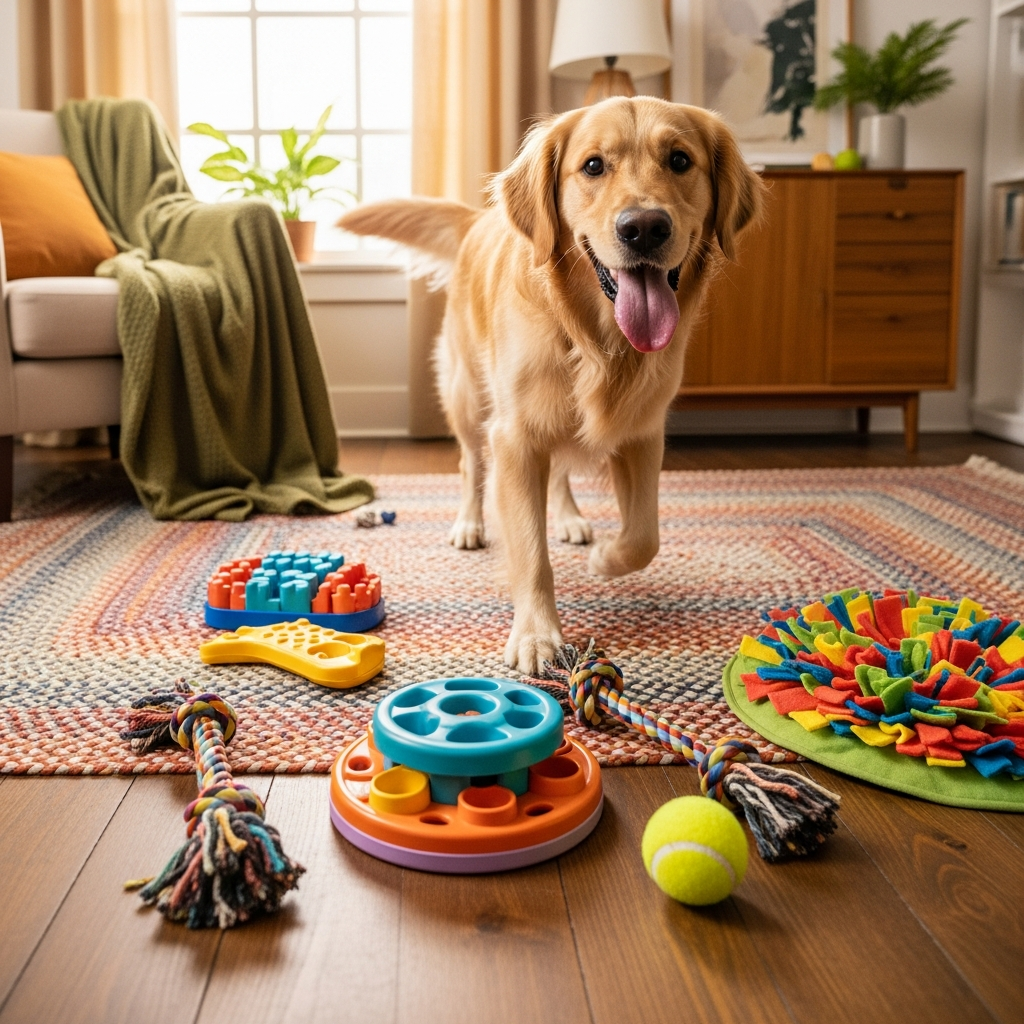
You get home from work to find a destroyed couch cushion, a shredded roll of toilet paper, and your dog looking at you like absolutely nothing happened. Sound familiar?
A bored dog is a destructive dog. Not because they are bad, but because they are smart, energetic animals who need mental and physical stimulation - and when they do not get it, they make their own entertainment. Your couch cushion never stood a chance.
The good news is that keeping your dog entertained while you are at work is not complicated or expensive. It just takes some planning and the right combination of exercise, enrichment, and management.
This guide covers everything: before-work exercise routines, mental enrichment strategies, the best toys and products for alone time, and options like dog walkers and daycare. If your dog’s behavior goes beyond boredom into genuine distress, check our guide on dog separation anxiety - the solutions are different.
For the broader training picture, head to our complete dog training guide.
Boredom vs. Separation Anxiety: Know the Difference
Before you invest in puzzle toys and dog walkers, make sure you are solving the right problem.
Boredom looks like:
- Chewing random objects (shoes, pillows, trash)
- Getting into the garbage
- Digging in the yard
- Restlessness that settles once they find something to do
- Improvement when given toys, chews, or more exercise
- Being fine when left with another dog or person
Separation anxiety looks like:
- Destruction focused on exit points (doors, windows, crate bars)
- Non-stop vocalization (howling, barking) that does not settle
- Urination or defecation despite being housetrained
- Refusing to eat when you are gone
- Following you room to room before you leave
- Panting, drooling, or pacing before departure
If the second list sounds more like your dog, head to our separation anxiety guide. Puzzle toys will not fix a panic disorder.
If it is boredom? Keep reading. We have solutions.
Before You Leave: The Morning Routine
The single most impactful thing you can do for a bored dog is to tire them out before you leave. A dog who starts the day with exercise and mental stimulation is far more likely to nap through the morning.
Physical Exercise (20-45 Minutes)
The goal is to get your dog’s heart rate up and work their muscles before you walk out the door. Options based on your schedule:
If you have 45 minutes:
- A thirty-minute walk at a brisk pace plus ten minutes of fetch or tug in the backyard
- A jog or run with your dog (if they are conditioned for it)
- A trip to a fenced dog park for off-leash play
If you have 20 minutes:
- A fast-paced walk with some interval training (walk-jog-walk)
- Fifteen minutes of intense fetch or flirt pole play
- A backyard agility session (jumps, weave poles, tunnels)
If you only have 10 minutes:
- Stair climbing (up and down several times - this is surprisingly tiring)
- A high-intensity game of tug
- Fetch in a hallway
The amount of exercise your dog needs depends on their breed, age, and health. A young Border Collie needs significantly more than an eight-year-old Basset Hound. Adjust accordingly, but err on the side of more.
Mental Exercise (10-15 Minutes)
Physical exercise tires the body. Mental exercise tires the brain. A combination of both is the recipe for a dog who naps until you get home.
Morning mental enrichment ideas:
- Feed breakfast from a puzzle toy instead of a bowl (this alone adds 10-15 minutes of mental work)
- Run through a quick training session - five minutes of basic commands or learning a new trick
- Play a scent game: hide treats around one room and let your dog find them
- Use a snuffle mat for breakfast
The training session is particularly effective because it requires focus and impulse control, both of which are mentally draining in a good way.
While You Are Gone: Enrichment and Entertainment
Once you have left, your dog needs things to do. Here is what actually works.
Puzzle Toys and Food Dispensers
These are the MVP of alone-time entertainment. A good puzzle toy occupies your dog’s brain, provides a food reward, and can keep them busy for thirty minutes to two hours.
The classics that work:
- Frozen Kong. Stuff a Kong with a mixture of kibble, peanut butter (xylitol-free), mashed banana, and a splash of broth. Freeze it overnight. This is the single most effective boredom-buster I have found. A frozen Kong can keep most dogs occupied for 20 to 45 minutes.
- Lick mats. Spread peanut butter, yogurt, or canned pumpkin on a textured mat and freeze it. Licking is calming and the frozen surface makes it last.
- Snuffle mats. Hide kibble in the fabric folds. Great for dogs who love to use their nose.
- Puzzle feeders. Interactive toys where your dog has to slide, flip, or lift components to access food. Vary the difficulty to keep it challenging.
For specific product recommendations, check out our best interactive dog toys guide.
Rotation is key. Your dog will lose interest in a puzzle toy they see every day. Keep four or five options and rotate them so each one feels novel. Novelty is what keeps enrichment enriching.
Long-Lasting Chews
Chewing is a natural stress reliever for dogs. Providing appropriate chews prevents them from choosing your furniture.
Good options:
- Bully sticks (single ingredient, fully digestible)
- Yak cheese chews (long-lasting, hard texture)
- Frozen raw marrow bones (supervise initially to ensure your dog does not break teeth)
- Rubber chew toys (like Kongs or West Paw Zogoflex)
Avoid: Rawhide (choking hazard and digestive issues), cooked bones (can splinter), and anything small enough to be swallowed whole.
Background Noise
Many dogs are comforted by ambient sound. Leaving the TV or radio on at a normal volume masks outside noises that might trigger barking and creates the feeling of presence.
Some dogs respond well to dog-specific music playlists (classical music at a slow tempo has been shown to reduce stress in shelter dogs). Others prefer talk radio - the sound of human voices can be soothing.
The key is to leave it on routinely, not just when you leave. You do not want the TV to become a departure cue.
Pet Cameras
A pet camera lets you check on your dog throughout the day, which is more for your peace of mind than theirs. Some models include:
- Two-way audio (though talking to an anxious dog can sometimes make things worse - test this)
- Treat dispensers that let you remotely reward calm behavior
- Motion alerts that notify you if your dog is pacing or restless
- Night vision for checking on them during dark hours
A pet camera is also invaluable for diagnosing whether your dog is truly bored or experiencing separation anxiety. Set it up and watch the footage.
Environmental Enrichment
Small changes to your dog’s environment can provide stimulation:
- Window access. If your dog enjoys watching the world (and does not react aggressively to passersby), leave curtains open on a window they can see out of.
- Scent stations. Dab a small amount of a novel scent (vanilla extract, lavender, anise) on a cloth and leave it in a different spot each day. Dogs live in a scent world - a new smell is interesting.
- Rotate toys. Put half your dog’s toys away and swap them every few days. A toy they have not seen in a week feels brand new.
Midday Solutions
For dogs who need more than morning exercise and enrichment, a midday break can make a significant difference.
Dog Walker
A professional dog walker who comes midday breaks your dog’s day in half. A thirty-minute walk provides exercise, bathroom access, and social interaction. This is especially valuable for puppies and high-energy breeds who cannot comfortably go eight hours without activity.
What to look for in a dog walker:
- Insured and bonded
- Positive reinforcement approach (no aversive equipment)
- References from other clients
- Clear communication (photos and updates after walks)
- Comfortable handling your dog’s specific needs
Dog Daycare
Daycare is the nuclear option for boredom - your dog spends the day playing, socializing, and being supervised by professionals. It is physically and mentally exhausting in the best way.
Daycare is great for dogs who:
- Love playing with other dogs
- Have high energy needs that a morning walk does not satisfy
- Are social and confident
- Are struggling with destructive boredom despite other interventions
Daycare is not ideal for dogs who:
- Are fearful or reactive around other dogs
- Have resource guarding issues
- Are overwhelmed by high-stimulus environments
- Have health issues that limit physical activity
Two to three days of daycare per week, combined with enrichment on the other days, is often the perfect balance.
Friend or Family Check-In
Sometimes the simplest solution is the best one. A neighbor, friend, or family member who can stop by for 20 minutes to let your dog out, play a quick game of fetch, and provide a Kong can be all it takes.
Exercise Plans by Energy Level
Not all dogs need the same amount of stimulation. Here is a framework based on energy level.
Low-Energy Dogs (Bulldogs, Basset Hounds, Senior Dogs)
Morning: 15-20 minute walk, breakfast from a puzzle feeder Alone time: One frozen Kong, a lick mat, background TV Evening: 15-20 minute walk, brief training session, cuddle time
These dogs are often content to sleep most of the day. Basic enrichment is usually sufficient.
Medium-Energy Dogs (Labs, Goldens, Spaniels)
Morning: 30-minute walk plus 10 minutes of fetch, puzzle feeder breakfast Alone time: Frozen Kong, rotating puzzle toys, a bully stick, midday dog walker 2-3 days per week Evening: 30-minute walk, 10 minutes of training, an evening play session
These dogs need consistent daily exercise but can handle being alone for a work day with proper preparation.
High-Energy Dogs (Border Collies, Australian Shepherds, Vizslas, Working Breeds)
Morning: 45-60 minutes of vigorous exercise (run, hike, or intense fetch), breakfast training session Alone time: Multiple enrichment items, puzzle feeders, midday dog walker daily or daycare 2-3 days per week Evening: Another 30-45 minute exercise session, training, scent work, or a dog sport class
High-energy dogs who do not get enough stimulation will find their own - and you will not like it. If you are consistently coming home to destruction despite following this plan, consider adding more exercise or another day of daycare.
DIY Enrichment Ideas
You do not need to spend a fortune on puzzle toys. Here are enrichment ideas that cost little or nothing:
Muffin Tin Puzzle
Place treats in a muffin tin and cover each cup with a tennis ball. Your dog has to remove the balls to access the treats. Simple, effective, free.
Cardboard Box Puzzle
Put treats or kibble inside a cardboard box (no tape or staples). Fold the flaps closed. Let your dog figure out how to open it. Some dogs will delicately unfold the flaps; others will shred the box. Both are fine - the enrichment is in the problem-solving.
Towel Roll
Roll treats inside a towel. Start with a simple fold and progress to tighter rolls as your dog gets better at unrolling them.
Ice Block Treasure
Freeze treats, kibble, and dog-safe broth in a large container (a bundt pan works great). Give your dog the frozen block to lick and chew as it thaws. This can last an hour or more on a warm day.
Scatter Feeding
Instead of feeding from a bowl, scatter kibble across the yard or a room. Your dog has to use their nose to find every piece. This engages their primary sense and can turn a two-minute meal into a twenty-minute activity.
Hide and Seek With Treats
Before you leave, hide small piles of treats around the house in accessible but not obvious places - behind a chair leg, on a low shelf, under a blanket edge. Your dog will spend time hunting them down after you leave.
Signs Your Dog Needs More Stimulation
Watch for these indicators that your current enrichment plan is not enough:
- Destructive chewing (furniture, baseboards, door frames)
- Excessive barking when you are gone (check with neighbors or use a camera) - for more on this, see our barking guide
- Digging in the yard or at carpet
- Restlessness or pacing visible on camera
- Counter surfing and trash raiding that was not a problem before
- Mouthiness or hyperactivity when you get home
If you see these signs, add more exercise, more enrichment, or consider a midday dog walker or daycare.
Signs of Adequate Stimulation
Here is what a well-stimulated dog looks like:
- Sleeps or rests calmly while you are gone (camera confirms)
- Greets you happily but calmly when you return
- Engages with enrichment toys
- Settles easily in the evening
- No destructive behavior
- Calm and relaxed body language
For a deep dive into mental stimulation specifically, including canine enrichment categories and advanced ideas, head to our mental enrichment for dogs guide.
Frequently Asked Questions
How long can I leave my dog alone?
Most adult dogs can handle four to six hours comfortably and up to eight hours if properly exercised and enriched. Puppies need more frequent breaks - a general rule is one hour per month of age (a four-month-old puppy can hold it for about four hours). Senior dogs may also need more frequent bathroom breaks.
Will getting a second dog fix my dog’s boredom?
Maybe. If your dog loves other dogs and the boredom is about having no one to interact with, a companion can help enormously. However, a second dog doubles your responsibility, your costs, and your training work. Make sure your first dog is well-managed before adding a second. And if the issue is separation anxiety rather than boredom, a second dog will not help - read our separation anxiety guide instead.
My dog has access to a yard but is still destructive. Why?
A yard is not exercise. Dogs do not self-exercise in a yard - they sniff around for five minutes and then wait by the door. Your dog needs structured exercise (walks, fetch, play) and mental enrichment, not just space. A bored dog with a big yard is still a bored dog.
Are puzzle toys safe to leave with my dog unsupervised?
Most commercial puzzle toys designed for dogs are safe for unsupervised use. However, supervise the first few uses to make sure your dog does not destroy the toy and swallow pieces. Avoid leaving any toy that can be broken into small, swallowable pieces. Frozen Kongs, lick mats, and durable rubber toys are generally the safest options.
My dog finishes the Kong in five minutes. How do I make it last longer?
Pack it tighter, use stickier ingredients (peanut butter, cream cheese), and freeze it solid. You can also layer it: put a small treat at the bottom, then a layer of kibble mixed with peanut butter, then a layer of mashed banana, then more kibble, and seal the top with peanut butter. Freezing for 24 hours makes it significantly harder than a fresh Kong.
Is doggy daycare safe?
Good daycares are safe and well-managed. Look for facilities that: separate dogs by size and temperament, have staff-to-dog ratios of 1:10 or better, require vaccination records, conduct temperament assessments, and have a clear protocol for handling conflicts. Tour the facility during operating hours and watch how staff interact with the dogs.
Can I leave the TV on for my dog?
Yes. Many dogs are comforted by background noise. It masks outside sounds that might trigger barking and creates a sense of presence. Stick with calm programming - nature documentaries and talk shows work better than action movies with gunshots and explosions.