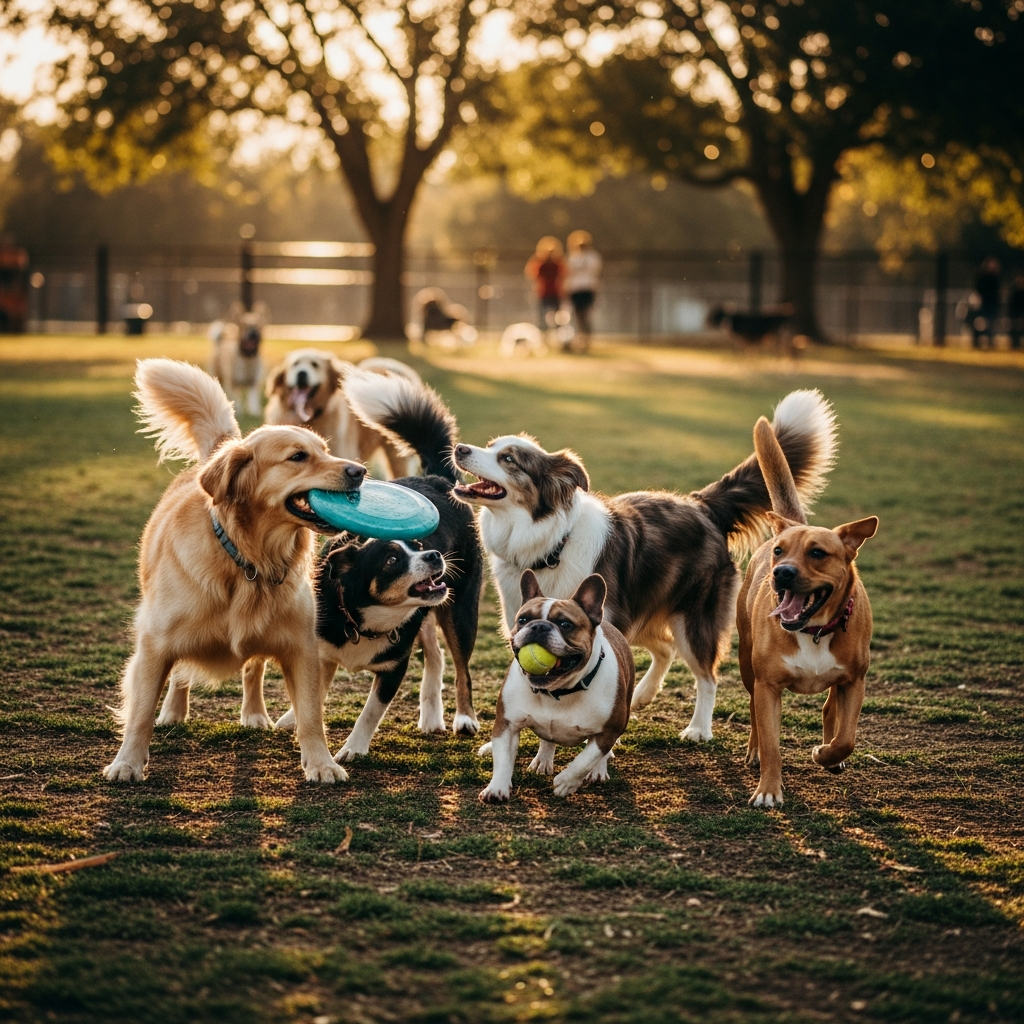
Socialization is the most misunderstood concept in dog ownership. Most people think it means “letting your dog meet other dogs.” Throw them in a dog park, let them figure it out, done. Right?
Wrong. That approach creates more problems than it solves. Socialization is not about quantity of exposure. It is about quality. It is about teaching your dog that the world - all of it, from other dogs and people to bicycles, thunderstorms, and slippery floors - is safe and manageable.
Done right, socialization produces a confident, adaptable dog who can handle new experiences without fear or aggression. Done wrong (or not done at all), you end up with a dog who barks at strangers, lunges at other dogs, and trembles at the sound of a truck.
This guide covers the full picture: the critical puppy socialization window, safe socialization for adult dogs, how to work with reactive or fearful dogs, and honest advice about dog parks. If you are just getting started with a new puppy, pair this with our new puppy checklist for a complete plan.
For the broader training framework, visit our complete dog training guide.
What Socialization Actually Means
Socialization is the process of exposing your dog to the full range of experiences they will encounter in life - and teaching them that these experiences are safe, neutral, or positive.
It is not just about other dogs. The socialization checklist includes:
People:
- Men, women, and children of various ages
- People wearing hats, sunglasses, uniforms, and carrying bags or equipment
- People of different body sizes, movement speeds, and voice volumes
- People using wheelchairs, walkers, or crutches
Animals:
- Other dogs (different sizes, breeds, energy levels)
- Cats
- Livestock (if relevant to your area)
- Wildlife (at a safe distance)
Environments:
- Different surfaces (grass, gravel, metal grates, slippery tile, sand)
- Indoor spaces (pet stores, lobbies, friends’ homes)
- Outdoor spaces (parks, sidewalks, trails, parking lots)
- Vehicles (cars, trucks, buses)
Sounds:
- Traffic
- Thunder and fireworks
- Construction
- Vacuums and household appliances
- Music and crowds
Handling:
- Being touched on paws, ears, mouth, and tail
- Nail trimming and grooming
- Veterinary examination
- Being restrained gently
- Being picked up (for small dogs)
The goal is not for your dog to love all of these things. The goal is for your dog to be aware of them and not panic.
The Critical Puppy Socialization Window
If you have a puppy under 16 weeks, this section is the most important thing you will read today.
The Science
Between approximately 3 and 16 weeks of age, puppies go through a critical socialization period during which their brains are uniquely receptive to new experiences. Positive (or neutral) exposures during this window create lasting confidence. The neural pathways formed during this period shape how your dog perceives the world for the rest of their life.
After this window closes, novel experiences become inherently more suspicious. A puppy who meets 50 different people during the critical window will generally be comfortable with strangers as an adult. A puppy who meets three people during the same window may be fearful of unfamiliar humans for life.
This does not mean socialization is impossible after 16 weeks. It means it is significantly harder and slower. The investment you make during the critical window pays dividends for the next 10 to 15 years of your dog’s life.
The Vaccination Concern
Here is the tension: the critical socialization window overlaps with the period when your puppy is not fully vaccinated. Many veterinarians advise keeping puppies away from other dogs until they have completed their vaccination series (around 16 weeks). But by then, the socialization window is closed.
The American Veterinary Society of Animal Behavior (AVSAB) addressed this directly in a position statement: the risk of behavioral problems from inadequate socialization is greater than the risk of disease from controlled socialization activities.
The key word is controlled. Here is what is safe and what is not:
Safe before full vaccination:
- Puppy socialization classes (all puppies vaccinated with at least one set of shots, held on sanitized floors)
- Play dates with known, healthy, vaccinated dogs in private yards
- Carrying your puppy in public places (they experience the sights, sounds, and smells without touching potentially contaminated ground)
- Visits to friends’ homes with vaccinated dogs
- Controlled exposure to different people, surfaces, and sounds at home
Not safe before full vaccination:
- Dog parks (unknown vaccination status, high disease exposure)
- Pet store floors (high traffic from unknown dogs)
- Areas with heavy dog traffic and no sanitation (sidewalks near dog parks, popular trails)
The Puppy Socialization Protocol
Week 1-2 at home (8-10 weeks old):
- Introduce household sounds gradually (vacuum cleaner, blender, TV, music). Pair each sound with treats.
- Handle your puppy daily: touch paws, ears, mouth, tail. Make it a game with treats.
- Invite three to five different people to your home. Different ages, appearances, and energy levels. Everyone gives the puppy treats.
- Walk your puppy through different rooms and on different surfaces (carpet, tile, wood, a towel, a plastic bag on the floor).
Week 3-4 (10-12 weeks old):
- Enroll in a puppy socialization class. These are facilitated by trainers and provide safe, controlled interactions with other puppies.
- Carry your puppy to new environments: a hardware store, a friend’s house, a park (carried, not on the ground). Let them observe.
- Introduce gentle handling exercises that mimic vet visits: look in ears, lift lips to see teeth, hold paws, gently restrain.
- Introduce the car: short, positive rides that end somewhere fun (not just the vet).
Week 5-8 (12-16 weeks old):
- Increase the variety and intensity of exposures. More people, more dogs (known and vaccinated), more environments.
- Practice basic commands in different locations. Training in new environments is itself a socialization activity.
- Introduce umbrellas, hats, bicycles, skateboards, and anything else your dog is likely to encounter regularly.
- Visit the vet for a “happy visit” - just treats and positive experiences, no procedures.
The Golden Rule of Puppy Socialization
Quality over quantity. Positive over neutral. Neutral over negative.
Every socialization experience should be positive or at least neutral. If your puppy shows fear (cowering, trembling, trying to hide, freezing), you have pushed too far. Back off immediately, create distance from the trigger, and let your puppy recover. Forcing a scared puppy to “face their fears” creates lasting fear, not confidence.
Watch your puppy’s body language:
- Confident: Loose body, wagging tail, approaching voluntarily, playful
- Cautious but okay: Moving slowly, sniffing, looking but not approaching, tail neutral
- Fearful (back off): Tail tucked, body low, ears back, whale eye (whites of eyes visible), hiding behind you, trembling, freezing
Let your puppy set the pace. If they do not want to approach something, do not push. Scatter treats near the scary thing and let your puppy investigate from a distance they are comfortable with.
Socializing an Adult Dog
Maybe you adopted an adult dog with limited socialization. Maybe your dog missed the critical window for other reasons. Can you still socialize an adult dog?
Yes. But the process is different.
The Reality Check
Adult dogs who missed the socialization window will never be as naturally comfortable with novelty as a well-socialized puppy would be. This does not mean they cannot improve - often dramatically - but it does mean your expectations should be realistic.
The goal with an adult dog is not necessarily “loves everyone and everything.” The goal is often “can exist in the world without panicking or aggressing.” For some dogs, that is a massive and life-changing improvement.
Counter-Conditioning and Desensitization
This is the foundation of adult socialization. The concept:
- Desensitization: Expose your dog to the scary thing at such a low intensity that it does not trigger fear. Gradually increase the intensity over time.
- Counter-conditioning: Pair the scary thing with something your dog loves (usually food). The trigger predicts treats, which changes the emotional response from “scary” to “treats are coming.”
Example: A dog afraid of strangers
- Find a comfortable distance where your dog can see a stranger without reacting. This might be 50 feet. This is your starting point.
- The moment your dog notices the stranger (looks at them, orients toward them), feed high-value treats. Stranger visible = chicken appears.
- When the stranger moves away or out of sight, the treats stop.
- Repeat across multiple sessions. Over time, your dog starts to associate strangers with treats rather than fear.
- Gradually decrease the distance. If your dog reacts (barking, lunging, freezing), you moved too fast. Go back to the previous distance.
This process takes weeks to months. It cannot be rushed. But it works.
Tips for Socializing Adult Dogs
Go at your dog’s pace. Pushing an adult dog too fast creates setbacks, not progress. One positive experience is worth more than ten forced ones.
Use management. While you are working on socialization, manage your dog’s environment to prevent exposure to triggers at full intensity. Cross the street to avoid other dogs. Walk at quiet times. Choose low-traffic routes.
Keep sessions short. Fifteen to twenty minutes of socialization work is plenty. Mental and emotional effort is exhausting.
End on a positive note. If your dog had a good interaction, end the session there. Do not push for one more and risk ending on a negative.
Celebrate small wins. Your dog looked at a stranger without barking? That is huge. Mark it, treat it, celebrate it. Progress in adult socialization is measured in inches, not miles.
Working With Reactive Dogs
Reactivity is a pattern of overreacting to specific triggers - other dogs, people, bicycles, cars, or anything else. It usually manifests as barking, lunging, growling, or a combination. Reactivity is not aggression, though it can look like it. Most reactive dogs are fearful, not dangerous.
Understanding Reactivity
A reactive dog has learned that big, loud displays make the scary thing go away. They bark and lunge at another dog; the other dog’s owner pulls them away; the scary dog disappears. From the reactive dog’s perspective: the strategy works.
Reactivity can also be frustration-based - a dog who desperately wants to greet another dog but cannot because they are on leash. The arousal comes out as barking and lunging.
The Look At That (LAT) Protocol
This is one of the most effective techniques for reactive dogs:
- At a distance where your dog can see the trigger but is not reacting, wait for your dog to look at the trigger.
- The moment they look, mark and treat. You are rewarding them for noticing the trigger without reacting.
- Your dog looks at the trigger, then looks at you for their treat. This is the pattern you are building: see trigger, look at owner, get reward.
- Gradually decrease the distance to the trigger over multiple sessions. Always stay below the threshold that triggers a reaction.
Over time, your dog starts to see the trigger and automatically look at you. The trigger has become a cue to check in with you rather than a cue to lose their mind.
Management While Training
Reactivity training takes time. While you are working on it:
- Walk at low-traffic times and in low-traffic areas.
- Cross the street or change direction when you see a trigger approaching. This is not giving up - it is managing the situation to prevent practice of the unwanted behavior.
- Use a front-clip harness for better control. Check our no-pull harness guide for options.
- Keep your dog at a distance that allows them to think. If they are over threshold (barking, lunging, unable to take treats), you are too close.
- Do not force interactions. A reactive dog who is forced to “say hi” to another dog is a dog who may bite.
When to Get Help
Reactivity is one of the behavior issues most likely to benefit from professional guidance. A certified trainer (CPDT-KA) or veterinary behaviorist can:
- Accurately assess the type and severity of reactivity
- Create a customized counter-conditioning plan
- Evaluate whether medication would support the training
- Provide hands-on coaching for your handling skills
If your dog’s reactivity includes hard staring, stiff body language, air snapping, or actual bites, seek professional help immediately. These are signs that the reactivity has an aggressive component that needs expert management.
The Dog Park Question
Dog parks are the most polarizing topic in dog socialization. Here is a balanced take.
The Pros
- Free off-leash exercise
- Practice social skills with a variety of dogs
- Mental stimulation from a novel environment
- Community connection with other dog owners
The Cons
- You cannot control other dogs’ behavior or vaccination status
- Bullying and inappropriate play are common and often unaddressed by other owners
- Resource guarding over toys, water bowls, or space can trigger fights
- Fearful or under-socialized dogs can be overwhelmed and traumatized
- Disease transmission risk is higher than in controlled settings
The Verdict
Dog parks can be great for social, confident, well-socialized dogs who enjoy rough-and-tumble play with unfamiliar dogs. They are a terrible idea for fearful dogs, reactive dogs, puppies under four months, and dogs who have not been socialized to play with unknown dogs.
If you go to the dog park:
- Visit during low-traffic times first
- Watch the energy before entering - if the dogs inside are playing too rough or there is tension, come back later
- Stay engaged - do not sit on a bench staring at your phone
- Know your dog’s play style and watch for signs of stress
- Leave if your dog is overwhelmed, being bullied, or bullying others
- Do not bring food or high-value toys that could trigger resource guarding
Alternatives to dog parks:
- Arranged play dates with known, compatible dogs
- Sniff walks in new areas (socialization is not just about other dogs)
- Group training classes
- Doggy daycare with proper temperament screening
Socialization Mistakes to Avoid
Flooding
Taking a fearful dog to a busy farmer’s market and forcing them to deal with it is flooding - overwhelming exposure to a fear trigger. It does not build confidence. It builds trauma. Always work below your dog’s threshold and let them choose to engage.
“They Need to Work It Out”
Two dogs growling and snapping at each other are not “working it out.” They are having a conflict that can escalate to injury. Intervene calmly by calling your dog away or creating distance. Do not wait for a fight to break out.
Only Socializing With Dogs
Dogs need to be comfortable with people, environments, sounds, and handling - not just other dogs. A dog who plays well at the dog park but barks at every person who comes to your house is not well-socialized.
Stopping After Puppyhood
Socialization is not a one-and-done event. It is a lifelong practice. Dogs who stop being exposed to variety can regress. Continue taking your dog to new places, meeting new people, and having new experiences throughout their life.
Ignoring Body Language
Your dog is constantly communicating through body language. Lip licking, yawning, turning away, showing whale eye, tucking their tail - these are all stress signals. If you do not notice and respond to these signals, you are pushing your dog past their comfort zone without realizing it.
Learn to read canine body language. It is the single most important skill for safe and effective socialization.
Socialization Checklist
Use this as a tracking tool. The goal is to expose your dog (at their comfort level) to each category:
People (aim for 50+ individuals during puppyhood):
- Children (toddlers, school-age, teenagers)
- Elderly people
- People with beards, hats, sunglasses
- People in uniforms
- People using mobility aids
- People of different ethnicities and body types
- Mail carriers, delivery drivers
- Crowds
Dogs (aim for 20+ interactions during puppyhood):
- Small dogs
- Large dogs
- Puppies
- Calm adult dogs
- Playful dogs
- Dogs of different breeds and coat types
Environments:
- Vet clinic (happy visits)
- Pet store
- Outdoor cafe
- Friend’s house
- Car rides
- Elevator
- Stairs
- Busy sidewalk
- Quiet trail
- Beach or lake
Surfaces:
- Grass
- Gravel
- Metal grate
- Wet floor
- Sand
- Stairs (carpet and hardwood)
- Dock or bridge
Sounds:
- Doorbell
- Vacuum
- Thunder recording
- Fireworks recording
- Construction sounds
- Traffic
- Crowd noise
- Musical instruments
Handling:
- Paw touching and nail trimming
- Ear examination
- Mouth examination
- Gentle restraint
- Brushing and grooming
- Bath
- Collar and leash handling
- Harness on/off
Frequently Asked Questions
My puppy is 14 weeks and I have not started socialization yet. Is it too late?
No, but start immediately. You still have a few weeks of the critical window, and socialization remains valuable even after it closes. It will just require more patience. Focus on the highest-priority exposures: people, other dogs, vet handling, and common environmental sounds.
How do I socialize my dog during winter when we cannot go out as much?
Indoor socialization is still socialization. Invite different people over, play sound recordings at varying volumes, practice handling exercises, visit pet-friendly stores, and arrange indoor play dates. You can also drive your dog to different parking lots and let them observe from the car.
My dog was socialized as a puppy but has become fearful as an adult. What happened?
Several things can cause regression: a traumatic experience, illness, pain, a major life change (move, new family member), or simply a lack of ongoing socialization. Address any medical causes first, then use the counter-conditioning and desensitization techniques described in the adult socialization section.
Is it safe to let my puppy play with my friend’s adult dog?
Yes, if the adult dog is healthy, vaccinated, good-natured, and has a history of being gentle with puppies. Supervise closely. A good adult dog will correct a pushy puppy with a gentle growl and turn away - this is normal and educational. A bad match is an adult dog who pins, shakes, or repeatedly overwhelms the puppy.
My dog loves people but is reactive to other dogs. Do they need more dog socialization?
Not necessarily in the way you might think. Forcing more dog interactions on a reactive dog makes things worse. What they need is counter-conditioning - learning to see other dogs at a distance without reacting - not close-up greetings with unfamiliar dogs. Some dogs are simply not dog-social, and that is okay. Not every dog needs to be a dog-park dog.
How do I socialize my dog if they have already bitten someone?
Stop all socialization attempts and consult a veterinary behaviorist or certified applied animal behaviorist immediately. A dog with a bite history needs a professional assessment to determine the level of risk and create a safe management and behavior modification plan. This is not something to work through on your own.
Can group training classes count as socialization?
Absolutely. Group classes expose your dog to other dogs, new people, a new environment, and new sounds - all in a controlled setting with a professional present. They are one of the best socialization tools available. Look for classes that use positive reinforcement methods and maintain appropriate space between dogs. For the commands you will learn there, check our basic commands guide.