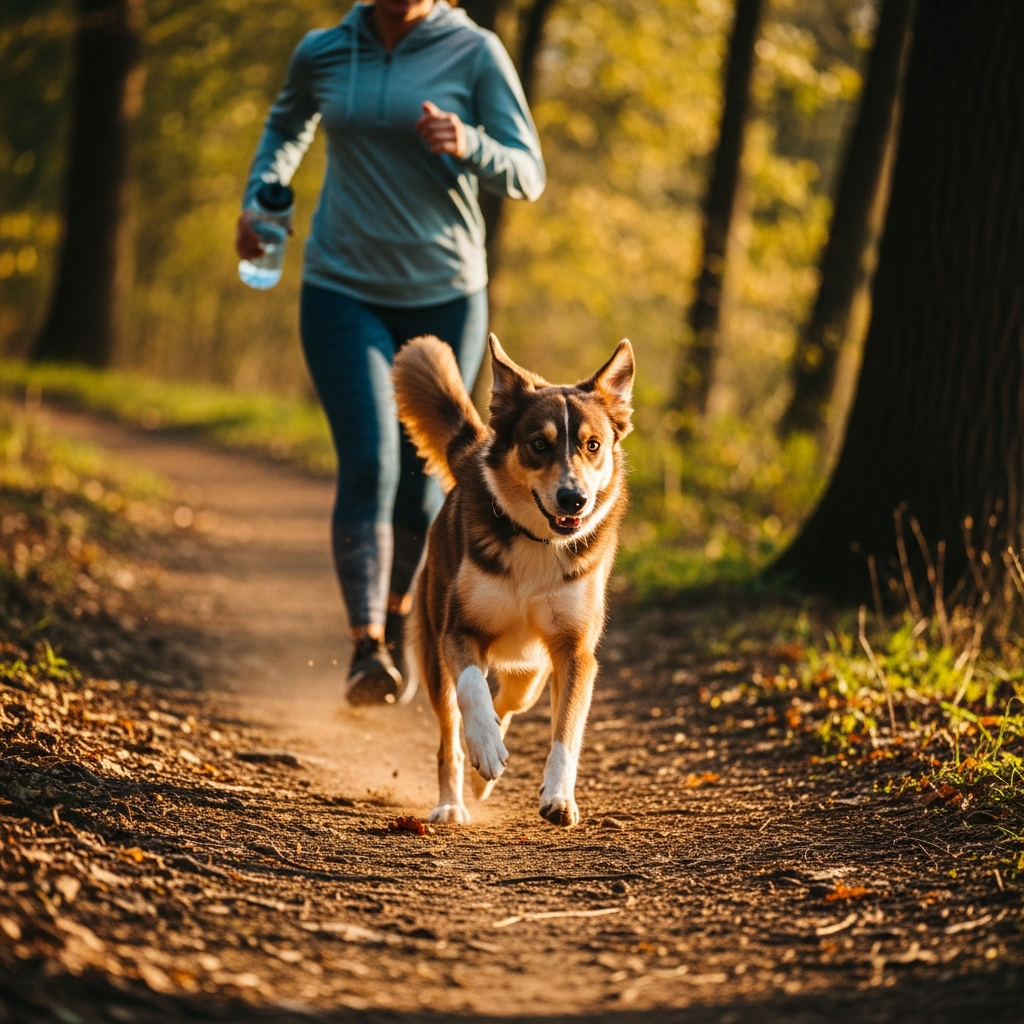
If you actually run, hike, bike, or spend most of your free time outside moving, you need a dog that can keep up. Not a dog that “likes walks.” A dog that can handle miles of trail, hours of elevation, heat, cold, and the kind of sustained effort that would put most breeds to sleep for two days.
But here’s the thing most breed guides don’t tell you: even athletic breeds have limits. Joint health matters. Heat tolerance varies wildly. Age of onset for exercise matters – puppies shouldn’t run until their growth plates close. And some of the most athletic-looking breeds have structural problems that make them terrible long-distance partners.
This guide covers the breeds that can actually do what you do, with honest assessments of their limitations so you’re not discovering problems at mile 8 on a mountain trail.
Before You Choose: Non-Negotiable Health Considerations
Growth Plates and Puppies
No puppy should do sustained running or high-impact exercise until their growth plates have closed. This typically happens between 12 and 18 months depending on breed size (larger breeds take longer). Forced exercise on immature joints causes permanent damage – we’re talking hip dysplasia, elbow dysplasia, and cartilage injuries that will end your dog’s athletic career before it starts.
This means if you get a puppy, you’re waiting 12-18 months before they’re a real exercise partner. Plan accordingly.
Heat Tolerance
Dogs regulate heat through panting and limited sweat glands in their paw pads. Heavy-coated breeds, brachycephalic breeds, and dark-coated breeds overheat faster. If you exercise in warm climates, this is a critical factor. Heatstroke can kill a dog in minutes, and it’s one of the most common preventable emergencies in active dogs.
Joint Health by Breed
Some breeds are structurally prone to joint problems regardless of conditioning. Hip dysplasia, elbow dysplasia, and ACL tears are more common in certain breeds and can be career-ending injuries for an athletic dog. Health testing by breeders significantly reduces (but doesn’t eliminate) this risk.
The Best Breeds for Runners, Hikers, and Active Lifestyles
1. Vizsla
Size: 45-65 lbs | Endurance: Exceptional | Heat Tolerance: Good | Joint Risk: Low-Moderate
The Vizsla is the ultimate running dog. They’re lean, athletic, and bred to work alongside hunters in the Hungarian plains for hours at a stretch. They have a thin, single-layer coat that handles heat better than most sporting breeds, and their drive to stay near their owner means they’re natural off-leash trail partners once recall is trained.
The honest truth: Vizslas are not casual dogs. If you skip a day of exercise, they’ll remind you by dismantling something in your home. They need 90+ minutes of vigorous daily activity – not a suggestion, a requirement. They’re also velcro dogs that develop separation anxiety at higher rates than most breeds. If you work long hours away from home and then come back too tired to exercise, this is not your breed.
Best activities: Running (5K to marathon distances), trail running, hiking, bikejoring, field work.
Limitations: Thin coat means cold weather needs a jacket. Not ideal for winter running in northern climates without gear.
2. German Shorthaired Pointer (GSP)
Size: 45-70 lbs | Endurance: Exceptional | Heat Tolerance: Good | Joint Risk: Low-Moderate
The GSP is an all-terrain athlete. They run, swim, hike, and retrieve with equal enthusiasm. Their versatility makes them the best choice for people who do multiple outdoor activities rather than specializing in one.
The honest truth: GSPs need a job. Without one, they become anxious, destructive, and difficult to live with. “A walk” is not a job. Running, hiking with purpose, fetch, swimming, or scent work are jobs. They also have a strong prey drive – squirrels, rabbits, and birds will test even a well-trained recall. Off-leash reliability takes significant work with this breed. Budget for 90-120 minutes of daily activity minimum.
Best activities: Trail running, hiking, swimming, hunting, mountain biking with dogs, dock diving.
Limitations: Their prey drive can make off-leash hiking stressful if wildlife is abundant. E-collar training for recall is common with this breed for safety.
3. Border Collie
Size: 30-55 lbs | Endurance: Exceptional | Heat Tolerance: Moderate | Joint Risk: Low
The Border Collie is the smartest dog breed alive and arguably the most athletic. They can run all day, navigate technical terrain like they were born on it (because many lines were), and they recover from exertion faster than any breed we’ve worked with.
The honest truth: Border Collies need mental stimulation as much as physical exercise. A Border Collie that runs 10 miles but doesn’t get any brain work may still be wired when you get home. They also herd things – runners, bikes, children, other dogs, cars. This herding instinct requires active management, especially around mountain biking trails where they may try to herd passing bikes. They’re not great with idle time, they’re not couch dogs, and they’re not for casual outdoor enthusiasts. They’re for people whose lifestyle genuinely centers on outdoor activity.
Best activities: Trail running, hiking (all difficulty levels), agility, disc dog, herding trials, bikejoring.
Limitations: Double coat limits hot-weather performance. They can overheat on summer runs. Plan for early-morning or evening exercise in warm months.
4. Australian Shepherd
Size: 40-65 lbs | Endurance: High | Heat Tolerance: Moderate | Joint Risk: Moderate
The Aussie is a versatile working dog with the drive and stamina for serious outdoor pursuits. They’re smart, responsive, and bond deeply with their handler, making them natural trail partners.
The honest truth: Aussies share many of the Border Collie’s traits – high intelligence, herding instinct, and a need for both physical and mental stimulation. Hip dysplasia is more common in Aussies than in Border Collies, so health testing from the breeder is critical. The merle coloring, while striking, comes with a genetic risk: merle-to-merle breeding can produce puppies with serious vision and hearing defects. If buying from a breeder, confirm that both parents aren’t merle.
Best activities: Hiking, trail running, agility, disc dog, backpacking.
Limitations: Their coat collects burrs, mud, and debris on the trail. Plan for post-hike grooming. Heat tolerance is moderate – schedule hot-weather activities for cooler parts of the day.
5. Rhodesian Ridgeback
Size: 70-85 lbs | Endurance: High | Heat Tolerance: Excellent | Joint Risk: Moderate
The Ridgeback was bred to track lions across the African savanna, which makes them uniquely suited for hot-weather endurance. Their short coat and lean build allow them to handle temperatures that would sideline a Husky or Malamute.
The honest truth: Ridgebacks are independent thinkers. They’re not as eager to please as retrievers or herding breeds, which means training requires patience and consistency. Off-leash reliability varies – their prey drive and independence can override recall in high-stimulation environments. They’re also large, strong dogs that need an experienced handler. A 70-pound Ridgeback that decides it’s going somewhere is going somewhere.
Best activities: Long-distance running (especially in warm climates), desert hiking, endurance trail work.
Limitations: Their independence means off-leash hiking requires extensive recall training. Not the best choice for people who want an immediately responsive trail partner.
6. Weimaraner
Size: 55-90 lbs | Endurance: High | Heat Tolerance: Good | Joint Risk: Moderate
The Weimaraner is a big, athletic, velcro dog that wants to do everything you do, preferably while touching you. They’re fast, have excellent endurance, and their short coat makes hot-weather activity more manageable.
The honest truth: Weimaraners have the worst separation anxiety in the sporting group. If you’re active but also work a 9-to-5, this dog will struggle with the hours you’re gone, regardless of how many miles you put in together. They’re also prone to bloat (gastric torsion), which requires emergency intervention. Avoid exercise within an hour of meals, and know the signs of bloat (distended abdomen, non-productive retching, restlessness).
Best activities: Running (all distances), hiking, swimming, field work.
Limitations: Separation anxiety is a serious breed trait, not an occasional behavior. Factor this into your lifestyle assessment honestly.
7. Labrador Retriever
Size: 55-80 lbs | Endurance: High | Heat Tolerance: Moderate | Joint Risk: Moderate-High
The Lab is the most popular adventure dog for a reason: they do everything reasonably well. Running, hiking, swimming, camping – Labs are game for all of it with an enthusiasm that makes every outing feel like their best day ever.
The honest truth: Labs come in two lines – “field” (bred for working, lean and athletic) and “show” (bred for conformation, stockier and calmer). For serious athletic partnership, field-line Labs are dramatically better suited. Show-line Labs tire faster and are more prone to weight gain. Joint issues (hip and elbow dysplasia) are significant in the breed – health-tested parents are essential. Labs also overheat faster than their enthusiasm suggests. They’ll keep running past the point of heat exhaustion if you let them, so heat management is your responsibility.
Best activities: Hiking, swimming, moderate-distance running, backpacking, dock diving.
Limitations: Joint health makes them less ideal for ultramarathon distances or highly technical trail running. Their eagerness to please means they won’t tell you when they’re tired – you need to monitor them.
8. Belgian Malinois
Size: 40-80 lbs | Endurance: Exceptional | Heat Tolerance: Good | Joint Risk: Low-Moderate
The Malinois is the elite athlete of the dog world. They have more drive, more stamina, and more intensity than almost any other breed. Military and police forces around the world choose this breed for a reason.
The honest truth: The Malinois is not a pet for most people. They need a handler, not just an owner. Their intensity, drive, and need for structured work goes beyond what most active people can provide. An under-stimulated Malinois doesn’t just get bored – they become neurotic, reactive, and potentially dangerous. Unless you’re prepared for a dog that needs 2+ hours of structured activity daily and ongoing advanced training, choose a different breed on this list. This is not a criticism of the breed – it’s a recognition of what they were built for.
Best activities: Protection sports, competitive obedience, bikejoring, trail running (if combined with brain work).
Limitations: Their intensity is a liability in casual settings. Dog parks, crowded trails, and unstructured social situations can bring out reactivity. This breed needs experienced ownership.
9. Siberian Husky
Size: 35-60 lbs | Endurance: Exceptional (cold weather) | Heat Tolerance: Poor | Joint Risk: Low
For cold-climate athletes, the Husky is unmatched. They were bred to pull sleds across Arctic tundra for hours, and their endurance in cold weather is extraordinary. If you’re a winter runner, snowshoer, or skijorer, this is your breed.
The honest truth: Huskies are escape artists with strong prey drive and almost no off-leash reliability. They’re independent, stubborn, and vocal (howling, screaming, full conversations). They shed their undercoat twice a year in a process called “blowing coat” that fills your house with fur for weeks. And they absolutely cannot handle warm-weather exercise. Running a Husky in 80-degree heat is dangerous and can be fatal.
Best activities: Skijoring, cold-weather running, winter hiking, bikejoring (in cool weather).
Limitations: Warm-climate athletes should not get a Husky. Period. Their double coat is insulation designed for -40, and it works both ways – it traps heat in warm weather just as effectively as it traps warmth in cold weather.
10. Standard Poodle
Size: 40-70 lbs | Endurance: High | Heat Tolerance: Good | Joint Risk: Low-Moderate
Surprised? Most people are. The Standard Poodle was bred as a water retriever and is a legitimate athlete beneath the fancy haircut. They’re fast, have good endurance, and their intelligence makes them responsive trail partners.
The honest truth: Poodles need professional grooming every 4-6 weeks, which adds cost. Their curly coat collects debris on the trail (burrs, mud, twigs) more than short-coated breeds. An “adventure Poodle” will need a practical clip, not a show cut. They can be sensitive and don’t do well with harsh handling, which matters if you’re pushing through tough trail conditions.
Best activities: Trail running, hiking, swimming (they’re natural water dogs), agility.
Limitations: Grooming maintenance is higher than other athletic breeds. Their coat requires post-adventure care.
Activity-Specific Breed Recommendations
For Runners (Road and Trail)
- Short distance (5K): Almost any healthy breed on this list
- Half marathon distance: Vizsla, GSP, Border Collie, Weimaraner
- Marathon+ distance: Vizsla, GSP (these two are the endurance kings)
For Hikers
- Day hikes: All breeds on this list
- Multi-day backpacking: Labrador, Aussie, GSP, Border Collie
- Technical mountain terrain: Border Collie, Aussie (lower center of gravity and nimble)
Check out our full hiking with dogs guide for trail preparation, gear, and safety.
For Mountain Bikers
- Trail riding: Border Collie, GSP, Vizsla, Aussie
- Technical riding: Border Collie (best trail awareness of any breed)
Our mountain biking with dogs guide covers training methods and trail etiquette.
For Cold-Weather Athletes
- Skijoring / winter running: Siberian Husky, Malinois, GSP
- Winter hiking: All breeds on this list with appropriate gear for short-coated breeds
For Hot-Climate Athletes
- Best heat tolerance: Rhodesian Ridgeback, Vizsla, Weimaraner
- Avoid in heat: Husky, Malinois (dark coat), any heavy-coated breed
How to Build Your Dog’s Fitness Safely
The Build-Up Period
Your dog isn’t ready for a half-marathon on day one any more than you would be without training. Build distance and intensity gradually:
- Weeks 1-2: 1-2 miles at a comfortable pace, every other day
- Weeks 3-4: 2-3 miles, gradually increasing pace
- Month 2: 3-5 miles, 3-4 times per week
- Month 3+: Working toward your target distances
Increase weekly mileage by no more than 10-15%, the same principle that applies to human running programs.
Paw Care
Pavement, hot surfaces, rocky trails, and snow all stress your dog’s paw pads. Condition their paws gradually and check them after every outing. Consider dog boots for extreme terrain or temperatures.
Hydration
Dogs can’t carry their own water. Bring enough for both of you on every outing. A collapsible bowl and access to water every 20-30 minutes during intense exercise is the minimum.
Nutrition for Active Dogs
An athletic dog burns significantly more calories than a sedentary one. Most active dogs need 20-40% more food than maintenance levels, with higher protein and fat ratios. Discuss your dog’s nutritional needs with your vet, especially if you’re doing endurance activities regularly. Our guides to best dog food brands and raw dog food cover nutritional options for active dogs.
Rest Days
Your dog needs rest days just like you do. Plan for at least 1-2 rest days per week with light activity only (short walks, sniff time, gentle play). Overtraining causes injuries in dogs just as it does in humans.
Frequently Asked Questions
How old does my dog need to be before running with them?
Wait until growth plates have fully closed, which is typically 12 months for small breeds, 14-16 months for medium breeds, and 16-18 months for large and giant breeds. Your vet can confirm closure with an X-ray. Starting too early causes permanent joint damage. Before growth plates close, stick to free play at the puppy’s own pace – no forced running, no leash jogging, no long hikes.
Can brachycephalic breeds (Bulldogs, Pugs, French Bulldogs) be running partners?
No. Their airway structure prevents efficient breathing during sustained exercise, and they overheat rapidly. These breeds are wonderful companions but they are not athletic partners. Forcing them to run can cause respiratory distress and heat stroke. Stick to the breeds on this list if you want a running dog.
How do I know if my dog is overheating?
Watch for excessive panting that doesn’t slow down during rest, bright red gums, thick drool, stumbling, glazed eyes, or collapse. If you see these signs, stop immediately, move to shade, apply cool (not cold) water to their belly and paw pads, and get to a vet. Heatstroke progresses fast and can be fatal.
Should I run with my dog on a leash or off-leash?
Leashed running is safer for road running and busy trails. Off-leash is appropriate only in designated areas where your dog has a bulletproof recall – and that means recall that works even when a squirrel or deer appears. Most dogs on this list need extensive recall training before off-leash trail work is safe. Start with a long line (30-foot leash) during the training transition.
How many miles can a dog run in a day?
This varies enormously by breed, conditioning, weather, and terrain. A well-conditioned Vizsla or GSP can handle 15-20 miles on a cool day. A Labrador might top out at 8-10 miles. Start well below your dog’s limit and build gradually. Watch for limping, slowing down, lying down during breaks, or reluctance to continue – these are signs you’ve pushed too far.
Do I need to adjust my dog’s food for exercise?
Yes. An active dog burning 1,000+ extra calories on a big hiking day needs more fuel. Increase portion size on heavy activity days and ensure protein makes up at least 25-30% of their diet. Some owners feed a smaller pre-activity meal and a larger post-activity meal. Avoid feeding a large meal within an hour of intense exercise to reduce bloat risk, especially in deep-chested breeds. Check our new puppy checklist for initial food setup, and talk to your vet about activity-specific nutrition as your dog matures.