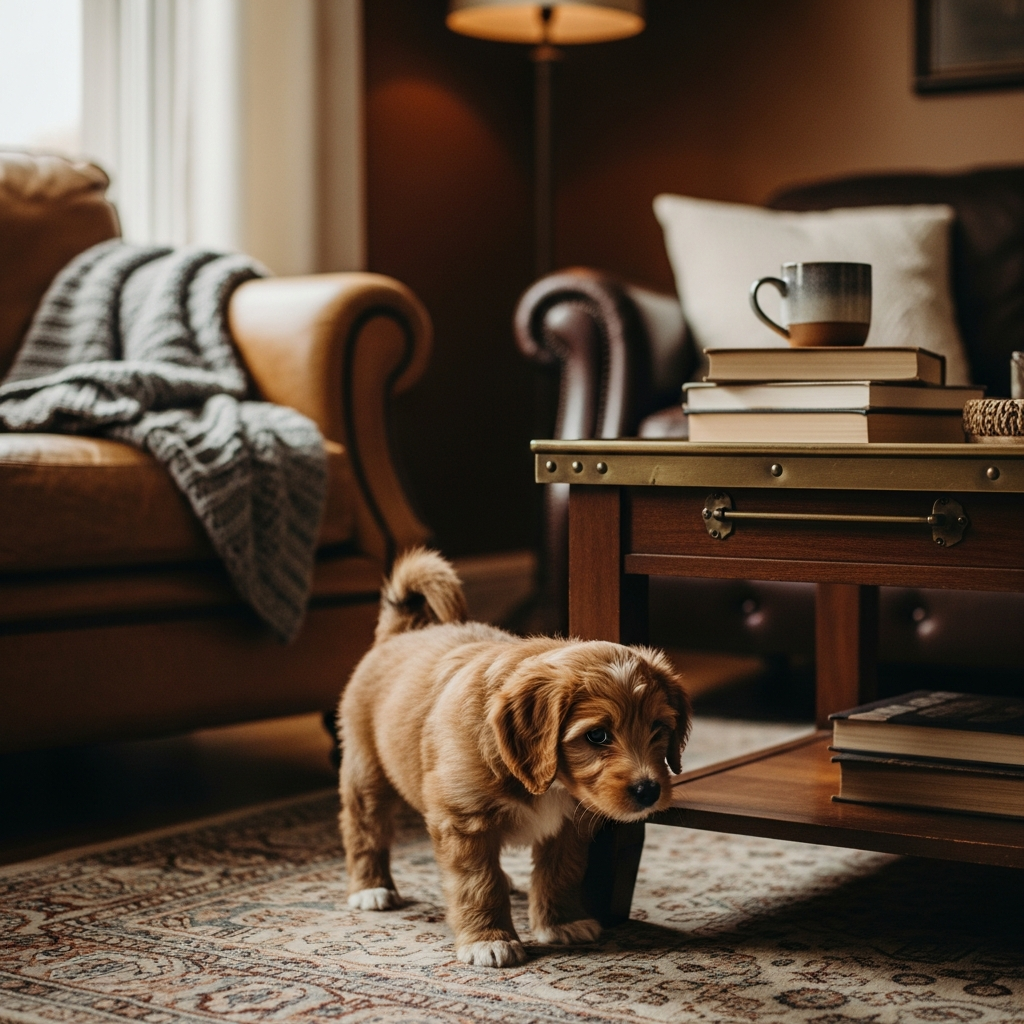
The first week with a new dog is one of the most exciting and most exhausting experiences you’ll have as a pet owner. You’ve done the research, bought the gear, and now there’s an actual living creature in your home that depends on you for everything.
Here’s what nobody tells you: the first week is mostly about what you don’t do. You don’t overwhelm them with visitors. You don’t rearrange their environment. You don’t expect them to be the dog they’ll become in three months. The first week is about creating safety, building trust, and establishing the rhythms that will shape your entire relationship.
This guide walks you through each day with specific priorities, so you always know what to focus on – even when it feels like chaos.
Before Day One: Final Prep
If you haven’t already, make sure your home is ready. Our new puppy checklist covers every item you need, but the critical day-one setup includes:
- Crate assembled and placed in a quiet corner of a common room
- Food and water bowls in their permanent spot
- Baby gates installed to limit access
- Toxic items, small objects, and chewable hazards removed from dog-accessible areas
- Enzymatic cleaner stocked on every floor
- The car ride home planned (bring a towel, a leash, poop bags, and paper towels)
One more thing: Decide your house rules as a household before the dog arrives. Can they go on furniture? Which rooms are off-limits? Who is responsible for which feeding and potty shifts? These conversations are much easier without a puppy crying in the background.
Day One: The Ride Home and First Hours
The Car Ride
Keep it calm. No loud music, no excited squealing, no passing the puppy around the car. The dog just left everything familiar – their litter, their foster home, or their shelter kennel. The car ride is stressful regardless of how chill they seem.
For puppies: Have one person sit in the back seat with the puppy on a towel in their lap or in a small travel crate. Bring paper towels – car sickness is common on first rides.
For adult rescue dogs: Use a car harness or secure their crate in the cargo area. An unfamiliar adult dog in an unfamiliar car is unpredictable. Safety first, bonding second.
The First Hour Home
When you arrive, take the dog directly to the spot where you want them to go potty. Stand there quietly and wait. If they go, praise warmly and give a treat. If they don’t, that’s fine – try again in 15 minutes.
Then bring them inside and let them explore at their own pace. Keep the leash on so you can guide them away from off-limits areas, but don’t drag them around for a house tour. Let them sniff. Sniffing is how dogs process new environments – it’s not wasted time, it’s essential information gathering.
Show them three things:
- Where the water bowl is
- Where their crate is (door open, a treat inside, no pressure to go in)
- Where the potty door leads
That’s enough for the first hour. Everything else can wait.
Who They Meet on Day One
Ideally: the people who live in the house. That’s it.
Do not invite friends over to meet the new puppy. Do not introduce them to the neighbor’s dog. Do not take them to the pet store for a “fun first outing.” Every new stimulus requires emotional processing, and your dog’s capacity for that is limited on a day that already includes a new home, new people, new smells, and new rules.
If you have children, coach them beforehand: sit on the floor, let the dog come to them, use quiet voices, no grabbing, no chasing. Young children and new dogs need supervision for every interaction in the first week, no exceptions.
If you have other pets, keep them separated on day one. Let them smell each other under doors and through baby gates. Formal introductions happen on day two or three, slowly and on leash.
Day One Feeding
Feed your new dog the same food they were eating before (ask the breeder, shelter, or foster in advance). A diet change on top of an environment change is a recipe for diarrhea, and you have enough to clean up already.
If your puppy doesn’t eat much on day one, don’t panic. Stress suppresses appetite. Offer food at scheduled times, leave it down for 15 minutes, and pick it up. They’ll eat when they’re ready.
Puppy feeding schedule (day one):
- Morning meal
- Midday meal
- Afternoon meal
- Evening meal (at least 2 hours before bedtime to reduce overnight accidents)
Adult dog schedule:
- Morning meal
- Evening meal
The First Night
This is the hardest part of day one. Here’s what to expect and how to handle it.
Puppies will cry. This is normal, expected, and not a sign that something is wrong. Your puppy has never slept alone. They’ve always had littermates piled on top of them for warmth and comfort. Tonight, they have neither.
What helps:
- Place the crate in your bedroom so they can hear you breathing and smell you nearby
- Put a worn t-shirt (yours) in the crate for familiar scent
- A snuggle toy with a heartbeat simulator (the SmartPetLove Snuggle Puppy actually works)
- A warm water bottle wrapped in a towel (mimics body heat)
- White noise or a fan to mask unfamiliar house sounds
What to do when they cry:
- If they’ve been quiet and suddenly start crying, they probably need to potty. Take them out, let them go, put them back. No playing, no lights, no conversation.
- If they cry continuously from the moment you close the crate, sit next to the crate with your hand against the door until they settle. Gradually move your position farther from the crate over the next few nights.
- Do not take them out of the crate because they’re crying (unless it’s a potty trip). This teaches them that crying opens the door.
Set an alarm for 3-4 hours after bedtime for a potty trip. Puppies under 4 months can’t hold it all night. Take them out, wait for them to go, bring them back. Middle-of-the-night potty trips should be the most boring event of their life. No play, minimal talking, dim lights.
Adult rescue dogs may or may not cry the first night. Some shut down and are eerily quiet. Others pace, pant, or whine. Follow the same principles: crate in the bedroom, comfort items inside, patience.
Day Two: Establishing the Rhythm
Day two is when you start building the routine that will carry you through the next several months. Dogs thrive on predictability. The sooner you establish consistent patterns, the faster your dog settles.
The Morning Routine
Start establishing the same morning sequence you’ll follow every day:
- Wake up and go directly outside. Don’t stop for coffee, don’t check your phone. Your puppy’s bladder is at maximum capacity, and every second counts.
- Potty, then praise. The instant they go, treat and verbal praise. Make going potty outside the most rewarding thing they do all morning.
- Breakfast. Feed at the same time every day. Pick up uneaten food after 15 minutes.
- Post-breakfast potty trip. Eating stimulates digestion. Take them out 10-15 minutes after they eat.
- Activity period. A short play session or training session.
- Crate or nap time. Puppies need 18-20 hours of sleep per day. Yes, really. After activity, they should rest.
Begin Crate Training
Day two is when structured crate training begins. Not the full program – just the basics:
- Toss a few treats into the open crate and let them go in voluntarily
- Feed their meals inside the crate with the door open
- Sit nearby while they’re inside, treating them for calm behavior
- Close the door for 30 seconds while you’re right there, then open it
- Gradually increase the time the door is closed
The goal for day two isn’t a dog that sleeps in the crate for 3 hours without complaint. The goal is a dog that walks into the crate voluntarily because good things happen there.
Potty Training Begins in Earnest
On day two, start tracking your puppy’s potty patterns. Most puppies need to go:
- Immediately after waking up (from any nap, not just overnight sleep)
- 10-15 minutes after eating
- After play or excitement
- Every 30-60 minutes while awake (for puppies under 12 weeks)
- Every 1-2 hours while awake (for puppies 12-16 weeks)
When they go outside, use a consistent cue word (“go potty,” “do your business,” whatever you want – just pick one and stick with it). Treat and praise immediately after.
When they have an accident inside – and they will – clean it up with enzymatic cleaner and move on. No punishment, no nose-rubbing, no scolding. They won’t connect your anger to something they did 30 seconds ago, let alone 5 minutes ago.
Introduce Basic Handling
On day two, start gently handling your puppy’s body. This isn’t grooming – it’s desensitization. Touch their paws, look in their ears, lift their lips to see their teeth, gently hold their collar. Pair every touch with a treat.
This pays enormous dividends later. A dog that’s comfortable being handled is easier to groom, easier to examine at the vet, and easier to medicate when they’re sick. A dog that was never touched as a puppy may snap when you try to clip their nails at age three.
Day Three: Expanding the World (Slightly)
First Short Walk
For adult dogs, day three is a reasonable time for a short leash walk around your immediate neighborhood. Keep it to 10-15 minutes, let them set the pace, and let them sniff everything. This walk isn’t exercise – it’s environmental exploration.
For puppies who haven’t completed their vaccine series, you can carry them outside to experience new sights and sounds without setting them down in areas where other dogs may have been. The socialization value of hearing traffic, seeing people, and smelling the world outweighs the inconvenience of carrying a wiggly puppy.
Begin Name Recognition
Your dog may or may not know their name, and even if they do, they don’t know that you’re the one saying it now. Start building name recognition:
- Say their name in an upbeat tone
- The instant they look at you, treat
- Repeat 10-15 times per session, a few sessions per day
Within 2-3 days, your dog should be turning toward you when they hear their name. This is the foundation for every command that follows.
Alone Time Practice
On day three, begin leaving your puppy alone for very short periods. Not hours – minutes.
- Put them in the crate with a stuffed Kong
- Leave the room for 2 minutes
- Return calmly (no excited reunion – you want departures and arrivals to be boring)
- Gradually increase to 5, 10, 15 minutes over the next several days
Dogs that never practice being alone can develop separation anxiety, which is one of the most difficult behavioral issues to address. Prevention starts now.
Day Four: Training Foundations
First Training Session
Your dog has had three days to decompress and begin to trust you. Day four is a great time to start formal (but very short) training.
Start with basic commands:
- Sit: Hold a treat above their nose, move it back over their head. Their butt hits the ground, they get the treat. Repeat 5-10 times.
- Name + eye contact: Say their name, treat when they look at you.
That’s it for day four. Two skills, 5-minute sessions, three times throughout the day. Puppies have the attention span of a distracted goldfish. End every session while they’re still engaged and successful.
Introducing House Rules
By day four, your dog is starting to test boundaries. They’re figuring out what gets a reaction and what doesn’t. This is normal and healthy.
Consistent responses:
- Counter surfing: Remove the dog from the area, don’t yell. Put food out of reach. Management, not punishment.
- Biting/mouthing: Redirect to a toy every single time. If the puppy bites skin, say “ouch” in a neutral tone and disengage for 15 seconds. Repeat.
- Jumping on people: Turn away, ignore, wait for four paws on the floor, then give attention. Every person in the household does this the same way, every time.
The key word is every time. Intermittent reinforcement (sometimes they get attention for jumping, sometimes they don’t) actually makes the behavior stronger, not weaker.
Day Five: Building Confidence
New Surfaces and Sounds
Day five is a good time to introduce novel stimuli in a controlled way. This is the beginning of socialization, and it’s one of the most important things you’ll do in the first few months.
At home, introduce:
- Walking on different surfaces (tile, carpet, a cookie sheet on the floor, a rubber mat)
- New sounds at low volume (a hair dryer from another room, the TV, a vacuum running in a different area of the house)
- Wearing a collar or harness if they haven’t yet (let them wear it around the house for short periods)
The rule: Every new experience is paired with treats and calm energy. If your dog shows fear (cowering, tail tucking, trying to flee), you’ve pushed too hard. Back up, reduce the intensity, and try again slower.
Visitors (Controlled)
If you’ve kept visitors away for the first four days (good for you), day five is a reasonable time to have one or two calm, dog-savvy people visit. Set expectations before they arrive:
- Enter calmly, don’t rush toward the dog
- Let the dog approach them, not the other way around
- Offer a treat with an open palm
- No picking up the dog without your guidance
- Keep the visit to 30 minutes
This is a socialization opportunity, not a party. One positive visitor interaction is worth more than a dozen overwhelming ones.
Day Six: Expanding Routines
Longer Walks and Exploration
By day six, adult dogs can handle a 20-30 minute walk. Continue letting them explore and sniff. Start reinforcing basic leash manners – when they pull, stop walking. When the leash is loose, you move forward. This is the beginning of loose leash training, and it starts now, not in a month.
For puppies, keep outdoor time short and close to home. Focus on positive exposure to the yard, the driveway, and the immediate surroundings.
Solidify the Schedule
By now, you should have a consistent daily schedule taking shape:
Sample daily routine:
- 6:30 AM – Wake up, immediate potty trip
- 7:00 AM – Breakfast
- 7:15 AM – Post-breakfast potty trip
- 7:30 AM – Play/training session (10-15 min)
- 8:00 AM – Nap in crate
- 10:00 AM – Potty trip, brief play
- 10:30 AM – Nap
- 12:00 PM – Midday meal (puppies), potty trip
- 12:30 PM – Play/socialization
- 1:00 PM – Nap
- 3:00 PM – Potty trip, afternoon play/training
- 3:30 PM – Nap
- 5:00 PM – Evening meal, potty trip
- 5:30 PM – Family time, calm play
- 7:00 PM – Last meal (young puppies), potty trip
- 8:00 PM – Wind down, quiet chew toy in crate
- 9:00 PM – Final potty trip, bedtime
- 1:00 AM – Middle of night potty trip (puppies only, gradually eliminated)
This looks rigid on paper, but it’s really just a rhythm of eat-potty-play-sleep on repeat. Your dog will sync to this schedule within days, and life gets dramatically easier once they do.
Handling and Grooming Practice
On day six, start brief grooming sessions. Run a brush over their coat for 60 seconds. Touch each paw for 2 seconds. Look in each ear. Treat generously throughout. This isn’t about getting them clean – it’s about building tolerance.
Day Seven: Reflection and Adjustment
What’s Working
Take stock of the week. By day seven, you should see:
- Potty training progress: Not perfection, but a pattern. They should be having more successes outside and fewer accidents inside. If they’re going in the same indoor spot repeatedly, you need more supervision and more frequent outdoor trips.
- Crate comfort: They should be entering the crate voluntarily for meals and treats. They may still protest when closed in, but the panic should be decreasing.
- Name recognition: They should turn toward you when they hear their name at least 50% of the time.
- Basic trust: They should be approaching you willingly, accepting handling, and showing some relaxation in the home environment.
What Needs Adjustment
Be honest about what isn’t working:
- Still having constant accidents? You’re probably not taking them out frequently enough, or you’re giving them too much unsupervised freedom. Tighten the management and increase outdoor trips.
- Crate panic not improving? Review our crate training guide. You may be moving too fast. Go back to feeding meals in the crate with the door open and rebuild from there.
- Puppy won’t stop biting? This is normal at this age. Consistent redirection to toys and brief disengagement when they bite skin is the path forward. It gets worse before it gets better (teething peaks at 4-5 months), and then it resolves.
- Rescue dog still shutting down? Remember the 3-3-3 rule: 3 days to decompress, 3 weeks to learn your routine, 3 months to feel at home. A dog that’s hiding on day seven is still well within the normal adjustment window. Don’t push it.
Setting Up Week Two
The hard part is done. You survived the first week, your dog is beginning to learn the rhythm of your home, and you’re starting to see glimpses of their real personality.
Week two priorities:
- Continue and expand basic commands – add “stay” and “come”
- Begin socialization with new people, environments, and sounds in controlled settings
- If your puppy has had their first round of vaccines, explore puppy socialization classes in your area
- Start transitioning food if you plan to switch from the breeder or shelter brand (do it gradually over 7-10 days)
- Consider scheduling a puppy kindergarten or group training class for week three or four
Special Considerations for Rescue Dogs
The first-week guide above applies to both puppies and adult rescue dogs, but rescue dogs deserve a few additional notes.
The Decompression Period
Rescue dogs – especially those who came from shelters, hoarding situations, or stray life – need time to decompress. This means:
- Don’t expect their shelter personality to match their home personality. The quiet, compliant dog at the shelter may become energetic and mouthy once they feel safe. The aloof dog may become a velcro dog that follows you everywhere.
- Don’t expect full house training immediately. Even if the shelter said they were house trained, a new environment resets their bathroom habits. Treat them like a puppy for the first two weeks in terms of supervision and outdoor frequency.
- Give them space to retreat. A crate with the door open, a quiet room, or a corner with their bed. Some rescue dogs need to observe their new world from a safe distance before they’ll engage.
Unknown History
With a rescue dog, you may not know their triggers. Things that seem harmless to you – a broom, a raised hand, the sound of a belt being pulled from belt loops – may have negative associations for them.
Watch their body language closely in the first week. Note what makes them cower, tuck their tail, freeze, or try to flee. These are clues to their past, and they’re also the things you’ll need to counter-condition over time with patience and positive associations.
When to Get Help
Most first-week challenges are normal adjustment issues that resolve with time and consistency. But some situations warrant professional help:
- Aggression toward people (growling, snapping, biting with intent to harm – not puppy mouthing)
- Severe panic that doesn’t improve after the first three days
- Complete refusal to eat for more than 48 hours
- Resource guarding (growling or snapping when you approach food, toys, or sleeping spots)
A certified dog behaviorist or veterinary behaviorist can assess these issues early, before they become ingrained patterns. Don’t wait months hoping it’ll resolve on its own.
Frequently Asked Questions
Is it normal for my new dog to not eat the first day?
Yes. Stress suppresses appetite. Many dogs skip their first meal or eat very little on day one. Offer food at scheduled times, leave it down for 15 minutes, and pick it up. If they haven’t eaten anything by the end of day two, contact your vet – but one day of reduced appetite in a new environment is completely normal.
Should I let my new dog sleep in bed with me?
This is a personal choice, not a training emergency. The main consideration is house training – a puppy in your bed is a puppy who can have an accident in your bed, and you won’t wake up fast enough to prevent it. If your dog is house trained (most adult rescues) and you want them in bed, go for it. If you’re house training, keep them in the crate until they’re reliable.
How do I introduce my new dog to my existing dog?
Not on day one, and not in your house. The best approach is a parallel walk on neutral territory (a park or quiet street neither dog associates with). Walk them side by side with separate handlers, gradually closing the distance. When they’re calm near each other, allow a brief sniff. Then bring them home together, with baby gates available to separate if needed. Full unsupervised access to each other should wait until you’ve seen consistent positive interactions over several days.
My puppy cries all night. How long does this last?
Most puppies settle within 3-5 nights if you follow the crate-in-bedroom approach and maintain a consistent bedtime routine. Some take up to two weeks. The crying should decrease in duration and intensity each night. If it’s getting worse after a week, reassess your crate training approach and make sure you’re not accidentally reinforcing the crying by responding to it with attention.
How often do I need to take a puppy outside to potty?
For puppies under 12 weeks, every 30-60 minutes while awake. For 12-16 week puppies, every 1-2 hours. Plus immediately after waking, eating, playing, and drinking. It feels excessive because it is excessive – but this intensive schedule for the first few weeks is what produces a reliably house-trained dog in months instead of a year.
When can I start leaving my dog alone for longer periods?
Build alone time gradually. Start with minutes on day three, work up to 30 minutes by the end of week one, and aim for 1-2 hours by the end of week two. Most adult dogs can handle 4-6 hours alone by the end of the first month if you’ve built up to it properly. Puppies under 4 months should not be left alone for more than 2-3 hours (they need potty breaks). If your schedule requires long absences, arrange for a dog walker, neighbor, or doggy daycare to break up the day.