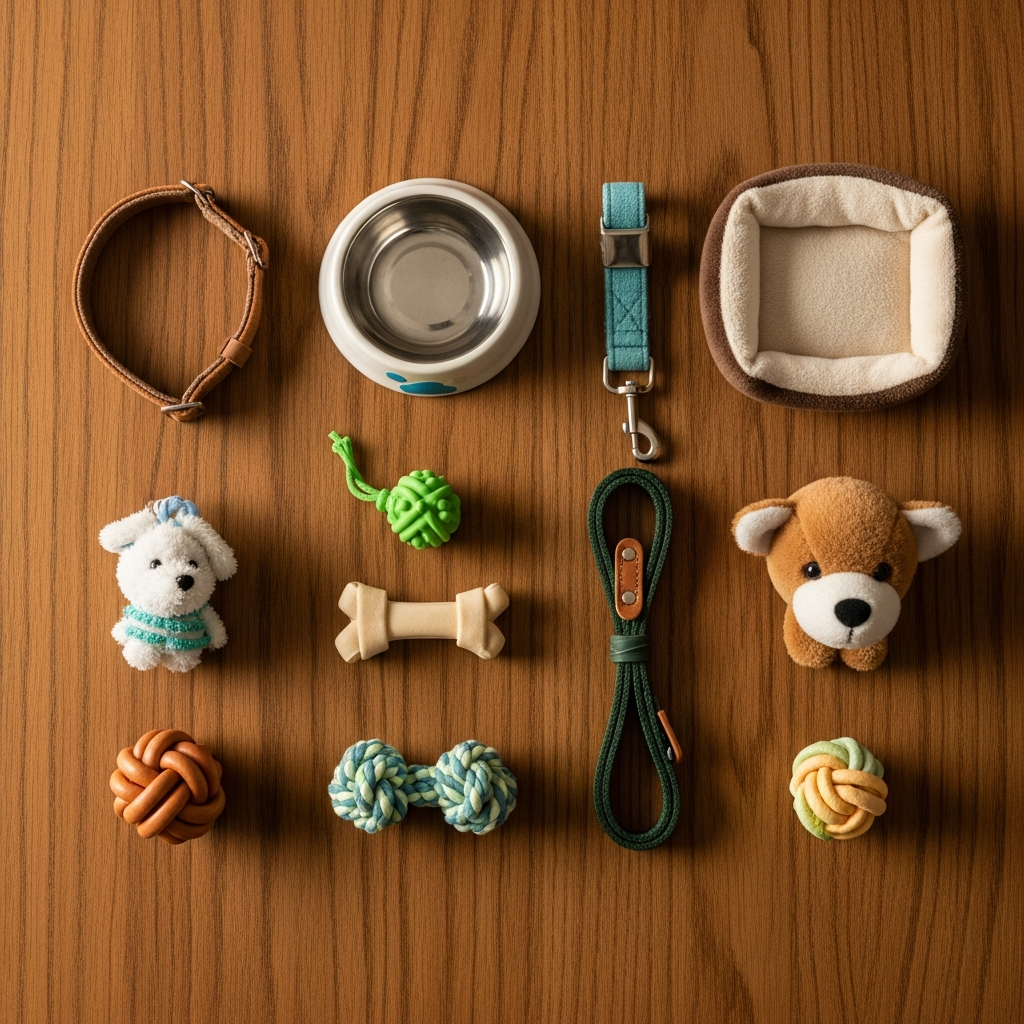
You’re about to bring a puppy home, and every website on the internet wants to sell you 47 things you don’t need. Meanwhile, the five things you actually need on day one are buried at the bottom of a sponsored list.
This checklist is different. We’ve organized it by priority – what you need before the puppy walks through the door, what you need in the first week, and what can wait until you know your specific dog. Every item links to our tested recommendation so you’re not comparison-shopping at 11 PM the night before pickup.
Let’s get you ready.
Before They Come Home: Day-One Essentials
These are the items that need to be in your house, assembled, and ready before you pick up your puppy. Not “ordered and arriving Tuesday.” Ready.
Crate
The crate is the single most important purchase you’ll make. It’s your puppy’s bed, den, safe space, house-training tool, and the thing that keeps them from eating your baseboards while you sleep.
What to buy: A wire crate with a divider panel. Buy the size your dog will need as an adult, then use the divider to make the space smaller while they’re a puppy. This prevents them from using one end as a bathroom and the other as a bedroom.
Sizing guide:
- Small breeds (under 25 lbs adult weight): 24-inch crate
- Medium breeds (25-50 lbs): 30-36 inch crate
- Large breeds (50-80 lbs): 42-inch crate
- Giant breeds (80+ lbs): 48-inch crate
Read our full guide to the best dog crates for specific model recommendations by breed size.
Cost: $40 - $120 depending on size.
Collar and ID Tag
Your puppy needs a collar with an ID tag from the very first minute. Before microchipping, before vet visits, before anything else – a tag with your phone number is the fastest way to get a lost puppy home.
What to buy: An adjustable nylon or biothane collar. Puppies grow fast, so you’ll likely go through 2-3 collars in the first year. Don’t spend big on the first one.
ID tag: Get a simple stamped metal tag with your name, phone number, and city. Skip the cute shapes and get one that’s flat and lightweight. You can order these on Amazon for under $5, and they arrive in 2 days.
See our best dog collars guide for recommendations that grow with your pup.
Cost: $8 - $20 for collar, $3 - $8 for tag.
Leash
A standard 6-foot nylon or leather leash. That’s it.
Do not buy a retractable leash. They teach dogs to pull, they’re dangerous (the thin cord can cause burns and lacerations), and they give you zero control in emergencies. A 6-foot fixed leash gives your puppy enough room to explore while keeping them safe.
Cost: $10 - $25.
Food and Water Bowls
Stainless steel bowls are the gold standard. They’re durable, easy to clean, dishwasher-safe, and don’t harbor bacteria the way plastic bowls do. Plastic bowls can also cause contact allergies that look like acne on your dog’s chin.
What to buy: Two stainless steel bowls – one for food, one for water. A rubber base prevents sliding on hard floors. Get a size appropriate for your puppy now; you can upgrade to larger bowls as they grow.
Cost: $8 - $20 for a set.
Puppy Food
Have this purchased and in your house before the puppy arrives. Ideally, ask the breeder or shelter what they’ve been feeding and start with the same food to avoid digestive upset during an already stressful transition.
What to buy: A high-quality puppy food formulated for your expected adult size. Large breed puppies need specific calcium-to-phosphorus ratios to protect their developing joints. Small breeds need calorie-dense formulas for their fast metabolisms.
Our complete guide to the best puppy food breaks down the top options by breed size with ingredient analysis.
If you’re planning to transition to a different food, do it gradually over 7-10 days once the puppy has settled in. Mix increasing amounts of the new food with decreasing amounts of the old food.
Cost: $30 - $70 per bag, lasting 2-6 weeks depending on breed size.
Enzymatic Cleaner
Your puppy will have accidents. This is not a failure of training – it’s biology. A young puppy physically cannot hold their bladder for more than a few hours.
Why enzymatic specifically: Regular cleaners may eliminate the odor you can smell, but dogs have 300 million olfactory receptors compared to your 6 million. If the enzymatic proteins aren’t fully broken down, your puppy will smell the old spot and think “this is where I go.” The cycle repeats.
What to buy: Nature’s Miracle Advanced or Rocco & Roxie enzymatic cleaner. Keep a bottle on every floor of your home.
Cost: $10 - $15 per bottle.
Poop Bags
You’ll use more of these than you think. Buy in bulk.
What to buy: Any biodegradable or standard poop bag that fits a leash-clip dispenser. The dispenser clips to your leash so you never forget them on a walk.
Cost: $8 - $15 for a 6-month supply.
First Week Additions
These items aren’t critical for the ride home, but you’ll want them within the first few days as you establish routines.
Chew Toys
Puppies chew. It’s not optional – it’s a biological need, especially during teething (which starts around 3-4 months and lasts until about 6-7 months). If you don’t provide appropriate chew outlets, they’ll find their own, and you won’t like what they choose.
What to buy (start with three types):
- A durable rubber toy like a Kong Classic. Fill it with peanut butter (xylitol-free) and freeze it for a long-lasting chew session.
- A textured chew toy for teething relief. Nylabone puppy chews are designed for the right firmness.
- A plush toy for comfort and light play. Expect this to be destroyed eventually – that’s fine.
Rotate toys every few days to keep them novel. A toy they haven’t seen in a week feels like a brand new toy.
Cost: $15 - $30 for a starter set.
Training Treats
You’re going to start training the first day. You need small, soft, high-value treats that your puppy will do anything for.
What to buy: Soft training treats that you can break into pea-sized pieces. One treat should last about one second to eat – if your puppy is chewing for 10 seconds, the treat is too big or too hard, and you’re losing training momentum.
Good options: Zuke’s Mini Naturals, Stewart Freeze-Dried Liver, or small pieces of boiled chicken breast.
Our basic dog commands guide covers exactly how to use treats effectively in training without creating a dog that only listens when food is visible.
Cost: $5 - $12 per bag.
Baby Gates
Unless you want your puppy to have unsupervised access to every room in your house (you don’t), baby gates are essential. They let you confine your puppy to puppy-proofed areas without closing doors, so they can still see and hear you.
Where to use them:
- Top and bottom of stairs (puppies and stairs are a bad combination for growing joints)
- Doorways to rooms with carpet (easier to clean accidents on hard floors)
- Kitchen entrances during cooking (hot spills, dropped knives, open trash)
What to buy: Pressure-mounted gates for temporary barriers, hardware-mounted gates for the top of stairs.
Cost: $20 - $50 per gate.
Puppy Pads (Maybe)
This is controversial. Some trainers swear by puppy pads as a transitional tool. Others argue they teach dogs that going inside is acceptable.
Our take: If you live in a high-rise apartment and can’t get outside quickly, puppy pads have a role. If you have a yard or live on a ground floor with easy outdoor access, skip them and go straight to outdoor training. Every time a puppy uses a pad indoors, it slightly reinforces the idea that inside is an acceptable bathroom.
If you do use them, place them by the door and gradually move them outside over 2-3 weeks.
Cost: $15 - $25 for a starter pack.
Grooming Basics
You won’t need a full grooming kit in the first week, but you should start getting your puppy comfortable with being handled. This means touching their paws, ears, mouth, and belly regularly – not for grooming purposes yet, but for desensitization.
First-week grooming supplies:
- A soft puppy brush (even if you just run it over them for 30 seconds)
- Dog-safe nail clippers or a nail grinder (start by just touching their paws and showing them the tool with a treat)
- Dog-specific ear cleaner wipes
Don’t bathe your puppy in the first week unless absolutely necessary. The stress of a bath on top of a new environment is too much. If they get dirty, use a warm damp cloth.
Cost: $15 - $30 for basics.
First Month: Building the Foundation
Once you’ve survived the first week and established basic routines, these items round out your setup.
Harness
For walks, a harness is safer and more comfortable than a collar – especially for puppies who haven’t learned leash manners yet. A collar puts pressure on the trachea when a puppy pulls, which every puppy will do.
What to buy: A Y-front harness that doesn’t restrict shoulder movement. Avoid anything that sits across the front of the shoulders, as it can alter gait in growing puppies.
When pulling becomes a training issue (and it will), our guide to the best no-pull harnesses covers options that assist with loose leash training without relying on pain or discomfort.
Cost: $20 - $40.
Crate Training Supplies
If you’re following a structured crate training approach (and you should be), you’ll want a few extras:
- Crate cover: A blanket or fitted cover to make the crate feel den-like. Some dogs prefer darkness; others want to see out. Experiment.
- Crate-safe mat or bed: Avoid plush beds until your puppy is past the chewing stage – they’ll shred it and potentially swallow the stuffing. A rubber-backed mat or a folded towel works for the first few months.
- Kongs and lick mats: These make crate time rewarding. A frozen Kong stuffed with peanut butter and kibble gives your puppy something to work on and creates a positive association with the crate.
Cost: $20 - $40 for all three.
Dental Care
Start dental care early. Not because a 10-week-old puppy needs clean teeth, but because getting a puppy comfortable with having their mouth handled and a toothbrush used now prevents a lifetime of wrestling matches at tooth-brushing time.
What to buy:
- A finger toothbrush (softer and less intimidating than a standard brush)
- Enzymatic dog toothpaste (never use human toothpaste – the fluoride is toxic to dogs)
Start by letting them lick the toothpaste off your finger, then progress to rubbing it on their gums, then gradually introduce the brush. This is a weeks-long process, not a single session.
Cost: $8 - $15.
Car Safety
If your dog rides in the car (and they will – vet visits alone guarantee this), you need a safety solution.
Options:
- A crate secured in the cargo area (safest option)
- A crash-tested car harness that clips to the seatbelt system
- A back-seat barrier or hammock (prevents access to the front seat but doesn’t restrain in a crash)
An unrestrained dog in a car is a projectile in an accident. A 60-pound dog in a 35 mph crash exerts roughly 2,700 pounds of force. This isn’t optional safety equipment.
Cost: $25 - $80 depending on solution.
Items You Can Wait On
Don’t buy everything at once. These are items you’ll eventually want but can wait until you know your specific dog.
Dog Bed
Wait until your puppy is past the destructive chewing stage (usually 8-12 months) before investing in a nice bed. They’ll destroy it. Use old towels, cheap fleece blankets, or a basic mat until then.
Advanced Toys and Puzzles
Interactive toys and puzzle feeders are fantastic for mental enrichment, but start simple. A Kong is enough for the first month. Once you understand your dog’s intelligence and drive, you can scale up to more challenging puzzles.
GPS Collar
A GPS dog collar is valuable for off-leash hiking and adventure dogs, but it’s not a first-month purchase. Wait until your dog is old enough and trained enough for off-leash activities before investing.
Professional Grooming
Most groomers won’t take puppies until they’ve completed their vaccine series (around 16 weeks). Use the early weeks to desensitize them to handling so the first grooming appointment goes smoothly.
The Complete Checklist: Quick Reference
Day One (Must Have)
- Crate with divider
- Collar and ID tag
- 6-foot leash
- Stainless steel food and water bowls
- Puppy food (same brand as breeder/shelter if possible)
- Enzymatic cleaner
- Poop bags with dispenser
First Week
- Chew toys (3 types: rubber, textured, plush)
- Training treats (soft, small, high-value)
- Baby gates (at least 2)
- Puppy pads (if in apartment/high-rise)
- Soft brush
- Nail clippers or grinder
First Month
- Harness (Y-front, non-restrictive)
- Crate cover and crate-safe mat
- Kongs and lick mats
- Finger toothbrush and dog toothpaste
- Car harness or travel crate
Can Wait
- Dog bed (after chewing stage passes)
- Puzzle toys and advanced enrichment
- GPS collar
- Professional grooming setup
Budget Breakdown: What to Expect
| Category | Budget Range |
|---|---|
| Day-one essentials | $100 - $250 |
| First-week additions | $50 - $120 |
| First-month items | $75 - $175 |
| Total starter kit | $225 - $545 |
The range depends primarily on your dog’s expected adult size. Giant breed gear costs more across every category. A Great Dane crate is three times the price of a Chihuahua crate, and food costs scale proportionally.
Where to save: Collar (buy cheap – they’ll outgrow it), poop bags (buy bulk generic), grooming basics (starter kits are fine).
Where to spend: Crate (you’ll use this for years), food (quality matters for growth and development), car harness (safety equipment isn’t the place to cut corners).
Mistakes That Cost New Puppy Owners Money
Buying Puppy-Sized Everything
A puppy crate, puppy bowls, and puppy harness all need to be replaced in 3-6 months. Buy adult-sized where possible (crate with divider, adjustable harness) and save the money for vet bills.
Overbooking the Toy Budget
Your puppy doesn’t need 15 toys on day one. They need three. You’ll quickly learn whether your dog is a chewer, a tugger, a fetcher, or a snuggler, and then you can buy accordingly. The plush octopus toy that’s perfect for one dog gets ignored by another.
Skipping the Enzymatic Cleaner
Regular carpet cleaner costs half as much and does zero percent of the job. You’ll re-clean the same spot five times instead of once. Enzymatic cleaner is the most cost-effective purchase on this list per use.
Premium Beds for Puppies
That $200 orthopedic dog bed will become a $200 pile of foam and fabric confetti. Save it for when they’re past the chewing stage. Your puppy will sleep just as soundly on a folded towel in their crate.
What’s Next
Once you have your supplies ready, read through our first week with a new dog guide so you know exactly what to expect each day. Start crate training from the first night and begin working on basic commands as soon as your puppy has settled in.
Welcome to dog ownership. Your couch will never be the same, and you’ll love every minute of it.
Frequently Asked Questions
How much should I budget for a new puppy’s first month?
Plan for $225-$545 in gear and supplies, plus $200-$400 for the first vet visit, vaccines, and any initial medications. Food will run $30-$70 depending on the brand and your puppy’s size. Total first-month spending typically falls between $450 and $1,000 before the adoption or purchase fee.
Do I really need a crate?
Yes. A crate isn’t a cage – it’s a management and safety tool. It accelerates house training by leveraging your puppy’s natural instinct not to soil their sleeping area, it prevents destructive behavior when you can’t supervise, and it gives your puppy a safe retreat when they’re overwhelmed. Our crate training guide walks through how to introduce it so your puppy loves it.
What toys are safe for puppies?
Look for toys labeled for puppies, as they’re made with softer materials appropriate for baby teeth. Avoid toys with small parts that can be chewed off and swallowed, and avoid rawhide (it’s a choking hazard and can cause intestinal blockages). Kong Classic, Nylabone Puppy Chews, and rope toys supervised during play are all solid starting points.
Should I buy pet insurance before the puppy comes home?
Ideally, yes. Most pet insurance policies have a waiting period of 14-30 days, so the sooner you sign up, the sooner coverage kicks in. More importantly, conditions documented before your policy starts are considered pre-existing and won’t be covered. Getting insurance before the first vet visit means everything starts with a clean slate.
What cleaning products are safe to use around puppies?
Avoid bleach, ammonia-based cleaners, and anything with essential oils (many are toxic to dogs). Enzymatic cleaners designed for pet messes are safe and effective. For general cleaning, look for products specifically labeled pet-safe, or use simple solutions like diluted white vinegar for surfaces.
Can I bring my puppy to stores on day one?
Until your puppy has completed their vaccine series (around 16 weeks), avoid places where unknown or unvaccinated dogs may have been – pet stores, dog parks, and sidewalks in high-traffic dog areas. You can carry your puppy into stores for socialization exposure, but don’t set them on the floor. The risk of parvo and distemper before full vaccination isn’t worth it.